


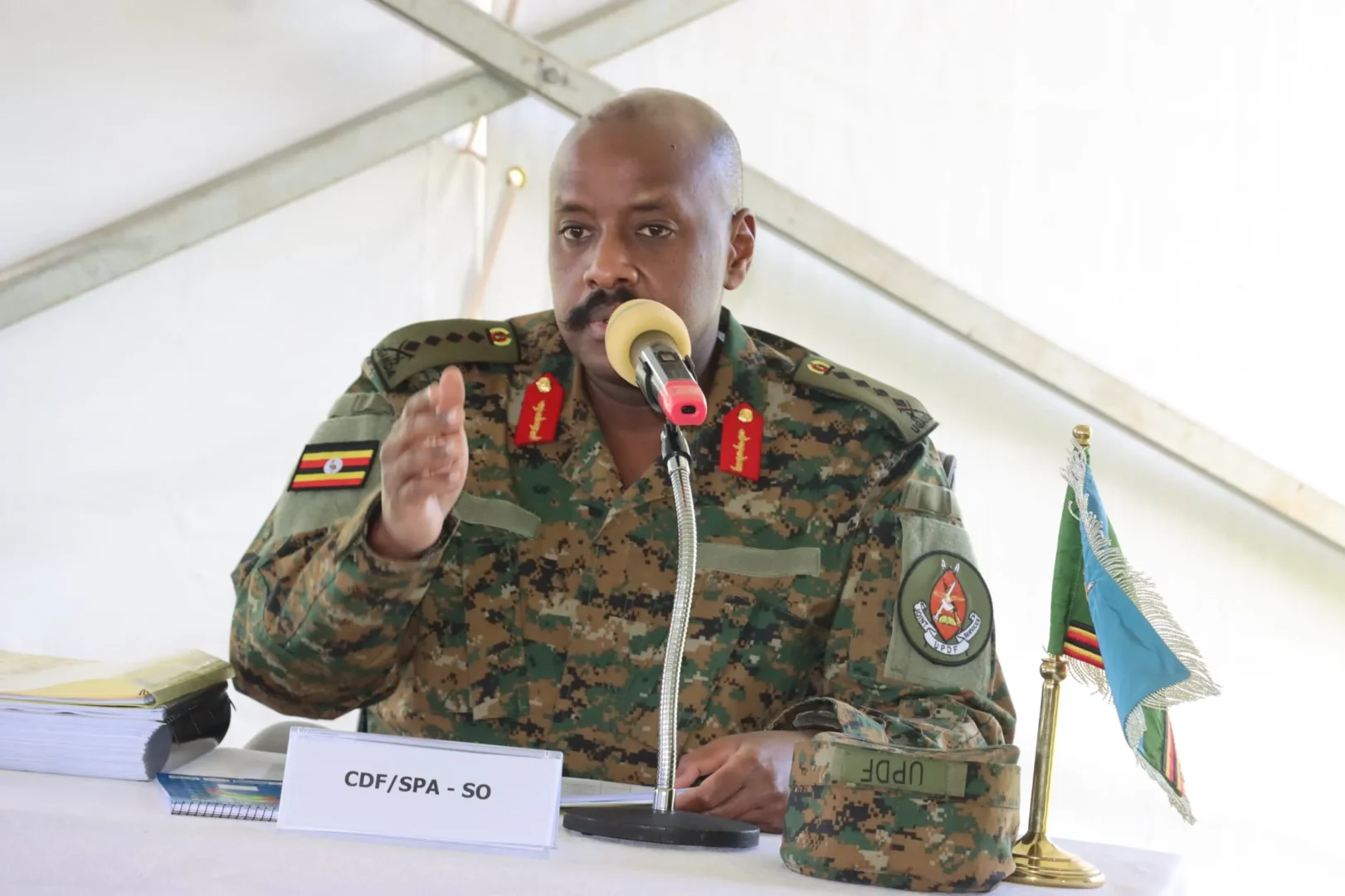
KAJIADO, Kenya — Uganda’s Chief of Defence Forces (CDF), General Muhoozi Kainerugaba, has threatened detained opposition figures Dr Kizza Besigye, Erias Lukwago and Sam Mugumya with possible execution, saying they must sign a surrender document prepared by the authorities if they are to secure their release.
In a series of posts on X on Tuesday, November 24, 2026, Muhoozi suggested that the three men would remain in custody unless they accepted the document, although he did not disclose its contents or explain the legal basis for the proposed condition.
“Besigye, Lukwago, Mugumya all of them will only avoid the hangman’s noose if they sign the surrender document we have prepared. Otherwise, they can die in jail!” he wrote.
In a separate post, the army chief claimed that their release depended on his personal approval.
“No one will release Besigye, Lukwago or the other criminals without my permission,” Muhoozi stated.
The remarks have raised fresh questions about the treatment of opposition figures in detention and the extent of military involvement in decisions that ordinarily fall within the criminal justice system.
They also leave several critical issues unanswered: what exactly does the surrender document require, who prepared it, whether the three detainees have been consulted and whether any court has been involved in the proposed arrangement.
Gen. Muhoozi did not provide details of any formal negotiations or identify the legal mechanism through which signing the document would lead to their release.
Besigye’s detention enters its second year
Dr Kizza Besigye, a veteran opposition politician and four-time presidential candidate, has been in detention since November 2024, when he was seized in Nairobi, Kenya, and taken to Uganda.
He was initially arraigned before a military court alongside his aide, Haji Obed Lutale, on security-related charges. However, proceedings were transferred to the civilian court system after Uganda’s Supreme Court ruled in January 2025 that civilians could not be tried by military courts.
On February 21, 2025, Besigye and Lutale were charged before the Nakawa Chief Magistrate’s Court with treason and misprision of treason. The prosecution alleges that they participated in activities intended to overthrow President Yoweri Museveni’s government.
Dr Besigye has denied the accusations and has not been convicted. The case subsequently proceeded within the civilian justice system, with the opposition leader’s continued detention becoming a major point of contention between his supporters and the government.
His wife, Winnie Byanyima, has repeatedly rejected suggestions that his freedom should be negotiated through political arrangements.
In October 2026, she dismissed reports of discussions aimed at securing his release, saying his health and constitutional rights should not be treated as bargaining issues.
“There are no negotiations for Kizza Besigye’s release. His health and his rights are not matters for negotiation,” she said.
Byanyima has maintained that the immediate priority should be Besigye’s access to appropriate medical care and his constitutional right to seek bail.
Lukwago’s detention adds another legal dimension
Gen. Muhoozi’s latest remarks also singled out Erias Lukwago, the former Kampala Lord Mayor and a lawyer who has represented Besigye.
Lukwago was arrested on June 15, 2026, after security personnel reportedly took him from his home in Kampala. His arrest came amid a separate legal dispute involving Muhoozi and alleged threats against Besigye.
The military chief publicly commented on the arrest, while opposition figures said Lukwago had been seized as he prepared to serve court documents in the matter.
He was subsequently produced before the Buganda Road Chief Magistrate’s Court and charged with misprision of treason, an offence involving the alleged failure to report knowledge of a treason plot.
Lukwago denied the charge and was remanded to Luzira Prison.
His detention has drawn concern from legal and human rights organisations, particularly over the circumstances of his arrest, the period during which his whereabouts were unclear and the public statements made by the army chief.
The case has therefore become more than a dispute involving an opposition lawyer. It raises questions about the protection of legal practitioners, access to courts and whether lawyers can carry out their professional duties without intimidation.
Mugumya reappears after more than a year
The third man named by Muhoozi, Sam Mugumya, is a former aide to Besigye whose whereabouts became the subject of a prolonged dispute after he reportedly disappeared in Mbarara in August 2025.
His family and supporters sought information about his whereabouts, while military officials previously denied holding him in detention.
The uncertainty ended publicly on November 18, 2026, when Mugumya appeared before the General Court Martial in Makindye, Kampala, alongside two UPDF soldiers.
He was charged with security-related offences and treachery. The prosecution alleges that the accused held meetings in different parts of Uganda and sought support from the Allied Democratic Forces, a rebel group operating in the region.
Also Read: The betrayal of a comrade: Why Museveni must end the ‘endless injustice’ against Besigye
Mugumya and the two soldiers denied the charges. The court remanded them, with Mugumya sent to Luzira Prison and the soldiers held at a military detention facility.
His appearance before the military court renewed scrutiny of the circumstances surrounding his disappearance and the period during which his family could not establish his whereabouts.
Muhoozi’s threats complicate proposed national dialogue
The latest statements follow Muhoozi’s November 17 rejection of proposals for national dialogue involving Besigye.
In posts on X, he described the opposition leader as a traitor and accused him of planning to shoot down President Museveni’s helicopter. He did not provide evidence for the allegation in the posts.
The remarks came amid discussions surrounding a proposed Consociational Democracy Agreement associated with General Salim Saleh, Museveni’s brother, which has been presented as a possible framework for political cooperation and power-sharing.
Besigye’s People’s Front for Freedom (PFF) rejected the proposal, arguing that any meaningful national dialogue must address political freedoms, justice, electoral reforms and the country’s constitutional future.
The party has also maintained that discussions about national unity cannot be separated from the detention of opposition leaders and wider concerns about human rights and political accountability.
By linking the possible release of three detainees to a surrender document, Muhoozi has added another complication to an already sensitive debate over political dialogue and the rule of law.
The central question is whether the proposed document represents a formal legal process, a political arrangement or a condition being imposed outside the ordinary judicial framework.
Until its contents and legal basis are made public, the circumstances surrounding the proposed surrender arrangement remain unclear. What is clear is that the three men continue to face separate legal proceedings, and the charges against them remain allegations to be determined through the relevant courts.
