


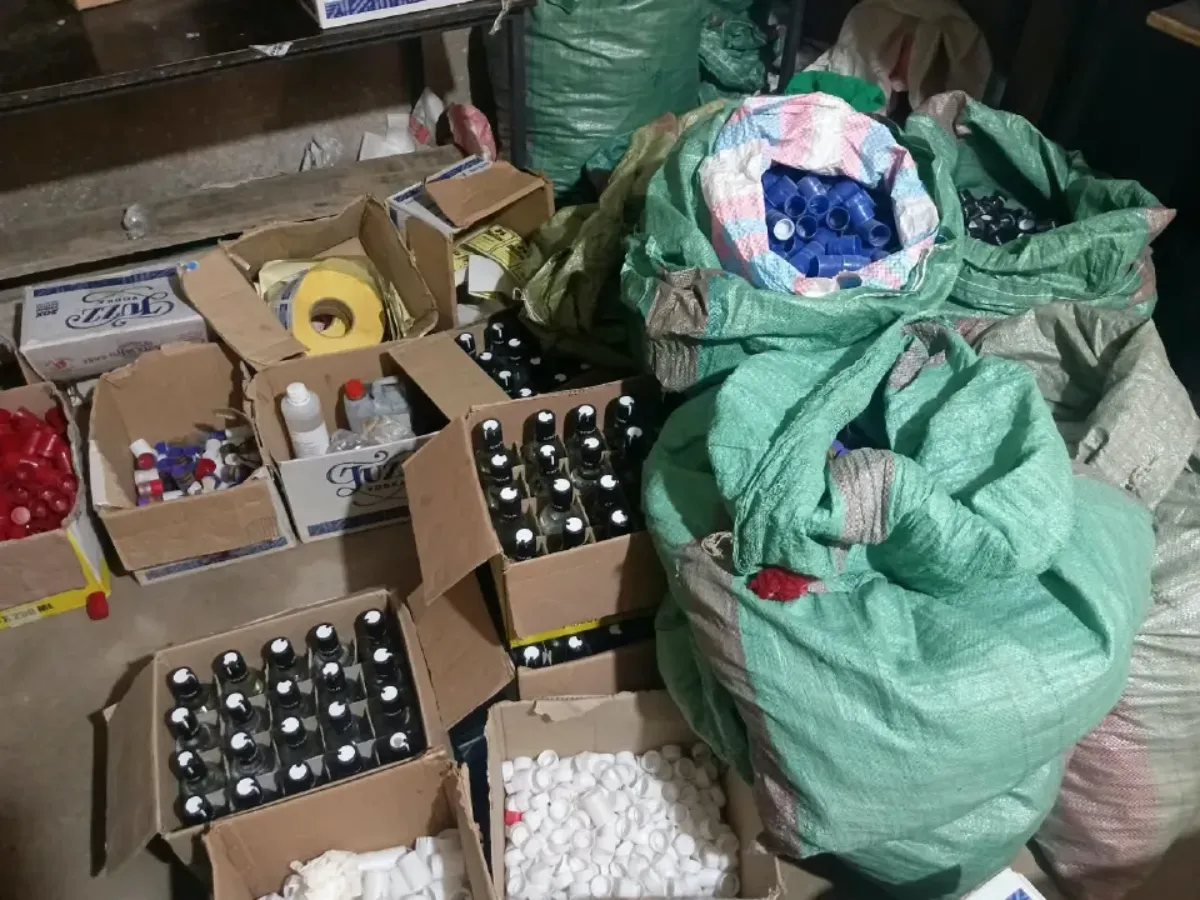
KAJIADO, Kenya — Two suspects have been arrested after anti-drug and alcohol enforcement officers uncovered a suspected counterfeit alcohol production and distribution operation in Kiserian, Kajiado County, seizing 15 boxes of suspected illicit alcoholic products.
The operation, conducted on Monday, November 23, 2026, by the National Authority for the Campaign Against Alcohol and Drug Abuse (NACADA) and other security agencies, targeted premises and a homestead believed to be connected to the manufacture and distribution of counterfeit alcoholic drinks.
Investigators recovered equipment and materials suspected to have been used to produce, package and disguise illicit alcoholic products as established commercial brands.
Among the items seized were a roll of Kenya Revenue Authority (KRA) excise stamps, assorted empty bottles, rolls of stickers bearing different alcoholic brands, approximately 20 litres of liquid suspected to be ethanol and a distillation drum.
The discovery of branding materials and tax stamps raises questions about the suspected operation’s capacity to package and distribute products that could appear legitimate to unsuspecting consumers.
The two suspects were arrested and taken to Kibiko Police Station as investigations continued to establish the scale of the operation, the origin of the recovered materials and whether other individuals were involved in the suspected supply network.
NACADA appeals for public support in crackdown
NACADA Chief Executive Officer Dr Anthony Omerikwa credited members of the local community for providing intelligence that helped enforcement officers identify and raid the premises.
He said cooperation between residents and security agencies remained essential in identifying illicit alcohol production sites and disrupting distribution networks.
“We are deeply grateful to the community for being at the forefront in volunteering information to the Authority. You are the key stakeholders in the fight against alcohol and drug abuse, and we commend you for the good work,” Omerikwa said.
The agency maintained that timely information from residents could help authorities identify suspicious activities before potentially harmful products reach consumers.
NACADA also urged communities to report suspected illegal alcohol manufacturing, storage and distribution activities, emphasising the importance of cooperation with local administrators and law enforcement officers.
Counterfeit alcohol poses a wider public health concern
The Kiserian operation highlights the continuing challenge authorities face in controlling illicit alcohol production and distribution in Kenya.
Counterfeit and illegally manufactured alcoholic products can expose consumers to serious health risks, particularly where manufacturers use unregulated ingredients, contaminated production equipment or inappropriate concentrations of alcohol.
The presence of suspected ethanol at the raided premises is particularly significant because authorities must establish its source, quality and intended use through further investigations.
Ethanol is commonly used in legitimate alcoholic beverage production, but improperly sourced or contaminated alcohol can pose serious health risks. Methanol contamination, in particular, can cause permanent blindness, organ damage and death.
Also Read: Police intercept vehicle carrying suspected counterfeit alcohol in Samburu
The recovery of counterfeit branding materials and suspected KRA stamps also raises concerns about possible tax evasion, trademark infringement and the potential circulation of products that consumers may mistake for genuine, regulated alcoholic beverages.
However, the precise nature of the recovered substances, the authenticity of the excise stamps and the intended distribution channels will need to be established through forensic examination and investigations.
Investigations continue as authorities pursue wider network
NACADA said the multi-agency team was following additional leads emerging from the raid, suggesting that investigators were examining whether the operation was connected to a wider illicit alcohol supply chain.
The investigation will be important in determining whether the premises were being used solely for local production or formed part of a broader network supplying counterfeit alcoholic products to retailers and consumers.
Authorities are also expected to establish where the recovered materials originated, whether the suspected products had already entered the market and whether additional premises were involved.
The arrests come amid continued efforts by Kenyan authorities to address the manufacture and distribution of illicit alcoholic products, a challenge that extends beyond enforcement to public health, consumer protection and revenue collection.
For residents, the operation serves as a reminder that suspicious alcohol production and distribution activities can have consequences far beyond individual premises.
While the Kiserian raid has resulted in two arrests and the seizure of suspected counterfeit alcohol, the effectiveness of the operation will ultimately depend on whether investigators identify the wider supply chain and prevent potentially dangerous products from reaching consumers.
The two suspects remain subject to the ongoing investigation, and the allegations against them have not been established in court.
