


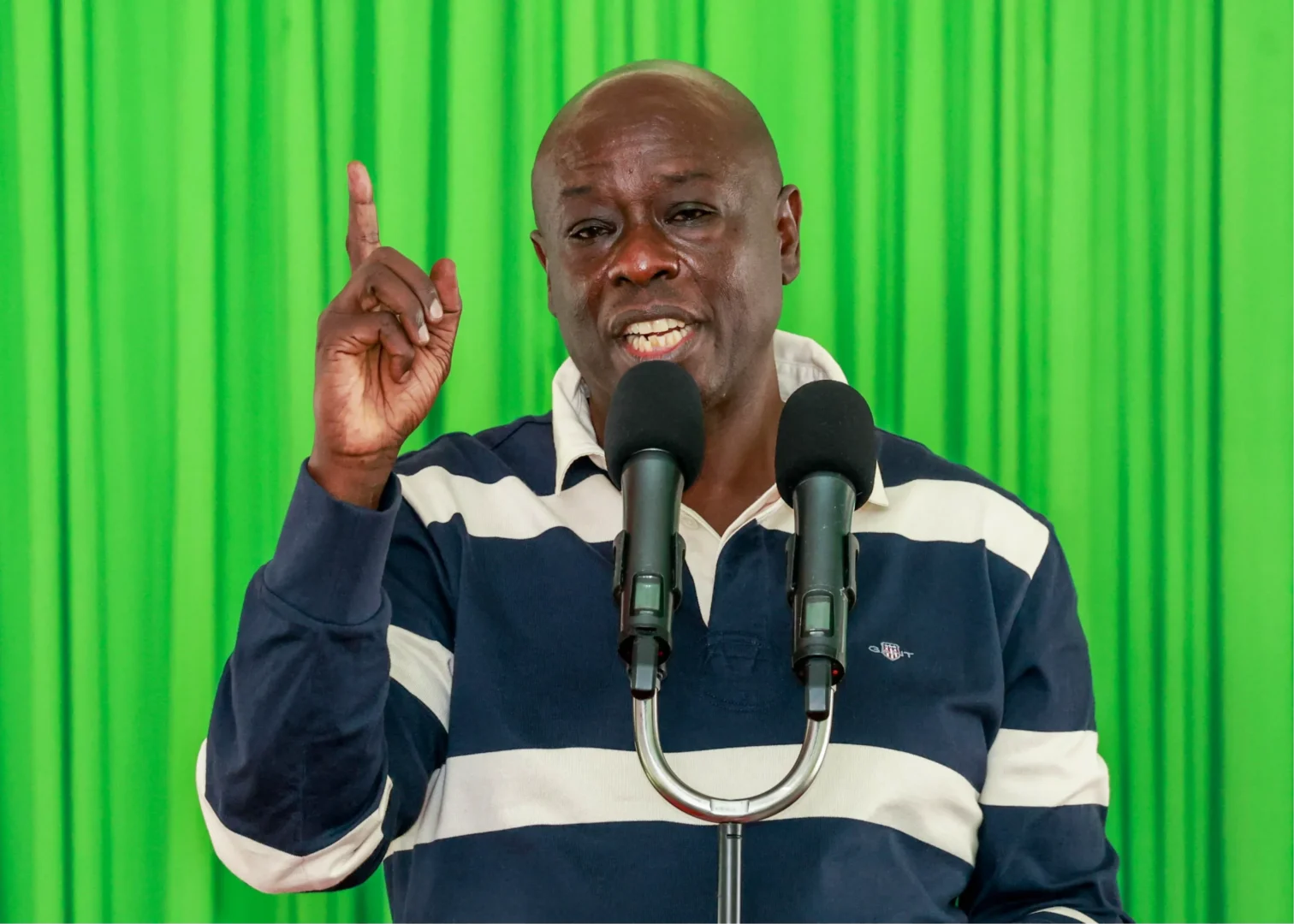
NYERI, Kenya — Democracy for Citizens Party (DCP) leader Rigathi Gachagua has accused President William Ruto’s administration of turning government-funded development projects into campaign instruments, claiming state resources are being deployed to influence voters ahead of the upcoming Ol Kalou by-election.
Speaking during a consultative meeting with leaders from Nairobi’s Westlands Constituency at his Wamunyoro residence on Wednesday, Gachagua alleged that a sudden surge of government projects and donations in Ol Kalou was politically motivated and aimed at boosting support for the ruling United Democratic Alliance (UDA) candidate.
The former Deputy President argued that development initiatives funded by taxpayers should not be tied to electoral contests or used to sway voter decisions.
“Development is a right for every Kenyan. It should not be delivered only when there is an election,” Gachagua said.
Focus on Ol Kalou by-election
The July 16 Ol Kalou by-election has emerged as a closely watched political contest, attracting attention from both the Kenya Kwanza administration and opposition leaders.
In recent weeks, Cabinet Secretaries, Principal Secretaries and senior government officials have made multiple visits to the constituency, announcing and launching various projects ranging from electrification programmes and road works to social support initiatives.
Among the developments that have attracted public attention are reports of the distribution of subsidised gas cylinders, electricity infrastructure and other government-backed interventions.
Gachagua claimed the concentration of development activity in the constituency reflects a broader pattern in which government services are accelerated during election periods.
“Let the government and UDA campaigners give you the gas cylinder, a GoK mattress, and everything else that has not been delivered to Ol Kalou since 1963. But do not surrender your democratic rights,” he told residents.
Warning of political consequences
The DCP leader argued that the approach could generate resentment among citizens in other parts of the country who continue to wait for similar projects despite having no ongoing elections.
According to Gachagua, Kenyans may increasingly question why public investments appear to be prioritised in constituencies facing electoral contests while other regions experience delays in service delivery.
He warned that such perceptions risk undermining public confidence in government development planning.
Political analysts have previously noted that major government project launches often attract scrutiny during campaign periods, particularly when they coincide with by-elections or general election campaigns.
Development versus politics
The remarks come against the backdrop of a wider national debate over the relationship between public development spending and electoral politics.
Kenya’s Constitution guarantees equitable access to public services and development regardless of political affiliation, while public finance laws require government resources to be used for national rather than partisan purposes.
Also Read: Can William Ruto win in 2027 if Mt Kenya voters abandon him?
Opposition leaders have repeatedly accused successive governments of concentrating resources in politically strategic areas during election periods.
Government officials, however, typically maintain that project implementation schedules are based on budgetary allocations, procurement processes and development priorities rather than electoral considerations.
High-stakes contest
The Ol Kalou by-election is being viewed by many observers as an important political test, particularly in the Mount Kenya region, where shifting alliances and emerging political formations have intensified competition ahead of the next general election cycle.
Gachagua, who has increasingly positioned himself as a key opposition figure following his fallout with President Ruto, has been actively campaigning against Kenya Kwanza candidates in several recent political contests.
He insisted that voters should evaluate candidates independently and resist pressure linked to development promises.
“No Kenyan should be forced to exchange constitutional rights for projects that should have been delivered in the first place,” he said.
As campaigns enter their final stretch, both government and opposition leaders are expected to intensify their engagement with voters in what has become one of the most closely watched by-elections in the country.
