


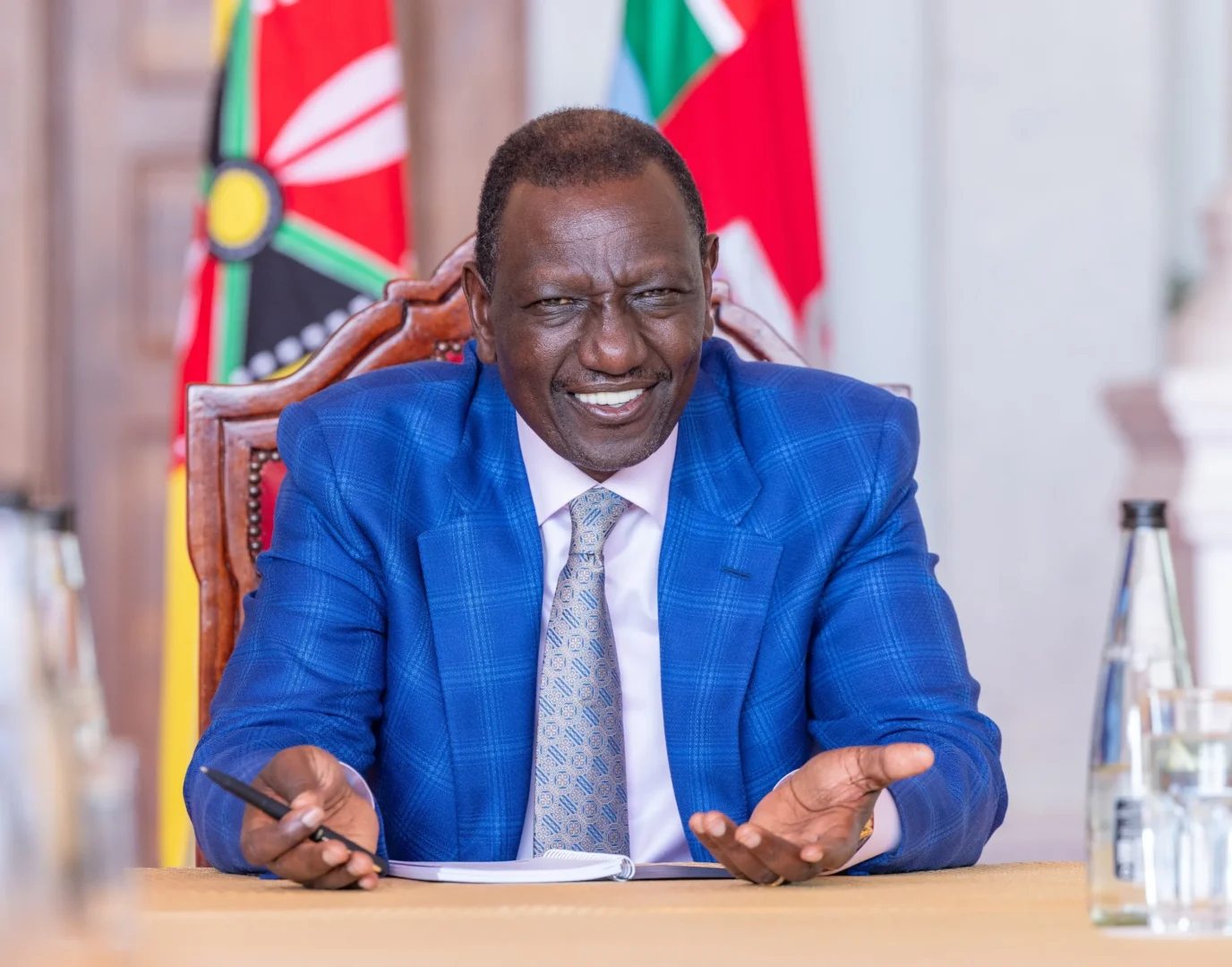
NAIROBI, Kenya — Kenya’s High Court has upheld President William Ruto’s decision to appoint opposition-affiliated politicians to his Cabinet, ruling that the Constitution does not bar members of opposition parties from serving in government and rejecting arguments that the appointments undermined Kenya’s multi-party democracy.
In a landmark judgment delivered on July 7, 2026, a three-judge bench sitting at the Milimani Law Courts dismissed a constitutional petition challenging the nomination, vetting and appointment of several politicians linked to the opposition Orange Democratic Movement (ODM).
The case arose after President Ruto dissolved his Cabinet in July 2024 amid nationwide anti-Finance Bill protests and later reconstituted it with a mix of former Cabinet Secretaries, technocrats and prominent opposition figures.
In a majority decision, Justices Eric Ogola and Jairus Ngaah found that political affiliation is not a constitutional barrier to Cabinet appointment, while Justice Stephen Githinji issued a dissenting opinion on aspects of the case.
Court rejects challenge to ODM appointments
The petition had been filed by a coalition of petitioners, including the Katiba Institute and Busia Senator Okiya Omtatah, who argued that incorporating opposition politicians into the Cabinet weakened constitutional checks and balances and diluted the role of opposition parties in Kenya’s democratic system.
The petition specifically challenged the appointments of several ODM-linked politicians, including:
- Treasury Cabinet Secretary John Mbadi
- Cooperatives Cabinet Secretary Wycliffe Oparanya
- Energy Cabinet Secretary Opiyo Wandayi
- Mining Cabinet Secretary Hassan Joho
- Gender Cabinet Secretary Beatrice Askul
The petitioners contended that bringing opposition leaders into government blurred the distinction between the ruling administration and opposition forces, potentially undermining political accountability.
However, the majority of the bench held that Kenya’s Constitution does not establish an official opposition as a constitutional institution and therefore does not prohibit members of opposition parties from accepting executive appointments.
The judges ruled that the President acted within his constitutional powers when appointing the Cabinet Secretaries.
Constitution does not restrict appointments by party affiliation
In its interpretation of the Constitution, the court found that Cabinet appointments are governed by constitutional qualifications and vetting procedures rather than party loyalty.
The judges observed that while political parties play an important role in Kenya’s democratic system, the Constitution does not require Cabinet Secretaries to originate exclusively from the ruling coalition.
The ruling effectively confirms that politicians from opposition parties may legally serve in government if nominated by the President and approved by Parliament.
The decision is likely to have significant implications for future coalition-building arrangements and cross-party political cooperation in Kenya.
Court also upholds reappointment of former Cabinet Secretaries
The bench further addressed a separate challenge regarding President Ruto’s decision to reappoint some Cabinet Secretaries after dissolving the Cabinet in 2024.
Petitioners argued that once dismissed, the former Cabinet members should not have been eligible for immediate reappointment.
The court disagreed.
The judges held that Cabinet dissolution under Article 152(5)(b) of the Constitution does not automatically disqualify an individual from future appointment.
According to the ruling, the 2024 Cabinet dissolution was a political and administrative restructuring exercise rather than a disciplinary process.
The court noted that no findings had been made against the affected Cabinet Secretaries under Chapter Six of the Constitution, which governs leadership and integrity standards.
As a result, the President was legally entitled to nominate some of them again for parliamentary approval.
Judgment comes amid separate ruling on gender representation
The ruling arrives just days after another significant High Court judgment that found President Ruto’s Cabinet unconstitutional for failing to comply with the two-thirds gender principle.
In that case, the same bench ruled that the Executive had repeatedly failed to achieve the constitutionally required threshold for gender representation despite multiple Cabinet appointments and reshuffles.
Also Read: Kenya’s Cabinet approves Ksh 5 trillion Infrastructure, Sovereign Wealth Funds
The court ordered the President to rectify the imbalance within 120 days.
That judgment means that while the court has now upheld the inclusion of opposition politicians in Cabinet, the administration still faces legal pressure to restructure the Executive to meet constitutional gender requirements.
Political significance
The decision represents a major legal victory for President Ruto’s administration and could shape the future of Kenya’s coalition politics.
The inclusion of senior ODM figures in government following the 2024 Cabinet shake-up marked one of the most significant political realignments since the 2022 General Election.
Supporters argued that the appointments promoted national unity and political stability following months of anti-government protests.
Critics, however, maintained that bringing opposition leaders into government weakened institutional oversight and reduced the effectiveness of opposition politics.
The High Court’s ruling settles the constitutional question for now, affirming that political affiliation alone cannot be used to invalidate Cabinet appointments under Kenya’s constitutional framework.
