


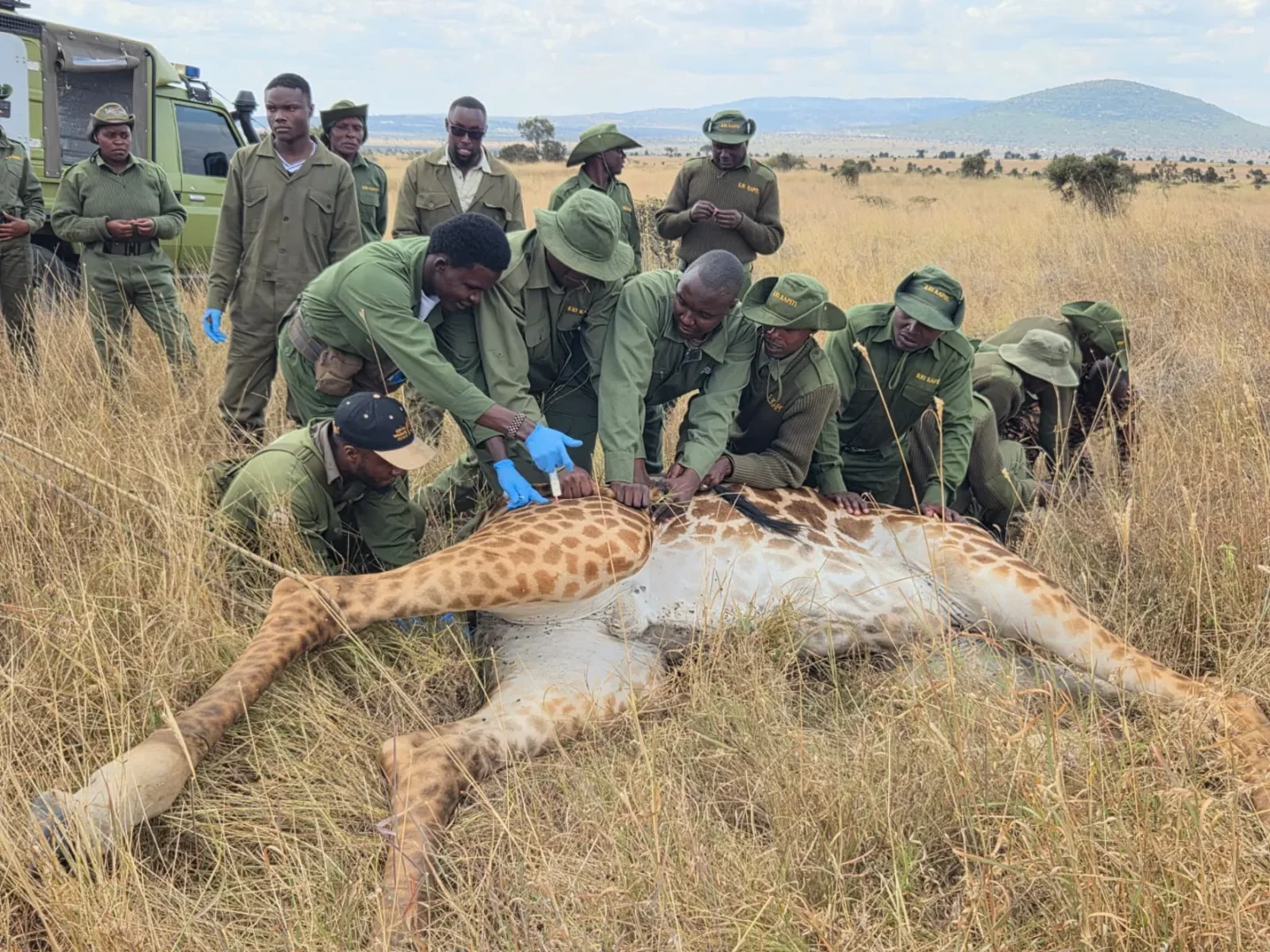
NAIROBI, Kenya — The Kenya Wildlife Service (KWS) has rescued an adult male Maasai giraffe found suffering from injuries caused by a wire snare at the International Livestock Research Institute (ILRI) Athi Kapiti Ranch, highlighting the continuing threat posed by illegal wildlife traps across the country.
In a statement issued on Tuesday, KWS said its Headquarters Veterinary Unit responded after receiving reports that the giraffe had a plain wire snare tightly wrapped around its right hind limb.
Veterinary officers successfully immobilised the animal, removed the snare and treated the wound before releasing it back into its habitat.
According to KWS, the giraffe is expected to make a full recovery.
“The team safely removed the wire snare, treated the injury and gave the animal a second chance. The prognosis for recovery is good,” the agency said.
Threat of snares remains a concern
Wildlife conservationists have long warned that wire snares remain one of the most persistent threats facing Kenya’s wildlife, particularly in areas bordering human settlements, livestock ranches and protected ecosystems.
Although often associated with bushmeat hunting and poaching, snares do not discriminate between target and non-target species. Animals caught in them frequently suffer deep wounds, infections, amputations and, in severe cases, death.
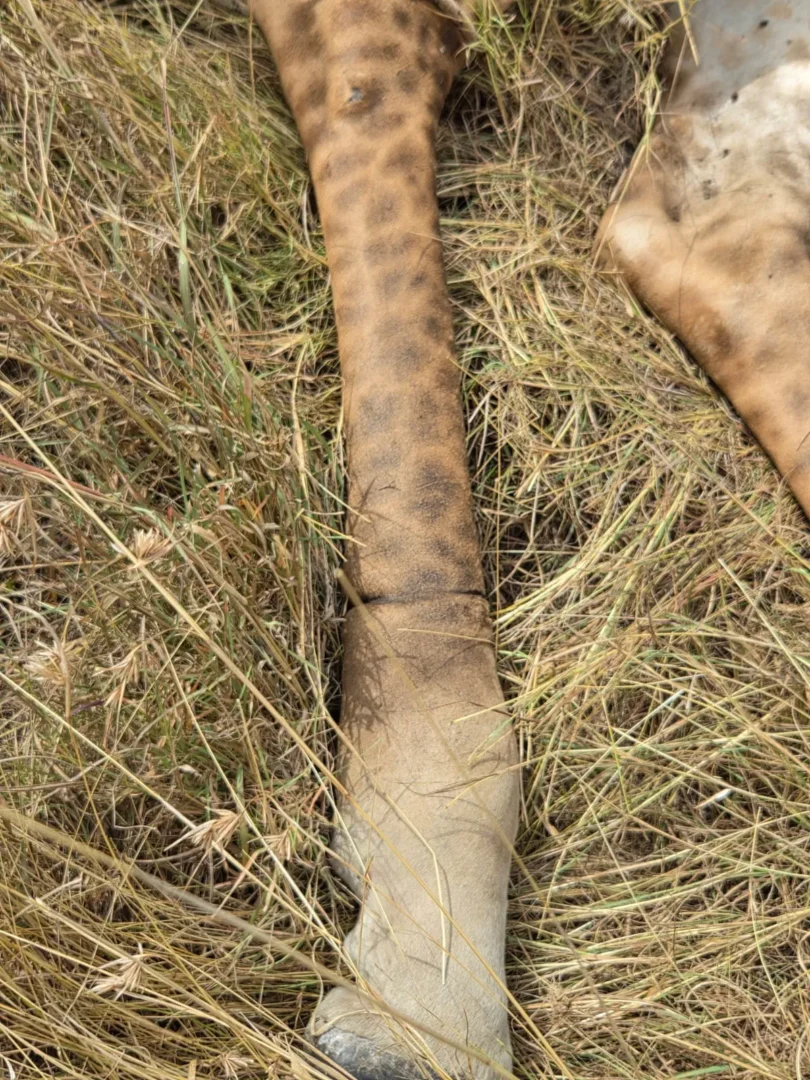
The Maasai giraffe (Giraffa camelopardalis tippelskirchi), Kenya’s most widespread giraffe subspecies, is among the species vulnerable to such injuries.
Conservation groups have noted that while anti-poaching efforts have helped reduce some forms of wildlife crime, illegal trapping remains a challenge because snares are inexpensive, easy to conceal and difficult to detect.
Role of KWS veterinary teams
KWS said the rescue demonstrates the critical work performed daily by its veterinary units, which respond to wildlife emergencies across the country.
The agency’s veterinarians regularly treat animals injured by snares, road accidents, human-wildlife conflict, poisoning incidents and other threats.
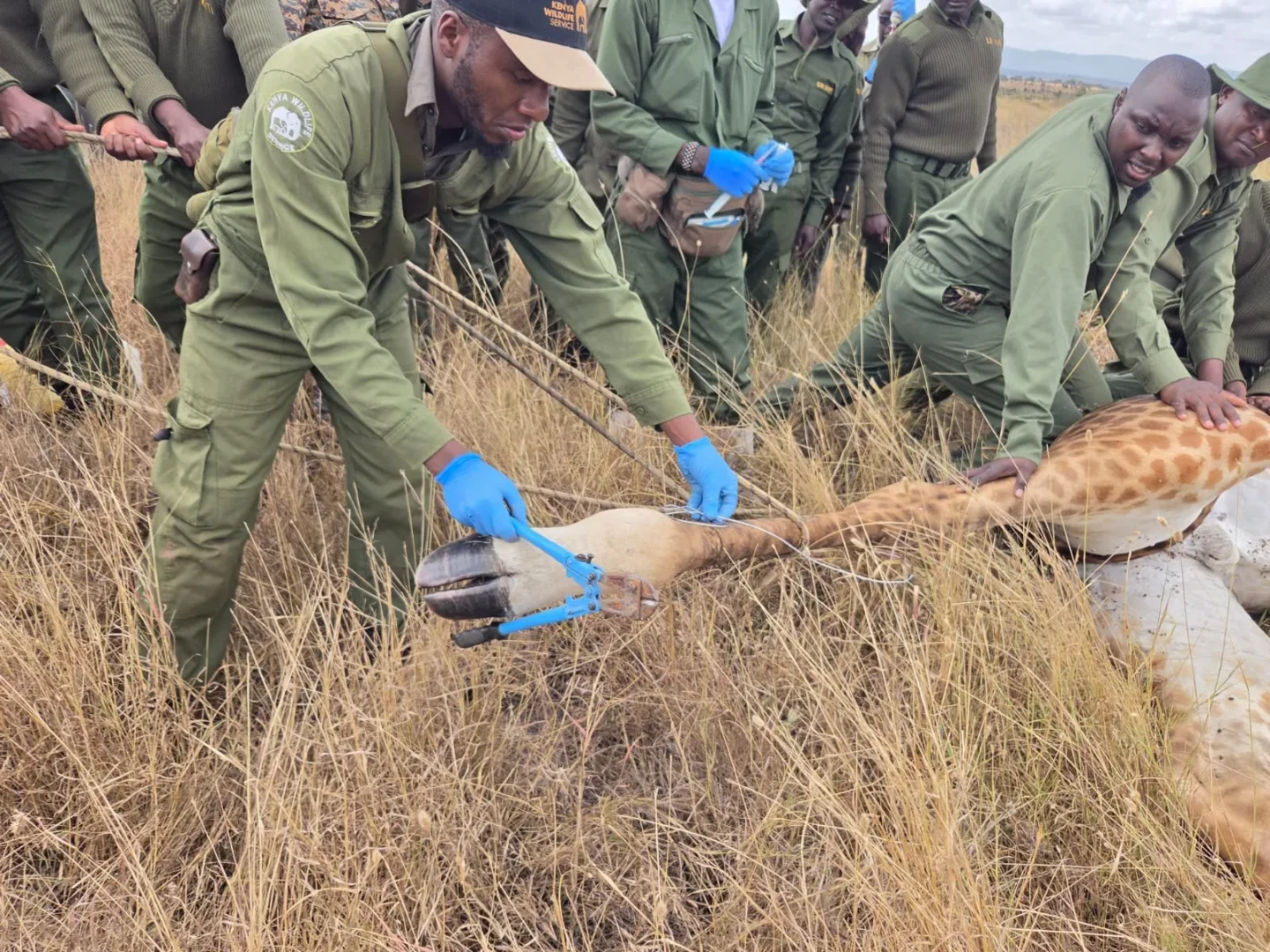
“This is what KWS veterinarians do every day. They work around the clock, responding to emergencies, treating injured wildlife and helping protect Kenya’s incredible biodiversity,” the agency said.
Kenya’s wildlife veterinary teams have increasingly relied on rapid response systems, community reporting networks and aerial surveillance to identify and rescue injured animals before their condition deteriorates.
Public urged to report wildlife crime
Following the rescue, KWS renewed calls for greater public participation in wildlife conservation and anti-poaching efforts.
The agency urged citizens to report suspicious activities involving wildlife, including the setting of snares, illegal hunting, trafficking of wildlife products and habitat destruction.
Also Read: Over 120 endangered vultures killed in South Africa poisoning incident
“If you witness or suspect wildlife crime, report it immediately,” KWS said.
Reports can be made through the agency’s 24-hour toll-free hotline, WhatsApp reporting channels or local KWS offices.
Protecting Kenya’s biodiversity
Kenya is home to some of Africa’s most iconic wildlife species and derives significant economic value from tourism and conservation.
Officials say protecting wildlife requires collaboration between conservation agencies, local communities, private ranches and research institutions such as ILRI.
The successful rescue at Athi Kapiti Ranch serves as a reminder that vigilance and timely intervention can save wildlife from preventable injuries and contribute to broader conservation goals.
“Together, let’s keep Kenya’s wildlife thriving for generations to come,” KWS said.
