


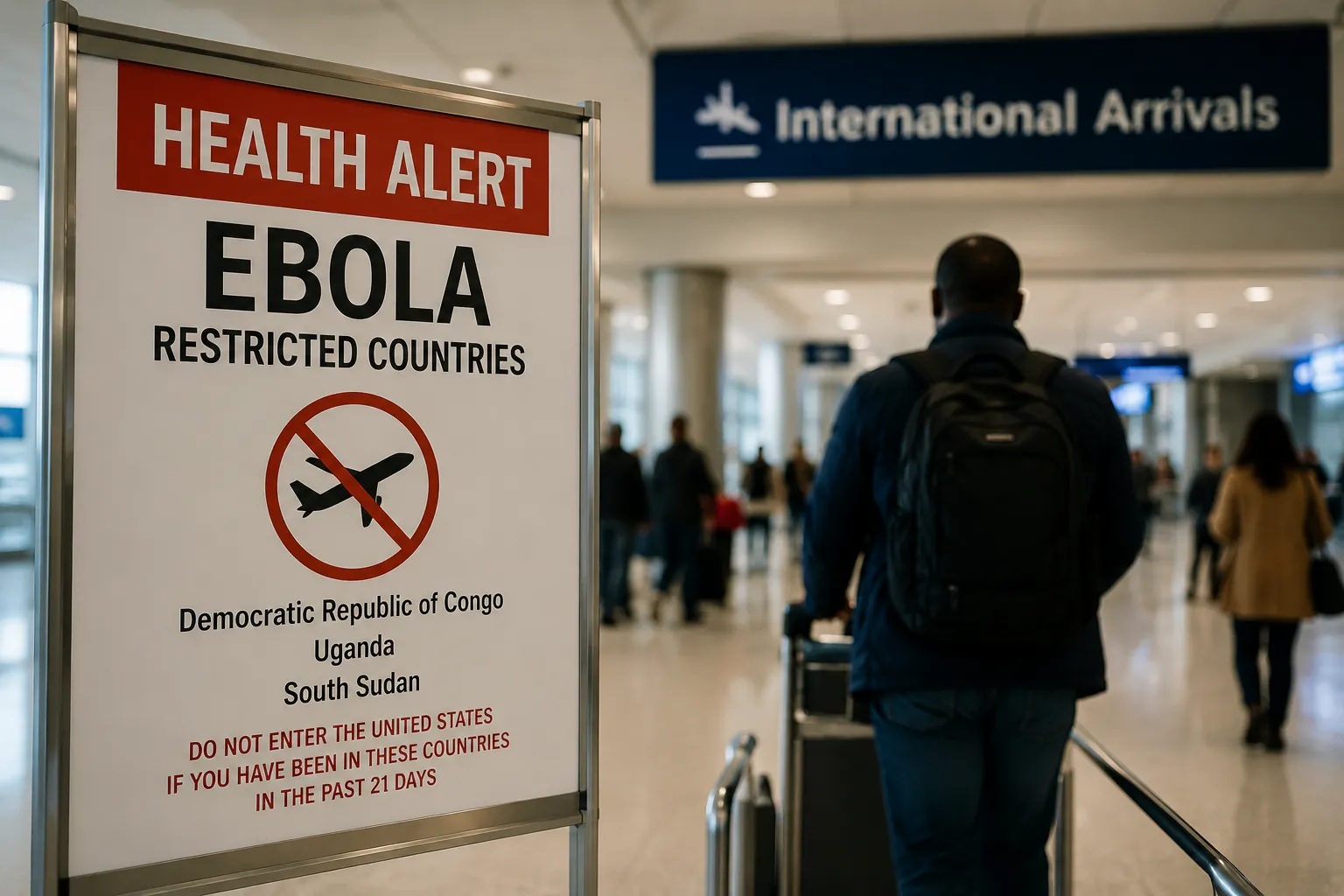
WASHINGTON, D.C., United States — The United States has introduced tighter boarding and entry measures for travellers with recent travel histories in the Democratic Republic of Congo (DRC), Uganda and South Sudan as authorities respond to the ongoing Ebola outbreak in the region.
The measures could affect Kenyan travellers heading to the United States if their itineraries include any of the affected countries.
Under updated guidance issued by the US Department of State, any traveller who has been in the DRC within 21 days of a planned flight to the United States will not be allowed to board a commercial flight bound for the US.
The restriction applies to both US citizens and foreign nationals.
It also covers passengers who transited through the DRC, including those who remained on the aircraft during a stopover.
The restrictions come as the DRC battles an expanding outbreak of Bundibugyo virus disease, an Ebola virus disease, which the World Health Organisation says has spread across multiple provinces and remains a major international public health concern.
What the new US rules mean for travellers
Travellers who have recently been in the DRC must remain outside the country for 21 days before boarding a commercial flight to the United States.
The requirement also applies where the DRC was only an intermediate stop on a multi-country itinerary.
The US government has warned that travellers connecting through third countries could face additional delays, flight disruptions or entry requirements imposed by airlines or transit countries.
This means a Kenyan traveller who has recently visited the DRC cannot necessarily bypass the restriction simply by travelling first to another country and then booking a US-bound flight.
Separate measures for Uganda and South Sudan
The United States has imposed different requirements on travellers with recent travel histories in Uganda and South Sudan.
Foreign nationals, including US lawful permanent residents and their eligible family members, who have been in Uganda or South Sudan must remain outside those countries for at least 21 days before boarding a flight to the United States.
US citizens and nationals who have recently been in Uganda or South Sudan—but have not been in the DRC—must enter the United States through one of four designated airports for enhanced health screening.
They are:
- Washington Dulles International Airport
- Hartsfield-Jackson Atlanta International Airport
- George Bush Intercontinental Airport in Houston
- John F. Kennedy International Airport in New York.
The measures therefore do not amount to a blanket travel ban on Uganda or South Sudan, but introduce additional requirements depending on a traveller’s nationality and recent travel history.
Ebola outbreak drives tighter controls
The US measures come against the backdrop of a rapidly expanding Ebola outbreak in the DRC.
According to the WHO’s latest detailed update, 4,665 confirmed cases and 2,184 deaths had been reported in the DRC by August 12, with cases detected across 54 health zones in six provinces. The organisation described the outbreak as the largest Ebola outbreak ever documented in the country.
Also Read: Seven US aid workers quarantined at Kenya’s Laikipia Ebola facility
Uganda has also been affected. WHO said the most recent imported case there was discharged from treatment on July 16, although the country remains at risk of reintroduction because of continued transmission in neighbouring DRC and cross-border movement.
The WHO has warned that the epidemic is spreading at unprecedented speed and that the risk of further national and international transmission remains high.
Kenyan travellers urged to check routes
For Kenyans planning to travel to the US, the restrictions make recent travel history and flight routing particularly important.
A traveller who has not visited the DRC, Uganda or South Sudan is not automatically affected simply because they are travelling from Kenya.
However, passengers should check whether their itinerary includes a stop in one of the affected countries and confirm their eligibility with their airline before travelling.
The US Department of State advises travellers to allow additional time for potential changes and to confirm flight arrangements in advance.
Travellers denied boarding because of the Ebola-related restrictions can contact the US government’s dedicated Ebola travel assistance address and provide their passport details, current location, denied flight information and recent travel history.
The latest US guidance was updated on August 22, 2026, and remains subject to change as the Ebola outbreak and public-health assessment evolve.
