


NANYUKI, Kenya — For months, the bio-isolation facility inside Kenya’s Laikipia Air Base existed largely as a political and legal controversy.
It was a project that generated protests, triggered court action and fuelled concerns among sections of the public who feared Kenya was being turned into a quarantine zone for foreign nationals during an Ebola outbreak unfolding hundreds of kilometres away in the Democratic Republic of Congo (DRC).
Then, just as the debate appeared to have faded into the background, the facility suddenly acquired its first occupants.
Seven American aid workers who had been involved in the Ebola response in eastern DRC are now undergoing a 21-day quarantine at the site in Nanyuki, according to information confirmed by Reuters and statements from US officials.
None of the seven has tested positive for Ebola. None has reportedly shown symptoms of the disease.
Yet their arrival has thrust the controversial facility back into the spotlight and reopened difficult questions about public health preparedness, international cooperation, national sovereignty and the politics of fear during disease outbreaks.
The episode is not simply about seven aid workers.
It is about how countries prepare for threats they hope never arrive.
A facility built for a crisis that had not yet come
When news first emerged that a US-supported bio-isolation facility was being established within the Laikipia Air Base complex, the reaction was immediate.
Civil society organisations questioned its legal basis.
Activists demanded greater transparency.
Residents and political leaders raised concerns about whether Kenya was being positioned as a quarantine hub for foreign nationals.
The issue became contentious enough to attract legal challenges.
The High Court later suspended operations at the facility pending the hearing and determination of a case filed by the Katiba Institute, one of Kenya’s leading constitutional litigation organisations.
For many Kenyans, the controversy appeared settled after Health Cabinet Secretary Aden Duale informed the court that activities at the site had been halted in compliance with judicial orders.
But behind the legal arguments sat a broader reality.
The Ebola outbreak in eastern Congo was worsening.
International health agencies were preparing for multiple scenarios.
And countries across the region were quietly strengthening their preparedness systems.
What few anticipated was that the Nanyuki facility would become operational again so soon—or that its first occupants would be Americans rather than Kenyan patients.
Why the Americans were moved to Kenya
According to Reuters, the seven Americans are members of Samaritan’s Purse, the Christian humanitarian organisation that has been involved in Ebola response operations in eastern Congo.
Franklin Graham, President and CEO of Samaritan’s Purse, told Reuters that the aid workers were being quarantined for 21 days despite not exhibiting symptoms.
“Samaritan’s Purse has seven American Disaster Assistance Response Team staff members there,” Graham said.
The quarantine appears to be precautionary rather than reactive.
A US State Department official told Reuters that the group had voluntarily relocated to the Kenyan facility after serving in Ebola response operations.
“Kenyan authorities have authorised their movement into the facility under the observation of the US Public Health Service clinicians,” the official said.
The official added that the decision had been taken “strictly out of an abundance of caution.”
That phrase—abundance of caution—has become familiar language in modern outbreak management.
Public health authorities often act before symptoms emerge because diseases such as Ebola can spread rapidly once transmission begins.
The shadow of a growing outbreak
The quarantine cannot be separated from developments across the border in the Democratic Republic of Congo.
The current Ebola outbreak has become one of the most closely watched public health emergencies in Africa.
Health authorities in neighbouring countries have intensified surveillance, expanded screening at border points and activated emergency preparedness systems.
Kenya has repeatedly stressed that no active Ebola outbreak exists within its borders.
Nevertheless, the country’s position as a regional transport and commercial hub makes preparedness particularly important.
A traveller leaving eastern Congo can reach major East African cities within hours.
That reality explains why governments increasingly view preparedness as a regional rather than purely national responsibility.
The challenge is that preparedness measures often become politically controversial precisely because they are designed for events that may never happen.
Why Nanyuki became so controversial
The opposition to the facility was never solely about Ebola.
It reflected broader anxieties about transparency and public trust.
Many critics argued that details surrounding the facility’s establishment emerged only after construction had already begun.
Others questioned why a foreign-supported isolation centre was being established inside a military installation.
The secrecy surrounding military facilities amplified speculation.
Public health experts note that trust becomes one of the most valuable commodities during outbreaks.
When information gaps emerge, fear often fills the vacuum.
That pattern has been observed repeatedly around the world—from Ebola outbreaks in West Africa to the COVID-19 pandemic.
The Nanyuki debate demonstrated how quickly public health planning can become politically charged when communities feel excluded from decision-making.
The bigger question: What is the facility actually for?
The arrival of the seven aid workers may offer the clearest answer yet.
Contrary to some public fears, the facility does not appear to be operating as an Ebola treatment centre.
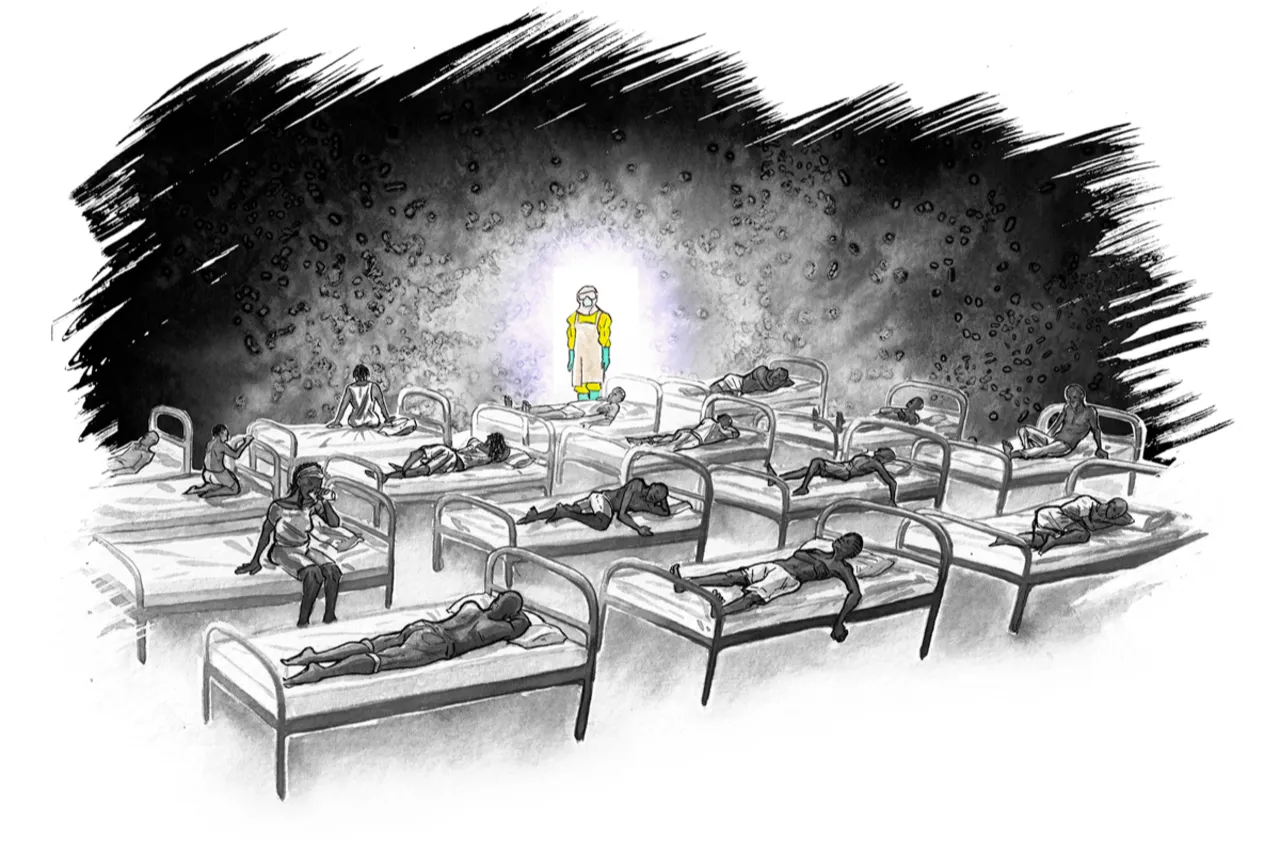
Instead, it is functioning as a monitoring and isolation site for asymptomatic individuals who may have been exposed to risk during outbreak response operations.
That distinction matters.
Treatment facilities manage active cases.
Isolation facilities monitor individuals during incubation periods before symptoms appear.
Health experts often describe such facilities as a buffer designed to prevent potential transmission while avoiding unnecessary strain on national health systems.
The US Embassy has repeatedly argued that the facility strengthens rather than weakens Kenya’s preparedness.
Also Read: Why Kenya’s proposed Ebola quarantine facility is a strategic necessity, not a threat
“Beyond Laikipia, we are working with Kenya to enhance border detection, provide accurate testing, and bolster the response in high-risk counties,” the Embassy said in a recent statement.
The Embassy further argued that expanding regional isolation and testing capacity helps preserve existing clinical resources for Kenyan citizens.
A growing American investment in Kenya’s preparedness
The quarantine operation is unfolding against a backdrop of expanding American support for Kenya’s Ebola preparedness efforts.
According to the US Embassy, Washington has committed approximately KSh 1.9 billion toward strengthening Kenya’s ability to prevent, detect and respond to potential Ebola outbreaks.
The funding supports disease surveillance systems, laboratory capacity, border screening, emergency operations centres, rapid response teams and healthcare worker training.
The assistance also extends to outbreak investigations, contact tracing, risk communication and community engagement.
Such investments reflect a growing recognition among global health agencies that outbreak containment is often most effective before cases appear.
As the COVID-19 pandemic demonstrated, disease preparedness is increasingly viewed as a matter of international security as much as public health.
Between preparedness and public anxiety
The arrival of the seven Americans places Kenya at the intersection of two competing realities.
The first is the logic of modern disease control, which emphasises early intervention, precautionary isolation and regional cooperation.
The second is the understandable public anxiety that emerges whenever infectious diseases, foreign governments and military facilities converge in the same story.
Both realities are influencing the conversation.
For health officials, the quarantine demonstrates preparedness systems functioning as intended.
For sceptics, it raises fresh questions about oversight, transparency and accountability.
Neither side is likely to disappear soon.
More than seven people in quarantine
At one level, this is a story about seven aid workers spending three weeks under observation.
At another, it is a story about how countries prepare for threats that rarely respect borders.
The Nanyuki facility was built for a moment like this—a moment when exposure risk exists but infection has not been confirmed, when caution competes with public concern, and when governments must balance preparedness with public confidence.
Whether the facility ultimately becomes a model of regional health security or remains a source of controversy may depend less on the seven Americans currently inside it than on how openly authorities communicate with the public outside its gates.
Because in public health emergencies, trust can be just as important as medicine.
