


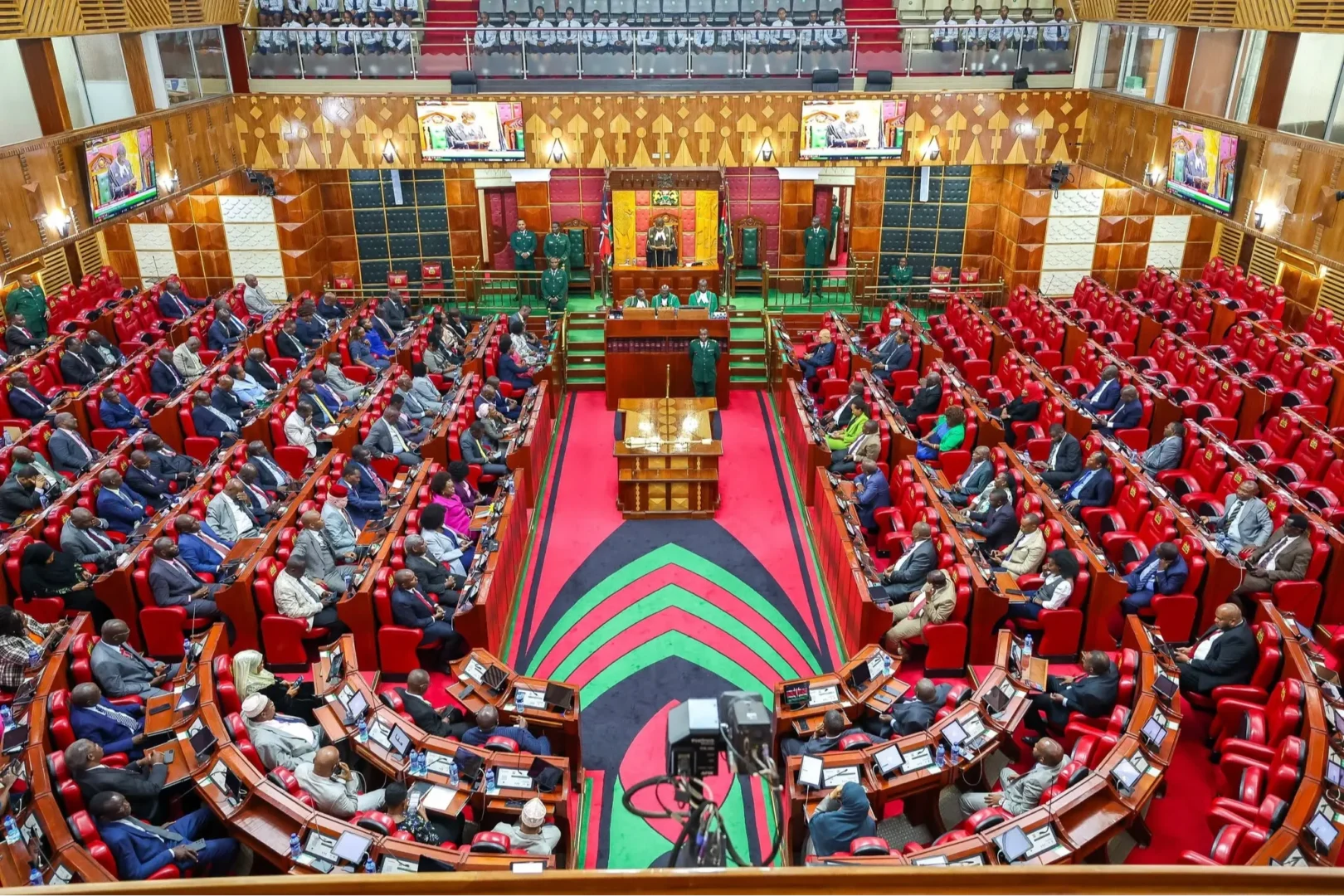
NAIROBI, Kenya — National Assembly Speaker Moses Wetang’ula has disclosed how a Member of Parliament (MP) was allegedly caught on CCTV taking a colleague’s mobile phone during a heated confrontation in Parliament, only to deny the incident when summoned and shown the footage.
The Speaker narrated the incident on Tuesday, November 24, 2026, while addressing lawmakers in the National Assembly, using the episode to challenge MPs to demonstrate honesty, integrity and respect for the institution they represent.
According to Wetang’ula, the incident happened during a period of heightened political divisions in the House, when disagreements between lawmakers had escalated and tempers were running high.
He said surveillance footage was retrieved and taken to his office, where he reviewed the recordings alongside Majority Leader Kimani Ichung’wah and one or two other legislators.
What they allegedly witnessed, according to the Speaker, was one MP taking another member’s mobile phone and slipping it into his pocket.
The lawmaker was subsequently summoned and confronted with the footage. However, Wetang’ula said the member denied taking the phone even after being shown the CCTV recording.
The Speaker declined to disclose the legislator’s identity, instead saying he left the matter to the individual’s conscience.
“I want to encourage you members to be men and women of honour. If you are the one doing an undeserving behaviour in the House, I can tell you there was an altercation between members here in this House then when the House was still split top bottom, and the passions were high,” Wetang’ula told MPs.
He continued: “We actually saw a member pocket the phone of another member, and we called him. And he denied it completely, even as he could see himself pocketing the phone on CCTV.”
Wetang’ula said he eventually advised the legislator to reflect on his conduct rather than publicly expose him.
“I told him to go and wrestle with his conscience for the rest of this term because there are certain things that are not expected of us,” he added.
The account offered a glimpse into an earlier confrontation among lawmakers and raised questions about personal responsibility and the standards of conduct expected from elected representatives.
Wetang’ula challenges MPs over integrity and parliamentary conduct
Beyond recounting the incident, Wetang’ula used the opportunity to remind MPs that their positions carry obligations that extend beyond political competition and parliamentary debates.
He warned that conduct inconsistent with the dignity of Parliament could undermine public confidence in the National Assembly, particularly when lawmakers fail to demonstrate the integrity expected of people entrusted with public authority.
His remarks also highlighted the role of parliamentary surveillance systems in examining incidents involving members, particularly where competing accounts emerge over what happened.
The Speaker’s decision not to identify the legislator means the individual cannot be independently questioned over the allegation from the information provided.
Nevertheless, his account placed the issue of honesty at the centre of parliamentary accountability, suggesting that integrity should be demonstrated even when misconduct is not publicly exposed.
Previous confrontations raise questions about MPs’ conduct
Wetang’ula’s latest warning comes against a background of previous incidents involving confrontations and misconduct within Parliament.
In April 2025, the Speaker condemned a physical altercation involving nominated MP Umulkher Harun Mohamed and East African Legislative Assembly legislator Falhada Iman Dekow within Parliament precincts.
Footage of the confrontation circulated widely online, showing the two legislators pushing and wrestling as people nearby attempted to separate them.
Wetang’ula described the incident as undignified and called on the legislators to account for their conduct.
He also raised concerns about the recording and circulation of the footage, warning that unauthorised recording within parliamentary premises could attract consequences.
The incident renewed debate about discipline within Parliament and whether elected representatives were setting an appropriate example for the public.
In August 2025, Wetang’ula again urged lawmakers to uphold integrity and avoid behaviour that could damage the institution’s reputation.
He invoked Article 73 of the Constitution, which establishes that authority assigned to State officers is a public trust and must be exercised in a manner that demonstrates respect for the people, promotes integrity and ensures accountability.
Also Read: DCI busts suspected stolen phone syndicate in Runda, two arrested
The constitutional provision further requires State officers to demonstrate objectivity and impartiality in decision-making and to avoid practices that undermine public confidence in their offices.
Parliament’s own ethical framework also places obligations on members to uphold the dignity of their positions and conduct themselves in a manner that reflects the responsibilities of public office.
Why the Speaker’s warning matters
The latest revelation raises a broader question about the standards of accountability expected of Kenya’s elected representatives.
Members of Parliament are entrusted with making laws, scrutinising government expenditure and representing the interests of their constituents. Their conduct within parliamentary precincts is therefore not merely a matter of personal behaviour but also one of institutional credibility.
The Constitution’s public-trust principle makes integrity and accountability central to the exercise of public authority.
Wetang’ula’s account also illustrates how surveillance technology can help establish what happened during disputes, although CCTV footage alone does not replace formal disciplinary procedures or an opportunity for an accused person to respond.
By declining to name the legislator, the Speaker avoided turning his account into a public identification exercise. However, the incident leaves unanswered questions about whether any formal disciplinary action was considered and whether the alleged conduct was reported to the relevant parliamentary authorities.
As Parliament continues to face scrutiny over the behaviour of its members, Wetang’ula’s message was that elected leaders must demonstrate the integrity they expect from the institutions they oversee.
His warning was particularly pointed: public office demands honesty not only when lawmakers are being watched, but also when they are confronted with evidence of their own actions.
