


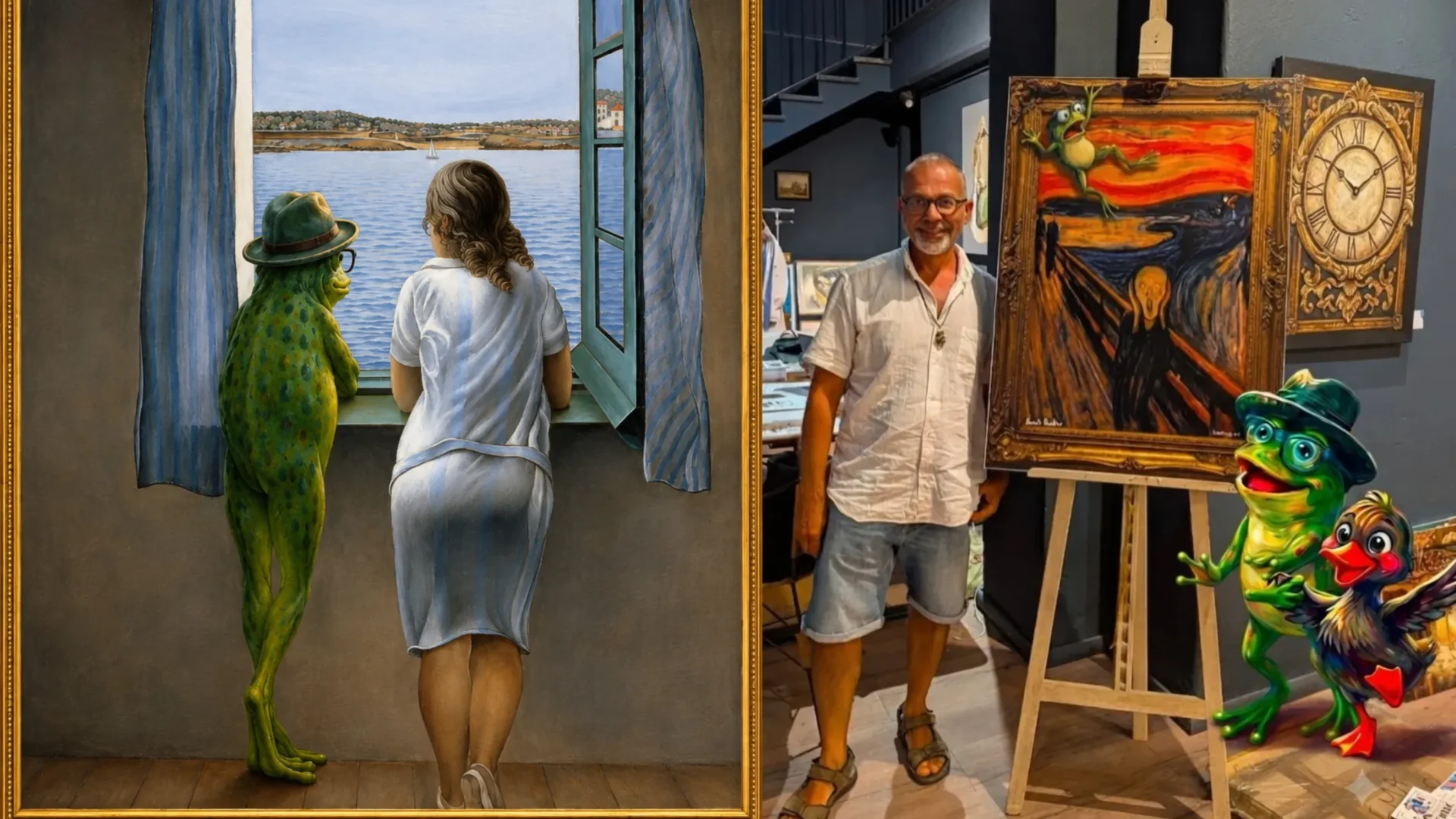
MASSA, Italy — An Italian artist’s experiment with a green frog, a shy duckling and some of the world’s most recognised paintings has grown into an online creative community of thousands, offering an unconventional way to introduce art history to wider audiences.
Renato Basteri, a visual artist, scenographer and educator based in Massa, Tuscany, says his Instagram project, VANFROG.ART, has grown from roughly 200 followers to 9,000 in about six months. Over a recent 30-day period, the page attracted more than 160,000 views, according to figures shared by the artist.
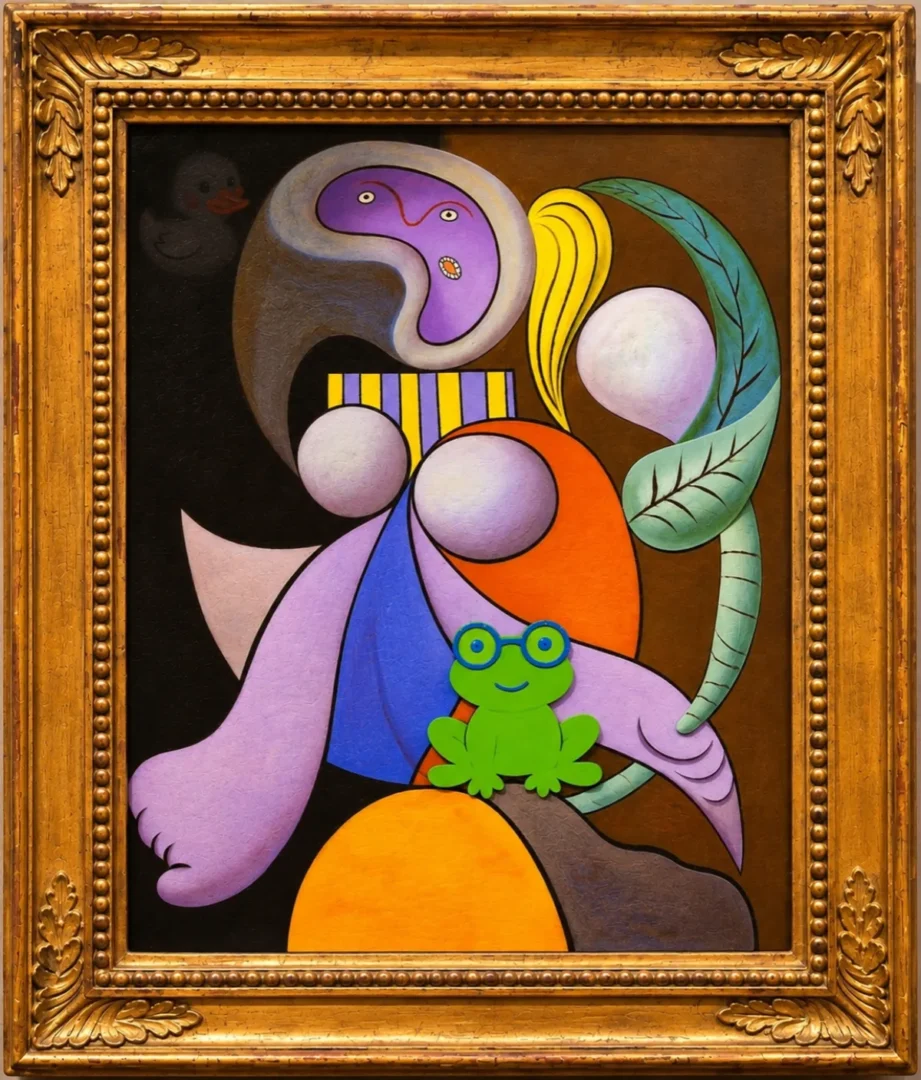
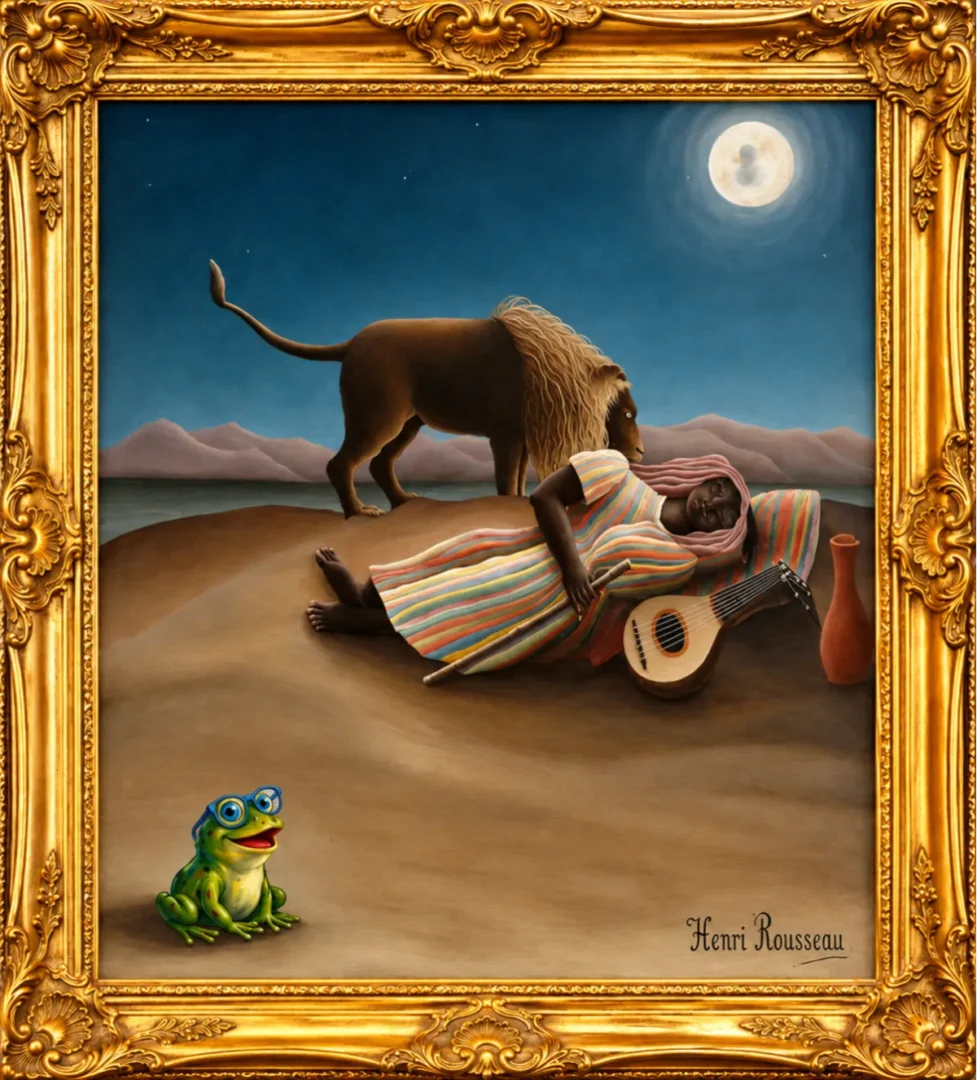
Behind the growth is an idea built around two fictional characters: René, a green frog with blue eyes and distinctive blue glasses, and Julie, a small, shy, dark-grey duckling who hides within famous paintings.
Their daily adventures have turned art appreciation into an interactive guessing game, encouraging followers to look closely at paintings while discovering the artists, techniques and historical stories behind them.
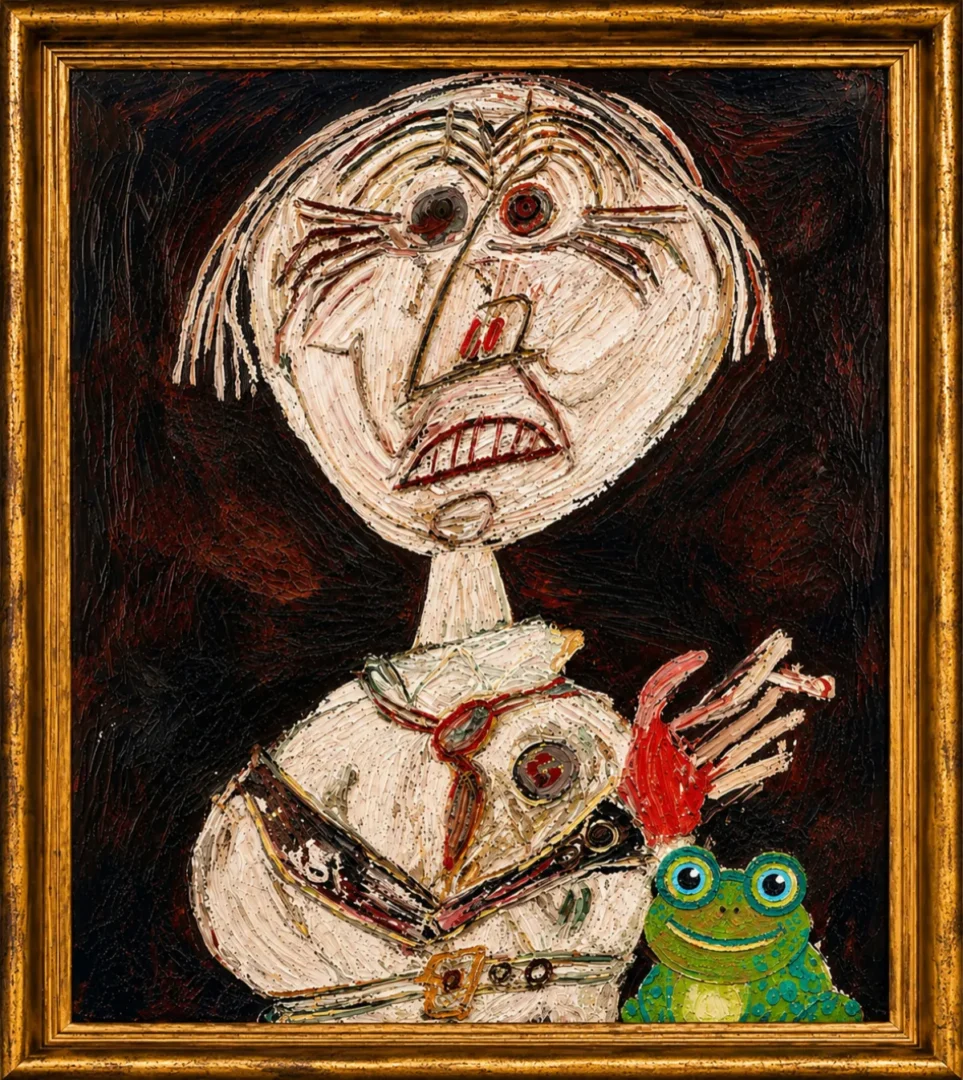
For Basteri, reaching the 9,000-follower milestone on November 21, 2026, represents more than social media traction. It reflects his ambition to make art history accessible through storytelling, humour, audience participation and artificial intelligence.
From theatre and scenography to digital art
Basteri’s creative journey began long before René and Julie appeared on Instagram. He graduated with honours—achieving 110/110 cum laude—in Scenography from the Academy of Fine Arts in Carrara, Italy, building a career spanning drawing, painting, large-scale scenic design and artistic decoration.
Before developing VANFROG.ART, he created artistic decorations for international cruise ships, built monumental carnival floats in Viareggio, and produced theatrical masks and props for opera productions alongside practical art workshops.
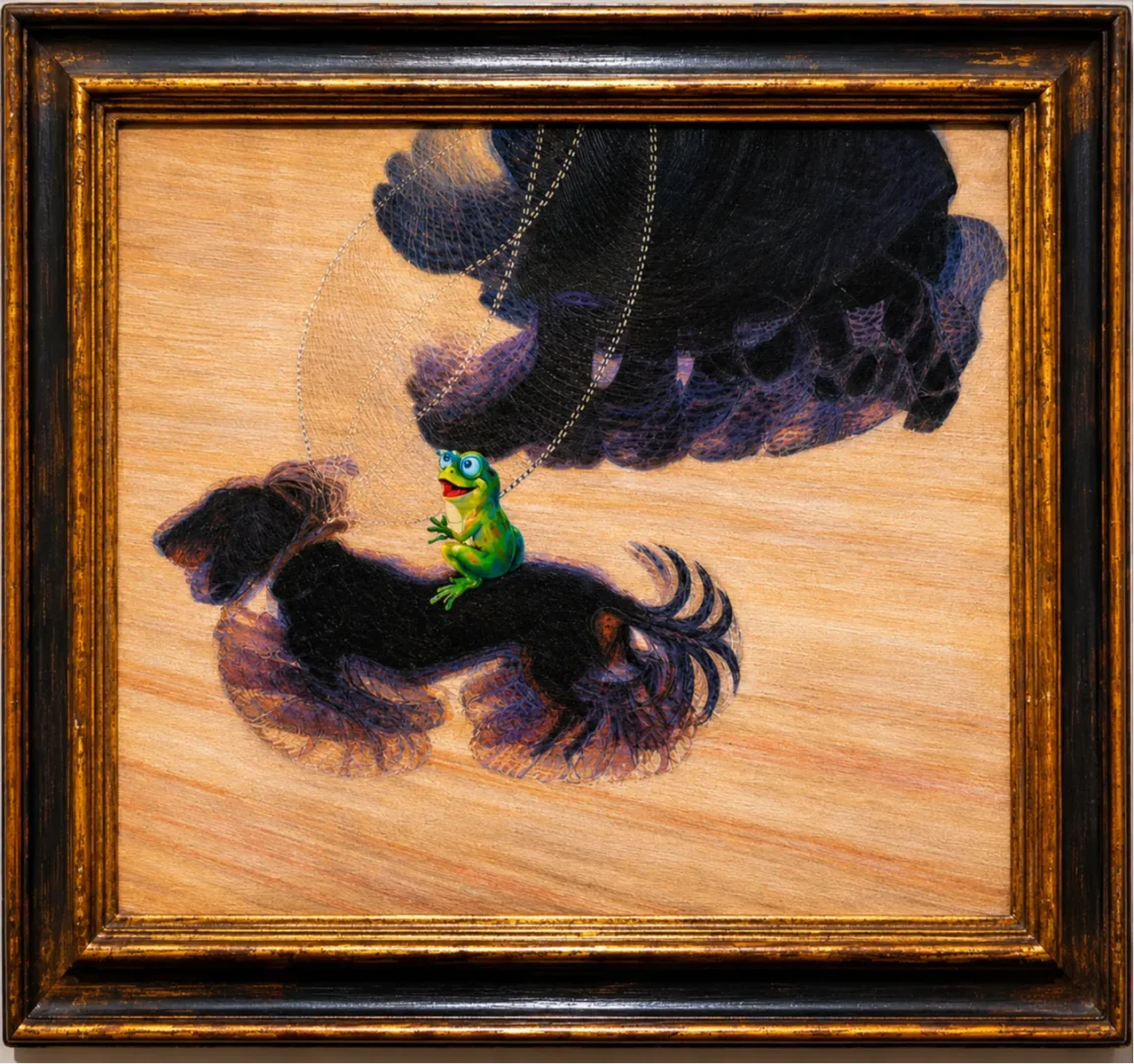
Those experiences shaped his understanding of how visual storytelling draws people into an imagined world. That same philosophy now informs VANFROG.ART: rather than presenting famous paintings as distant museum objects, Basteri introduces an element of play that invites viewers to step inside the frame.
A frog, a duckling and an unusual art adventure
The concept centres on one simple question: where is Julie hiding today?
Each day, Basteri selects a historical painting and develops a new AI-assisted visual interpretation featuring the duo. René sometimes appears inside the artwork, reacting to the emotions and scenes depicted in the original piece.
In other instalments, he steps outside the picture frame to search for Julie, who may be concealed within a vase, a shadow, or a decorative detail.
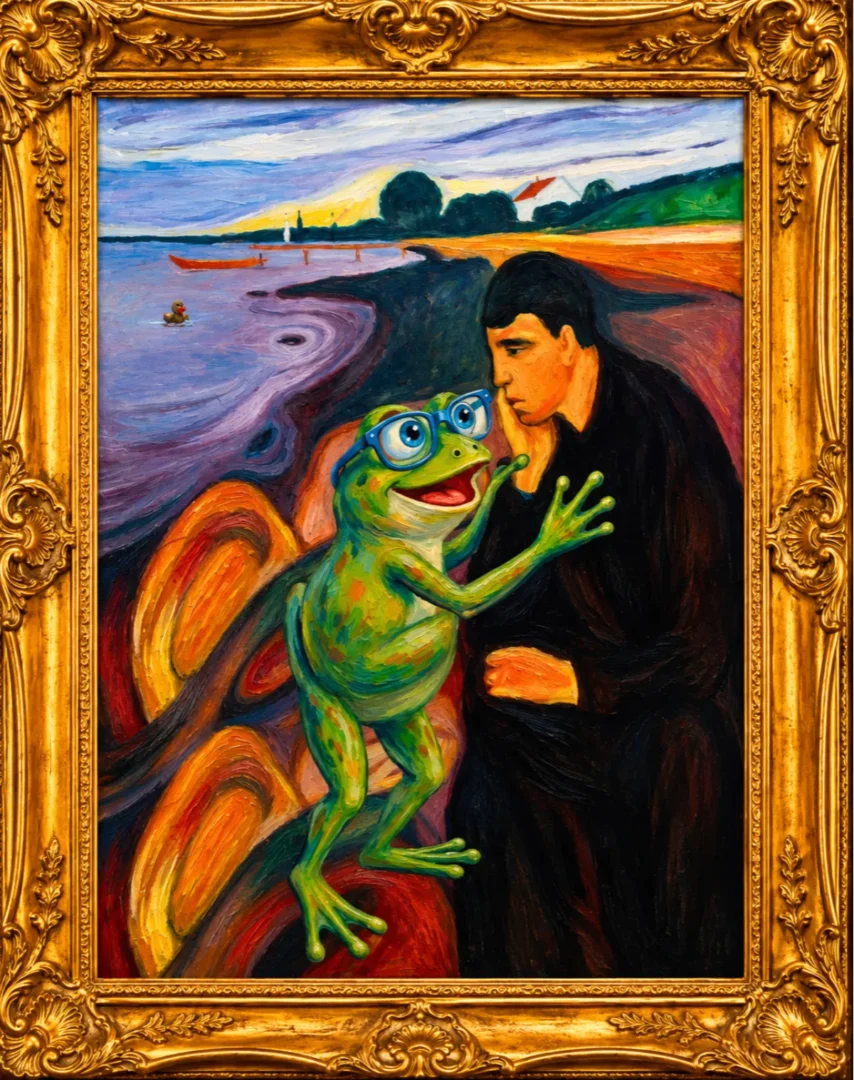
Followers are invited to spot the duckling’s hiding place, and the first person to answer correctly gets to choose between two paintings for the next day’s post.
The format transforms passive scrolling into active participation, giving the audience a direct hand in shaping what comes next.
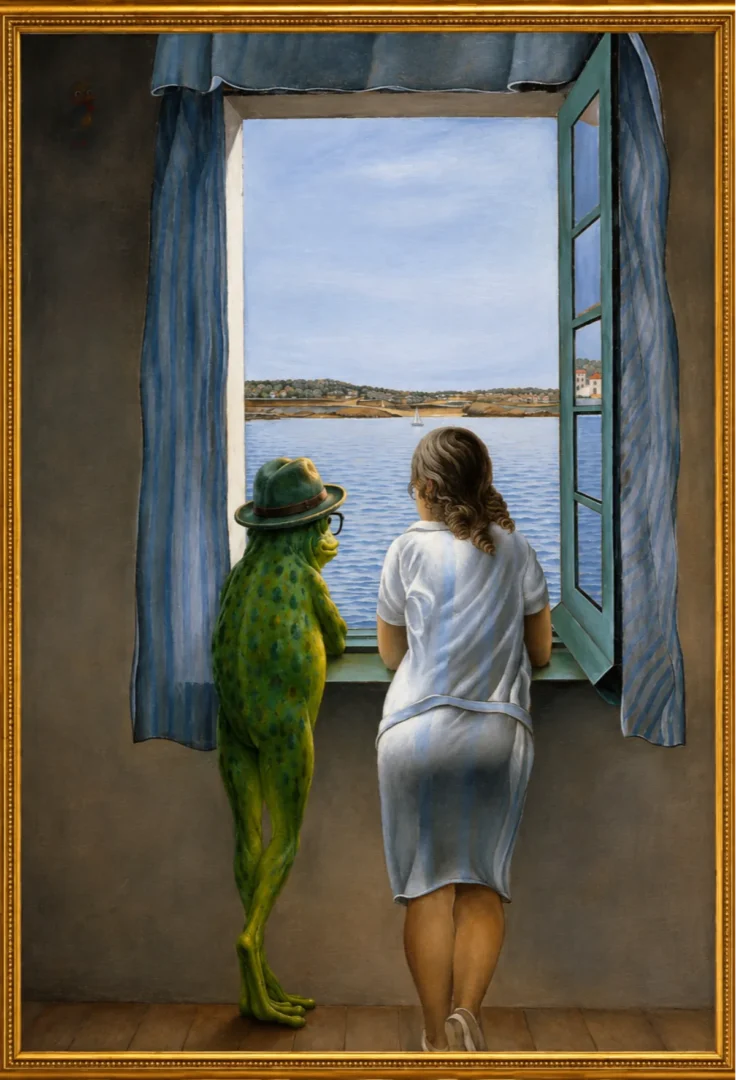
“People might start out simply looking for a tiny duckling hidden in the corner of a canvas,” Basteri explains. “By the time they find her, they have spent minutes studying the brushstrokes, the lighting and the expressions of figures they might otherwise have scrolled right past.”
Bringing classical paintings into the digital age
Basteri’s project draws on a wide range of artistic movements, exploring works associated with Italian Futurist Giacomo Balla, French painter Henri Rousseau, Norwegian expressionist Edvard Munch and Russian abstract artist Wassily Kandinsky.
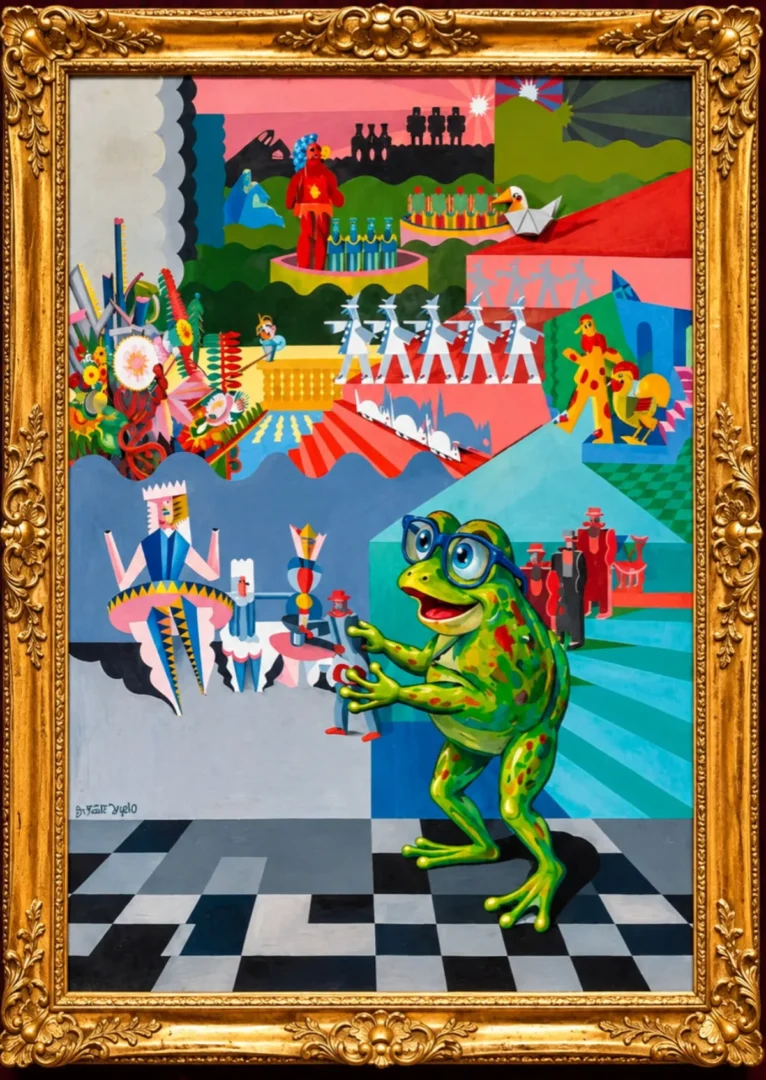
To give the project depth beyond the daily game, Basteri also shares short educational videos in a recurring feature called The Professor’s Corner. In these clips, he introduces the artists behind the featured paintings, discusses their techniques and historical periods, and highlights hidden details in the works.
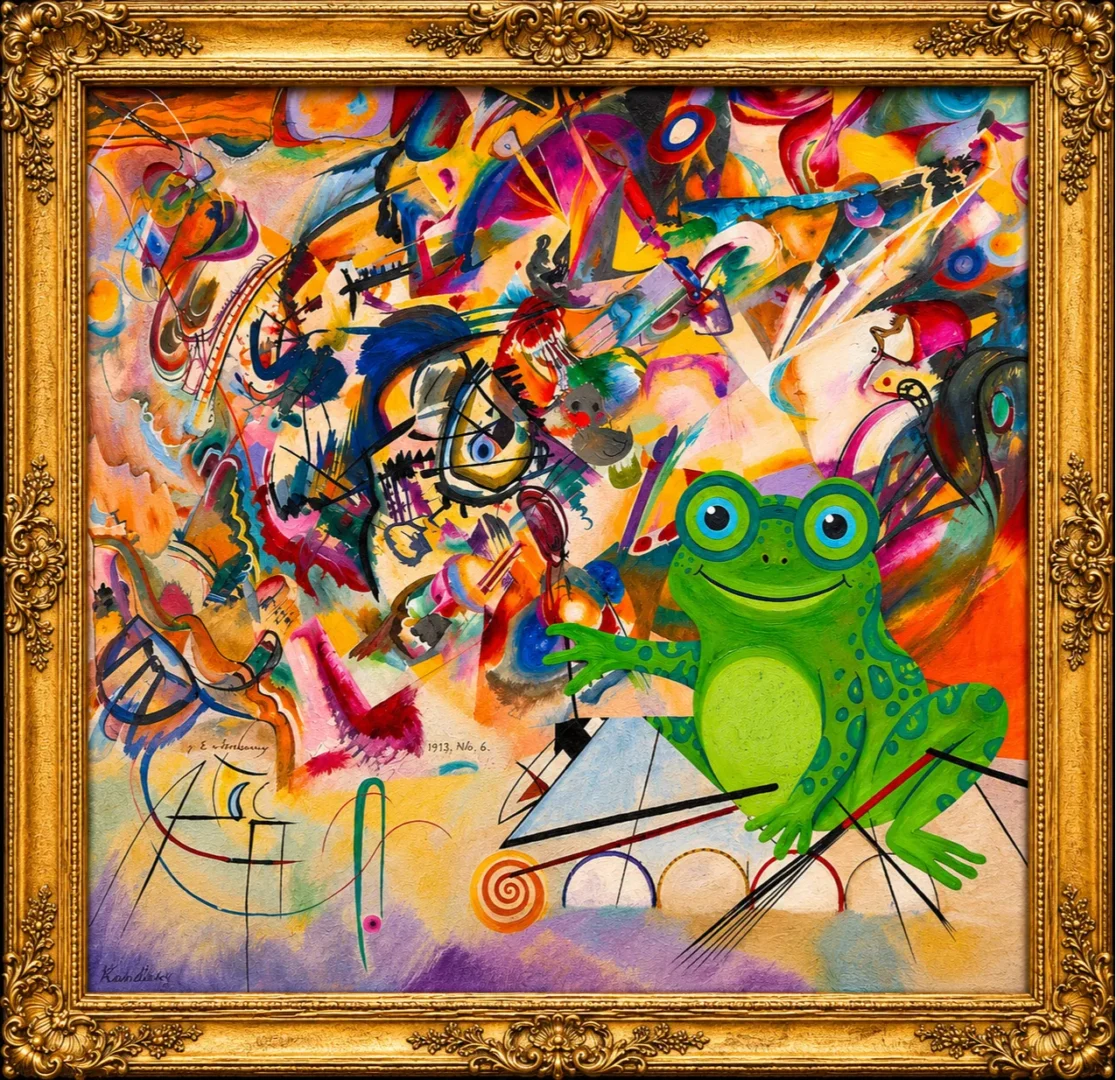
Basteri stresses that the original masterpieces remain the heart of the project. His AI-assisted scenes are contemporary interpretations designed to spark curiosity about the source material, rather than replace the original artists’ work.
Teaching, inclusion and the role of artificial intelligence
Away from social media, Basteri works as a support teacher at Istituto Comprensivo Alfieri Bertagnini in Massa, developing creative activities for lower-secondary-school pupils. His work in inclusive education has reinforced his belief that artistic expression should be open to learners of all abilities and backgrounds.
In his workshops, pupils combine drawing, painting, papier-mâché and creative reuse with guided experimentation in artificial intelligence.
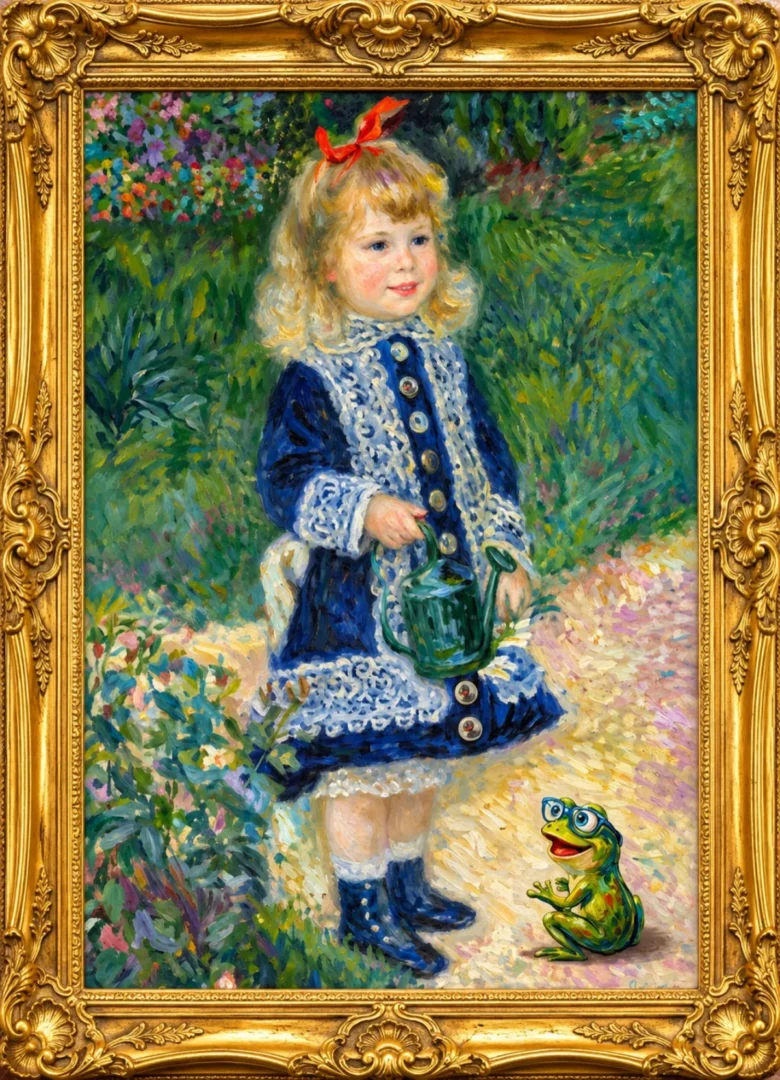
Crucially, every exercise begins with traditional materials: pupils create their own physical drawings first, then photograph them to experiment with digital tools—comparing how platforms like ChatGPT and Gemini interpret their prompts.
“Artificial intelligence should never replace a student’s imagination or the tactile joy of putting pencil to paper,” Basteri says. “Technology comes in only after they have developed their own original idea, helping them question, compare and make creative decisions.”
From an online community to international exposure
The momentum behind VANFROG.ART has increasingly carried the project beyond Instagram. Basteri says his work has been featured on a public digital billboard in New York’s Times Square, as well as in international art presentations in Milan, Tokyo, London and Amsterdam, with further exhibition opportunities lined up in Madrid and Paris.
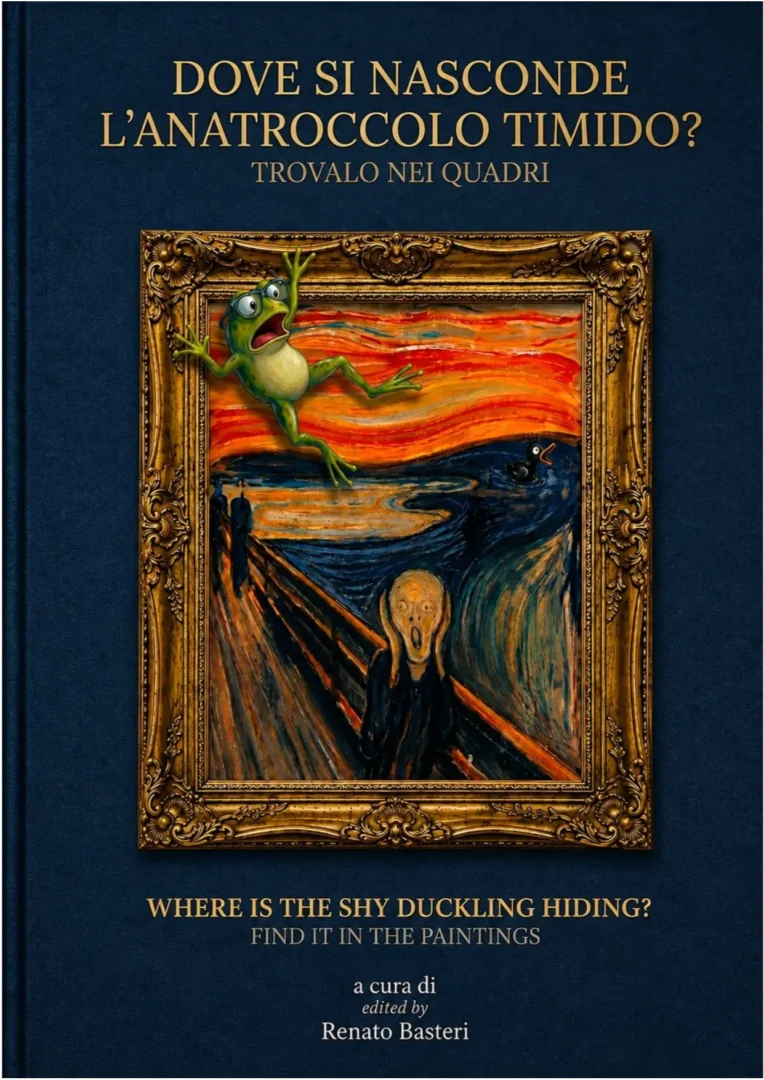
The concept has also expanded into print through a bilingual Italian-English book, Dove si nasconde l’anatroccolo timido? Trovalo nei quadri / Where Is the Shy Duckling Hiding? Find It in the Paintings, allowing readers to search for Julie inside classic artworks away from a screen.
Why the project is about more than follower numbers
Reaching 9,000 followers marks a clear milestone for a project that began just six months ago, yet Basteri measures its success by the daily conversations unfolding in his comment sections rather than analytics alone.
By blending traditional theatrical storytelling with modern digital tools, he has built a space where art history feels approachable rather than intimidating.
For Basteri, the real achievement is not the follower count—it is the possibility that someone, especially a young person who once thought art was not for them, might pause, look closely at a painting, and discover something unexpected.
