


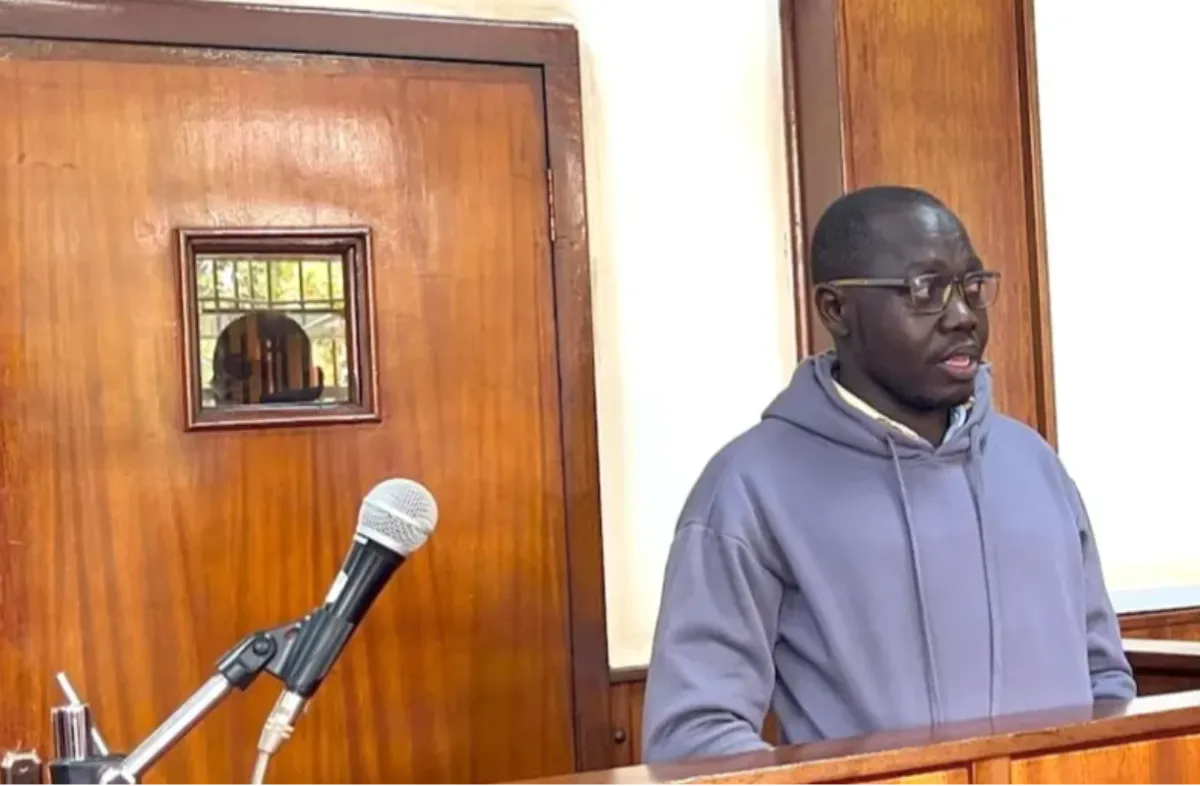
KAMPALA, Uganda — Daily Express journalist Remmy Asiteza has been remanded to Luzira Prison after being charged with allegedly publishing fake news and operating an online broadcasting service without a licence.
Asiteza, 32, appeared before Buganda Road Chief Magistrate Ritah Neumbe Kidasa on Thursday, August 20, after spending several days in police custody at Kampala Central Police Station. He denied both charges.
The case centres on a story published on the Daily Express website in July concerning an alleged investigation into the recruitment of assistant Resident District Commissioners (RDCs).
According to the charge sheet, Asiteza and others still at large published the story between July 7 and 8, 2026, under the headline: “Museveni Orders ISO Probe into Billions Swindled Under Assistant RDCs Recruitment Scheme.”
Prosecutors allege that the article contained false claims portraying Minister for the Presidency Milly Babalanda as corrupt and linking her to a scandal involving the recruitment of assistant RDCs.
The prosecution has not established those allegations as facts; they form the basis of the charge against the journalist.
Chief State Attorney Joan Keko told the court that investigations were still under way and asked for more time.
The magistrate subsequently ordered Asiteza to remain in custody at Luzira. He is expected to return to court on September 9 for further proceedings, including consideration of his bail application.
The second charge
Asiteza faces a separate allegation concerning the operation of the Daily Express website.
Prosecutors allege that he and others operated a broadcasting service through the website without a licence issued by the Uganda Communications Commission (UCC).
The charge is brought under Section 28(1) and (2) of the Uganda Communications Act, according to the charge sheet reported in court.
The alleged publication offence, meanwhile, has been brought under Regulation 110(e) of the Uganda Communications (Licensing) Regulations, Statutory Instrument No. 95 of 2019.
The case therefore raises two related but distinct questions: whether the published information amounted to an offence under Uganda’s communications laws, and whether an online news platform such as Daily Express requires a broadcasting licence for the activities alleged by the prosecution.
Those questions will ultimately have to be determined through the judicial process.
A journalist behind a growing digital news operation
Asiteza is listed as a reporter and editor at Daily Express, where his published work includes national affairs, government policy and public-interest stories. His author profile shows extensive reporting for the Ugandan digital publication.
The story that triggered the current case was itself published on July 7, according to the Daily Express website.
The publication remains listed among the outlet’s articles, with Asiteza identified as the author.
The prosecution’s allegation that the article was false is therefore now a matter before court rather than an established finding against the journalist.
That distinction is particularly important in cases involving journalists, where allegations concerning the accuracy of published material can have consequences for both the individual journalist and the wider media organisation.
The wider legal pressure on Uganda’s digital media
Asiteza’s case comes against a backdrop of increasing legal scrutiny of online broadcasting and social-media publishing in Uganda.
In recent months, journalists and online commentators have faced criminal and civil proceedings over material published on digital platforms.
One prominent case involves journalist and TikTok commentator Dean Lubowa Saava.
In February 2026, Lubowa was convicted by the Makindye Chief Magistrate’s Court on charges including operating an online television broadcasting apparatus without a UCC licence and disobeying lawful orders.
Following a plea bargain, he was fined a combined Shs4 million on three counts, with a default prison sentence of six months. He also forfeited 45 pieces of broadcasting equipment seized from the TV10 Gano Mazima offices and studio in Lungujja, Kampala.
The legal consequences did not end there.
In June, the High Court ordered Lubowa to pay Shs100 million in general damages to Deputy Inspector General of Government Anne Twinomugisha Muhairwe after finding that statements published on his TikTok platform were defamatory.
Justice Joyce Kavuma ruled that the publications falsely portrayed Muhairwe as corrupt and unfit to hold public office. The court also issued a permanent injunction against further defamatory publications and ordered Lubowa to issue a public apology.
Another journalist case
Asiteza’s prosecution also follows the case of journalist Arnold Anthony Mukose, who was arraigned in April over allegations linked to material published on the Alternative Digital Channel.
Mukose was charged with offences including broadcasting fake news and sending false distress signals.
Prosecutors alleged that material published between January and March 2026 falsely reported that First Lady Janet Kataha Museveni had died.
Also Read: Ugandan journalist Timothy Kalyegira remanded over operating illegal online platforms
The case attracted additional attention because Mukose had previously been among petitioners challenging provisions of Uganda’s Computer Misuse Act, 2022.
The Constitutional Court subsequently nullified several provisions of the legislation, prompting the Attorney General to advise security agencies and prosecutors against continuing to charge suspects under provisions that had been struck down.
Why the Asiteza case matters
The proceedings against Asiteza are significant beyond the individual journalist.
Uganda’s media environment has increasingly expanded beyond traditional newspapers, radio and television stations to websites, livestreaming platforms, TikTok channels and other forms of digital broadcasting.
That expansion has created new questions for regulators and courts.
Where does a news website end and a broadcasting service begin?
What licence, if any, is required for different forms of online publishing?
And where should the line be drawn between unlawful false information and legitimate journalism, criticism or reporting in the public interest?
Those questions become particularly sensitive when publications concern senior government officials.
The Daily Express article at the centre of Asiteza’s case concerned allegations involving a government minister and the recruitment of assistant RDCs. Such subjects are inherently matters of public interest, but public interest does not remove the legal obligation to verify serious allegations before publication.
At the same time, an allegation that a report is false must be established through due process rather than simply assumed because criminal charges have been filed.
What happens next
For now, Asiteza remains in custody and has denied the allegations against him.
The prosecution says its investigations are continuing.
The court will return to the matter on September 9, when the case is expected to proceed to its next stage and Asiteza’s bail position may also be addressed.
The case is likely to attract continued attention from Uganda’s media fraternity because it sits at the intersection of journalism, digital publishing, regulation and criminal law.
For Asiteza, however, the immediate issue is more straightforward.
He is facing two charges.
He denies both.
And until the court determines otherwise, the allegations remain allegations.
The next phase of the case will determine whether prosecutors can substantiate their claims — and could also provide further guidance on how Uganda’s communications laws apply to the country’s rapidly expanding digital news industry.
