


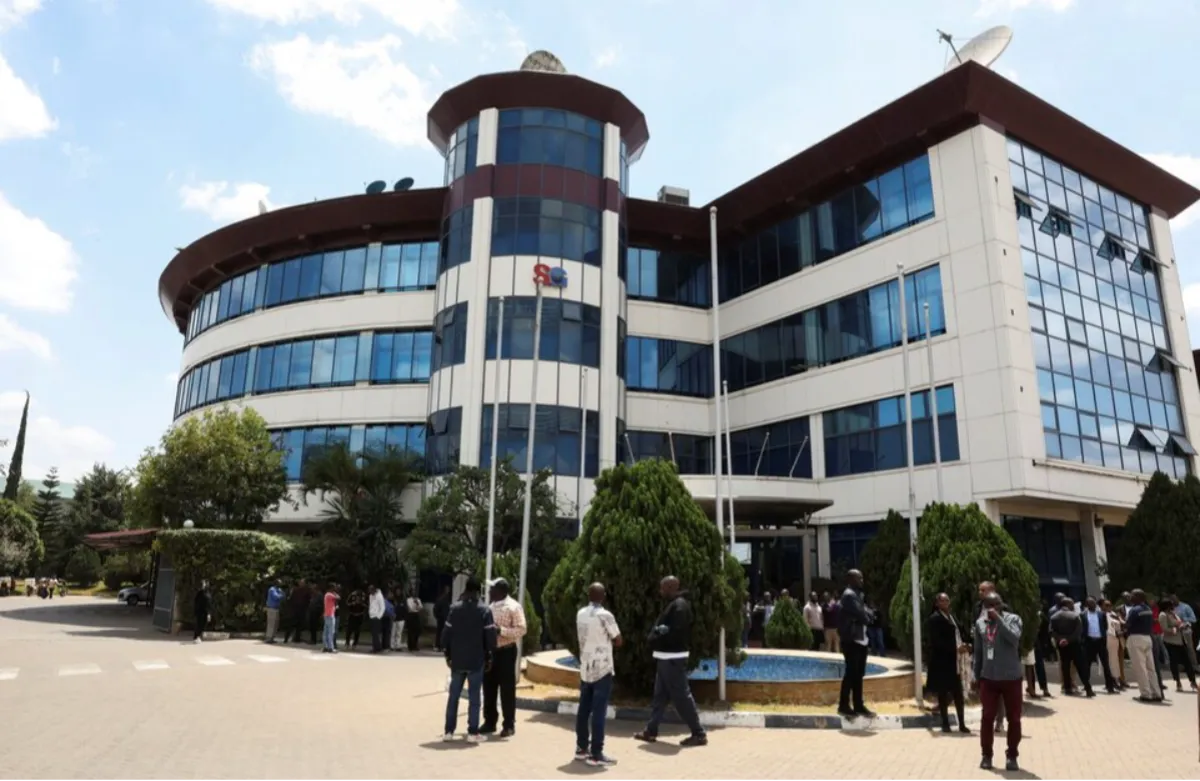
NAIROBI, Kenya — The Standard Group has condemned a protest outside its headquarters along Mombasa Road in Nairobi, saying the confrontation with demonstrators amounted to harassment of its staff and an attack on media freedom.
A group of protesters gathered outside the media organisation’s premises on Friday, October 2, to challenge its coverage of President William Ruto and his administration. The demonstrators carried placards and accused the media house of publishing what they described as negative coverage of the government.
The protest later became tense after some demonstrators attempted to access the Standard Group compound, according to reports from the scene.
Human-rights activists also gathered outside the premises in support of the media organisation, leading to a confrontation between the two groups.
In a statement issued on Friday, the Standard Group said the protesters purported to speak on behalf of President Ruto and the Kenya Kwanza administration. The company accused them of directing profanities at the organisation and intimidating its staff.
“The Standard Group PLC condemns, in the strongest terms, the unwarranted protest and name-calling outside our premises along Mombasa Road today,” the company said.
The media organisation said the incident was part of what it described as a broader pattern of attacks against The Standard, KTN and its digital platforms over coverage of the President and his administration.
It also alleged that protesters had directed criticism and insults at KANU chairman Gideon Moi and former President Uhuru Kenyatta, whom the demonstrators allegedly accused of influencing headlines critical of the government.
The Standard Group rejected those allegations and defended its editorial independence, saying its journalism is guided by professional standards, the Code of Conduct for the Practice of Journalism and the public interest.
“We condemn this intrusion by paid goons ready to harm our journalists and staff. It has no place in a country that claims to uphold the rule of law and a free society,” the company said.
The characterisation of the protesters as “paid goons” is the Standard Group’s allegation and has not been independently established.
The company said Kenyans have a constitutional right to raise grievances, demonstrate and challenge institutions, but argued that intimidation or threats against journalists cannot be regarded as legitimate protest.
Kenya’s Constitution protects freedom of expression under Article 33 and guarantees the freedom and independence of the media under Article 34. Article 34 also prohibits the State from interfering with people engaged in broadcasting, publication and dissemination of information.
The Standard Group commended police officers for preventing protesters from entering its premises, saying the response helped protect its staff and operations.
The protest had been anticipated. On September 29, the media organisation said a group identified as Bunge la Mwananchi had announced plans to mobilise more than 5,000 people for a demonstration at its headquarters over its coverage of the government. The Standard said it had raised security concerns with South B Police Station and notified the Directorate of Criminal Investigations.
The latest confrontation also follows growing public tensions between the media organisation and supporters of the government over its reporting.
In June, President Ruto publicly criticised the Standard Group, accusing it of publishing what he described as an “extortionist propaganda” campaign against his administration. The Standard rejected the characterisation and defended its journalism.
Also Read: President Ruto, The Standard and the battle for Kenya’s media space
For the Standard Group, Friday’s incident represents another challenge to its ability to operate without intimidation.
The company said it would continue reporting despite the confrontation.
“To our readers, viewers, listeners and all Kenyans: we will not relent in our duty to inform you,” the media house said.
It added that it would continue reporting on issues involving those in positions of power and exposing matters it believes are in the public interest.
The confrontation comes as political activity intensifies ahead of Kenya’s 2027 General Election, putting renewed attention on the relationship between political actors, the media and the constitutional right to freedom of expression.
For journalists and media organisations, the incident also highlights the distinction between legitimate criticism of journalism and attempts to intimidate newsrooms because of their editorial coverage.
