

NYANDARUA, Kenya — For most Kenyan by-elections, the significance rarely extends beyond the constituency boundaries. Roads, local development promises and grassroots political rivalries usually dominate the conversation.
But the outcome in Ol Kalou is being interpreted as something much larger: a test of political momentum, a measure of voter sentiment and perhaps an early glimpse into the battle lines of the 2027 General Election.
That is why, even before the celebrations had subsided in Nyandarua County, some of Kenya’s most influential political figures were already framing the result in national terms.
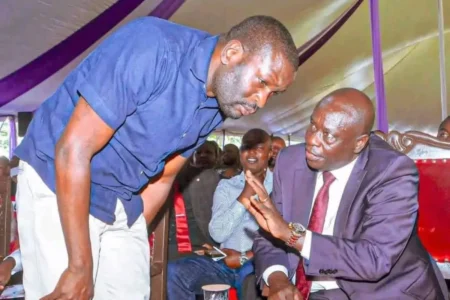
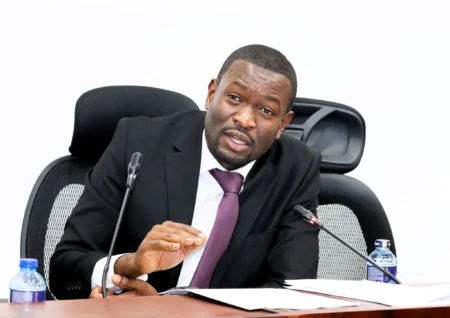
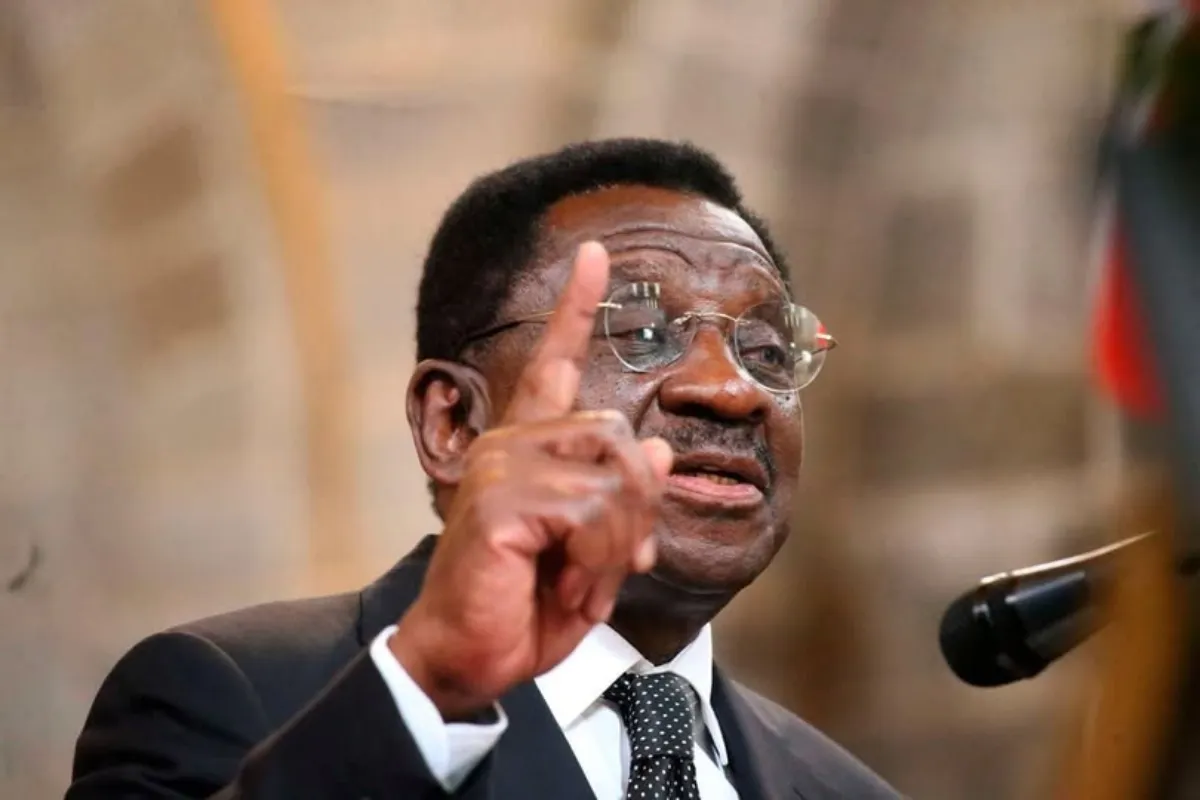
Among them was Siaya Governor James Orengo, one of the country’s longest-serving opposition figures, who viewed the victory of Democracy for the Citizens Party (DCP) candidate Sammy Douglas Waweru Kamau not simply as a constituency win but as evidence of a shifting political landscape.
“DCP’s Sammy Douglas Waweru’s decisive win in Ol Kalou represents a triumph for ordinary citizens. It is a clear signal that the ground has shifted, and President Ruto should prepare for a single term,” Orengo said.
Whether that prediction ultimately proves accurate remains uncertain. Yet the speed with which political leaders moved to assign national significance to a local contest reveals just how intensely Kenya’s political class is already looking toward 2027.
A by-election that became a national contest
The Ol Kalou race had all the characteristics of a local election on paper. Voters were selecting a Member of Parliament to represent their constituency.
In practice, however, the contest evolved into a broader referendum on competing political narratives.
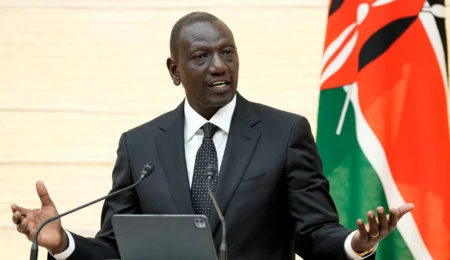
President William Ruto’s allies entered the race determined to demonstrate that the Kenya Kwanza administration still retained strong support in the Mt Kenya region, traditionally one of the country’s most influential voting blocs.
Senior government officials campaigned aggressively. Cabinet Secretaries, Principal Secretaries, governors and MPs traversed the constituency, highlighting development projects and urging voters to support the UDA candidate.
The opposition, meanwhile, saw an opportunity.
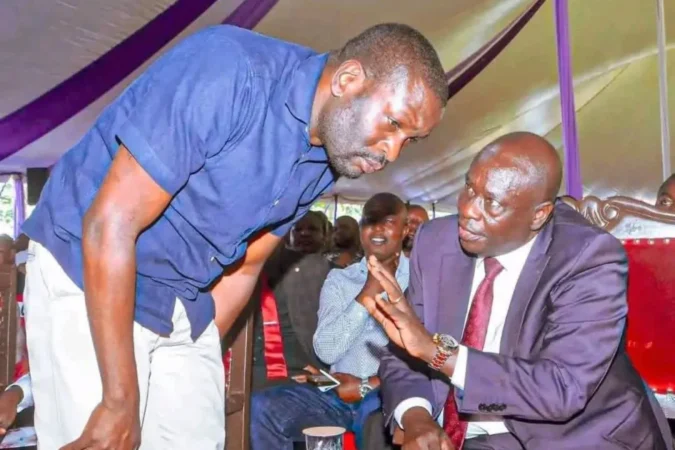
For former Deputy President Rigathi Gachagua, whose political fallout with Ruto dramatically altered Kenya’s political dynamics, Ol Kalou represented a chance to test whether his influence in the region remained intact.
The result was a campaign that increasingly resembled a miniature general election.
By the time ballots were cast, the constituency had become one of the country’s most closely watched political battlegrounds.
Why the margin matters
Political analysts often argue that election victories are not judged solely by whether a candidate wins or loses.
The margin matters.
And in Ol Kalou, the margin was difficult to ignore.
Official results showed DCP candidate Sammy Douglas Waweru Kamau securing more than 35,000 votes against about 5,400 votes for UDA’s Samuel Muchina Nyagah.
The scale of the victory immediately changed the conversation.
Had the race been narrowly decided, observers might have attributed the outcome to local grievances, candidate popularity or constituency-specific issues.
Instead, the overwhelming margin encouraged broader political interpretations.
For opposition supporters, it suggested that dissatisfaction with the government may be running deeper than previously assumed.
For government strategists, it raised uncomfortable questions about whether political loyalties in parts of Mt Kenya are becoming less predictable.
Official Ol Kalou by-election results
| Position | Candidate | Party | Votes |
|---|---|---|---|
| 1 | Sammy Douglas Kamau Waweru | DCP | 35,440 |
| 2 | Samuel Muchina Nyagah | UDA | 5,450 |
| 3 | Wilson Mwaniki Kigwa | Jubilee | 198 |
| 4 | Stephen Wanyoike Waithaka | NLP | 103 |
| 5 | Timothy Kamau Kariuki | PM | 51 |
| 6 | Edwin Kariiri Muchiri | PNU | 28 |
| 7 | Abdifatah Hussein Abdullahi | FPK | 19 |
| 8 | Edward Mathenge Mwaniki | KMM | 16 |
| 9 | Rachael Wangui Njoroge | PDP | 11 |
Election statistics
| Item | Figure |
|---|---|
| Registered Voters | 73,480 |
| Total Votes Cast | 41,656 |
| Voter Turnout | 57% |
Key takeaway
| Metric | Figure |
|---|---|
| Winner | Sammy Douglas Kamau Waweru (DCP) |
| Winning Votes | 35,440 |
| Runner-up | Samuel Muchina Nyagah (UDA) |
| Runner-up Votes | 5,450 |
| Winning Margin | 29,990 votes |
| Vote Ratio (Winner vs Runner-up) | 6.5:1 |
Source: Independent Electoral and Boundaries Commission (IEBC) official results for the Ol Kalou parliamentary by-election.
The return of political realignment
Kenyan politics has often been shaped by shifting alliances rather than fixed ideological divisions.
Political strongholds can remain stable for years before suddenly realigning around new leaders, grievances or national debates.
The Mt Kenya region has historically played a decisive role in presidential elections because of its large voter population and high turnout rates.
That is partly why Orengo’s comments drew attention.
His argument was not merely about Ol Kalou.
It was about what the result might reveal regarding the future direction of a region that helped propel President Ruto to power in 2022.
“DCP ikishinda Ol Kalou, hiyo ni ushindi ya sisi sote. Sisi wa Linda Mwananchi, DCP ikishinda na Katititi akishinda, hiyo ni ushindi wetu kama Wakenya wote,” Orengo said.
The statement reflected a growing effort among opposition figures to portray individual electoral victories as evidence of a broader national coalition beginning to emerge.
The Gachagua factor
Perhaps no politician has more at stake in the Ol Kalou result than Rigathi Gachagua.
Since his departure from government, Gachagua has positioned himself as one of the administration’s most vocal critics while seeking to consolidate support within the Mt Kenya region.
The by-election provided one of the first major electoral tests of that strategy.
His response after the results suggested he viewed the outcome as validation.
“Congratulations, Hon. Sammy Douglas Kamau Waweru, on your historic election as the Member of Parliament for Ol Kalou Constituency. You have won by a resounding margin, reflecting the unmistakable voice of the people,” Gachagua said.
The victory also carries symbolic significance because it gives DCP its first seat in the National Assembly.
Also Read: Gachagua’s ‘One Term’ remark goes viral, inspires ‘Wantam’ musical parodies and online memes
Political parties often struggle to transition from movements built around personalities into institutions with elected representation.
For DCP, Ol Kalou marks that transition.
The challenge now becomes whether the party can convert a constituency victory into sustained national momentum.
A different reading from government
While opposition figures celebrated, government leaders sought to project stability.
Deputy President Kithure Kindiki moved quickly to congratulate the winner, striking a conciliatory tone rather than framing the outcome as a political setback.
“Congratulations Sammy Douglas Waweru Kamau on your imminent victory in the by-election held today for the MP seat for Ol Kalou constituency. Unite the residents and serve them all without distinction.”
Kindiki’s response reflected a familiar reality in democratic politics: by-elections often generate headlines, but translating those results into national electoral outcomes is far from straightforward.
Governments frequently lose local contests only to perform strongly in subsequent general elections.
Equally, opposition victories sometimes signal deeper shifts that become visible only later.
The difficulty lies in determining which category Ol Kalou belongs to.
The bigger question
The significance of the Ol Kalou by-election may ultimately depend less on the numbers recorded this week than on what happens next.
If the result remains an isolated victory, it will be remembered as an important local upset and a milestone for DCP.
If similar outcomes begin emerging elsewhere, historians may eventually point to Ol Kalou as one of the first visible signs of a broader political realignment.
That uncertainty explains why leaders across the political divide reacted so quickly and so strongly.
For Orengo, the election was evidence that “the ground has shifted.”
For Gachagua, it represented proof that a new political vehicle can compete successfully against the ruling party.
For the government, it serves as a reminder that political support can never be taken for granted.
And for voters, the result offered a glimpse of a campaign season that has effectively begun nearly a year and a half before Kenyans return to the ballot box in 2027.
The battle for Ol Kalou may be over.
The argument about what it means has only just begun.