


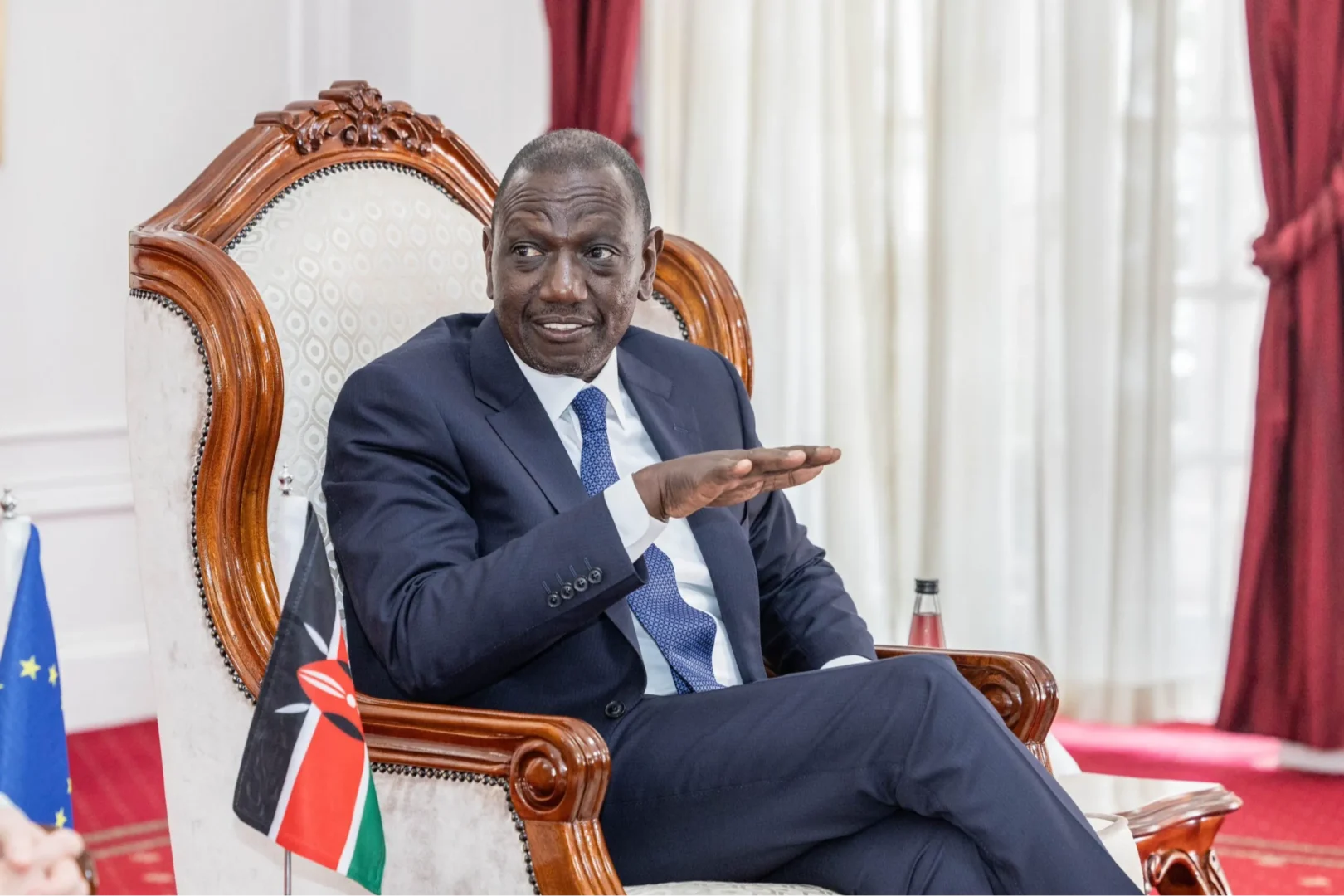
NAIROBI, Kenya — President William Ruto has announced that the government is preparing to roll out the Nairobi Metropolitan Policing Framework, a new security model intended to strengthen cooperation between residents, law enforcement agencies and local authorities in addressing crime and public safety challenges across the capital region.
Speaking after a high-level security briefing at State House, Nairobi, the President said the framework would adopt a community-centred approach to policing, placing residents at the core of identifying security concerns and shaping local responses.
The roll-out of the Nairobi Metropolitan Policing Framework will commence in the coming days, laying the foundation for a more coordinated, accountable and community-led approach to policing across the Nairobi Metropolitan Area,” Ruto said.
The initiative comes as the government seeks to improve urban security management in a rapidly growing metropolitan region that faces challenges ranging from organised crime and petty theft to traffic-related offences and emerging cyber threats.
According to the President, the framework is designed to bring together multiple stakeholders, including local residents, community leaders, the National Police Service, county authorities and other public institutions.
The aim, he said, is to create structured channels through which communities can identify local security priorities, monitor implementation and contribute to solutions through consultation and public participation.
Security experts have increasingly argued that community policing models can improve intelligence gathering, strengthen crime prevention and enhance trust between citizens and law enforcement agencies when implemented effectively.
The government believes the Nairobi framework will provide a more coordinated mechanism for addressing security concerns across the wider metropolitan area, which includes Nairobi and surrounding urban centres experiencing rapid population growth.
Ruto said the framework would also improve coordination among security agencies and strengthen accountability in policing operations.
“We will strengthen public safety, deepen trust between communities and law enforcement, and build safer and more secure neighbourhoods for all,” he said.
The initiative reflects broader efforts by the government to modernise security management through partnerships between national and county institutions.
Officials have previously acknowledged that fragmented responses to crime, overlapping mandates and limited community engagement have at times weakened the effectiveness of policing in densely populated urban areas.
The President’s remarks followed a briefing at State House attended by senior government and security officials, including Interior Cabinet Secretary Kipchumba Murkomen, Inspector-General of Police Douglas Kanja and Nairobi Governor Johnson Sakaja.
The meeting reviewed progress toward implementation of the framework and preparations for its official rollout.
While the government has not yet released detailed operational guidelines, officials indicated that implementation will begin in the coming days.
Also Read: Gachagua raises alarm over Ruto’s security, warns against ‘crisis of great magnitude’
The Nairobi Metropolitan Area remains Kenya’s largest urban and economic hub, making public safety a critical concern for residents, businesses and investors.
Analysts note that the success of the framework will likely depend on several factors, including sustained funding, effective coordination among agencies, transparency in decision-making and meaningful community participation.
Questions are also expected regarding how the framework will interact with existing community policing structures, county enforcement units and national security agencies.
For now, the government is presenting the initiative as a significant shift toward a more collaborative approach to urban security, with the expectation that stronger partnerships between citizens and law enforcement will contribute to safer neighbourhoods and improved public confidence in policing.
