


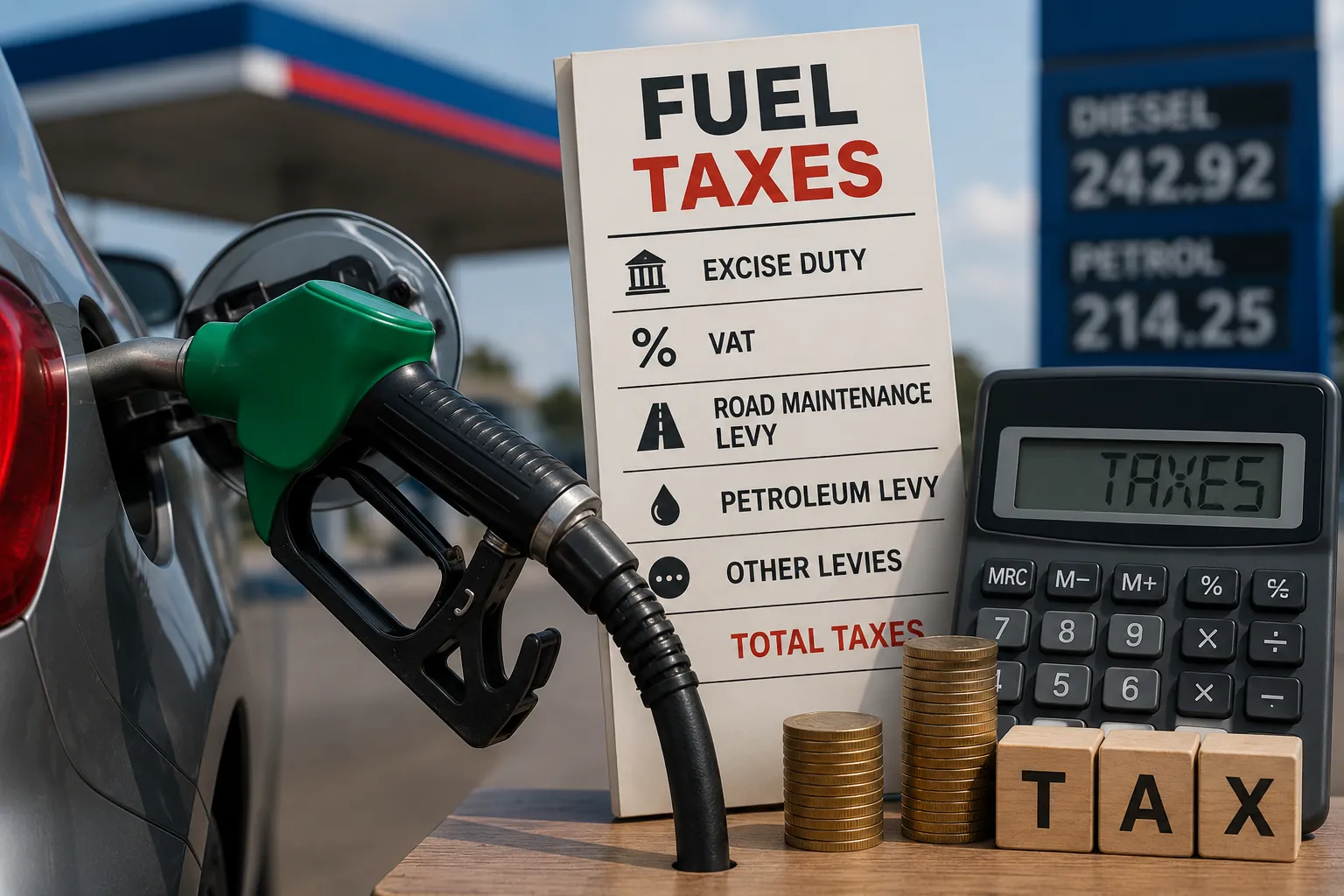
NAIROBI, Kenya — Kenyan motorists will continue paying the same prices for petrol, diesel and kerosene over the next month after the Energy and Petroleum Regulatory Authority (EPRA) retained pump prices despite renewed uncertainty in global energy markets.
In its latest monthly pricing review released on Tuesday, EPRA announced that fuel prices will remain unchanged between July 15 and August 14, 2026, citing government interventions aimed at cushioning consumers from international oil market volatility.
Under the new pricing schedule, Super Petrol in Nairobi will continue retailing at Sh214.03 per litre, Diesel at Sh222.86, and Kerosene at Sh191.38.
The decision comes against the backdrop of growing concerns over global crude oil prices following renewed geopolitical tensions in the Middle East, particularly around the Strait of Hormuz, one of the world’s most important oil shipping corridors.
Government intervenes to prevent fuel hike
EPRA said the government had extended the application of the 8 per cent Value Added Tax (VAT) on petroleum products for an additional three months and injected Sh945 million from the Petroleum Development Levy (PDL) Fund to stabilise pump prices.
“The situation in the Middle East remains uncertain, creating high price volatility and as a result, the Government has extended the 8 per cent VAT on petroleum products for a further three months and utilised Sh945 million from the Petroleum Development Levy Fund to ensure pump price stability,” EPRA said.
The intervention means consumers will avoid what could have been a significant increase in fuel costs amid rising international benchmark prices.
Fuel prices across major towns
The unchanged prices will apply nationwide, subject to transportation and distribution costs.
In Mombasa, Super Petrol remains at Sh210.74, Diesel at Sh219.56, and Kerosene at Sh188.09 per litre.
In Kisumu, motorists will continue paying Sh213.69 for petrol, Sh223.08 for diesel and Sh191.63 for kerosene.
Residents of Nakuru will pay Sh214.53 per litre for petrol, while those in Eldoret will continue purchasing petrol at Sh214.18 per litre.
Prices remain highest in parts of northern and coastal Kenya due to transportation costs.
In Lamu, Super Petrol will continue retailing at Sh216.18 per litre, while motorists in Hola will pay Sh216.57.
Global market risks remain
The decision to retain prices comes as international oil markets remain sensitive to developments in the Middle East.
Earlier this week, Energy Cabinet Secretary Opiyo Wandayi warned that renewed tensions in the region had begun pushing up global oil benchmarks and that future pricing cycles could reflect the increase if market conditions persist.
Also Read: Kenya signals possible fuel price hikes in upcoming reviews
Kenya imports all its refined petroleum products, making domestic fuel prices highly vulnerable to changes in international oil prices, exchange rate movements and shipping costs.
According to EPRA, the average landed cost of imported fuel in June stood at:
- Super Petrol: US$886.92 per cubic metre
- Diesel: US$984.37 per cubic metre
- Kerosene: US$1,028.17 per cubic metre
Relief for households and businesses
Fuel prices remain a key economic indicator because they directly influence transportation, manufacturing, agriculture and household costs.
Analysts say the decision to maintain pump prices will help contain inflationary pressure and support businesses already facing high operating expenses.
However, with geopolitical tensions continuing to unsettle energy markets, the sustainability of the government’s subsidy measures is likely to remain under scrutiny in the coming months.
For now, motorists have secured a temporary reprieve, but future reviews will depend heavily on developments in global oil markets and the government’s capacity to continue cushioning consumers.
