


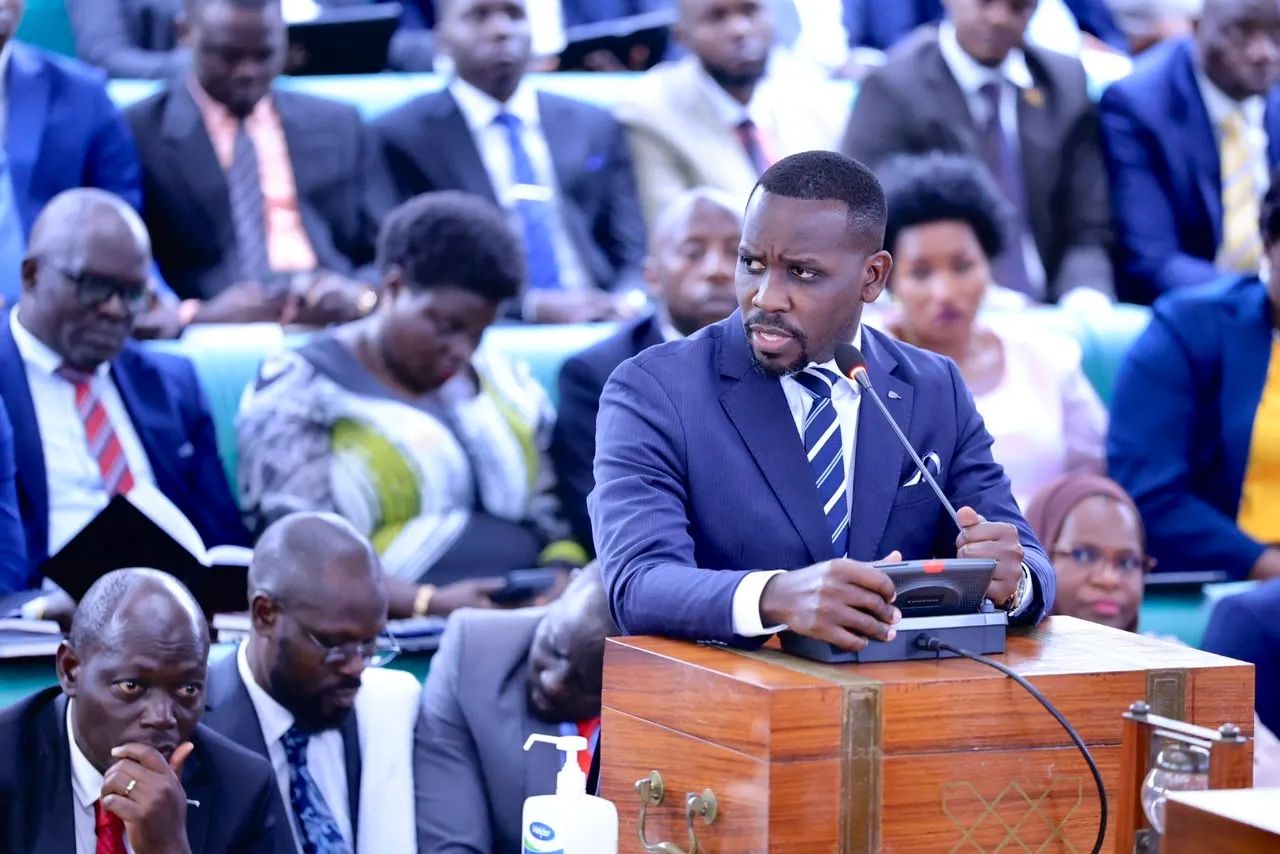
KAMPALA, Uganda — A heated debate erupted in Parliament on Tuesday 14, July 2026 after the Opposition demanded that the government account for the whereabouts of former Butambala County MP Muhammad Muwanga Kivumbi, who was allegedly taken into custody by security operatives shortly after being released on bail.
The matter was raised by Leader of the Opposition (LoP) Joel Ssenyonyi, who told the House that Kivumbi had not been seen since Friday, prompting concerns about due process, constitutional protections and the growing controversy surrounding alleged enforced disappearances.
Ssenyonyi said Kivumbi was granted bail by court on July 10 after standing surety in a criminal matter. According to the Opposition leader, the former legislator was intercepted while travelling from Butambala to Kampala the following day and allegedly forced into a white Toyota Hiace vehicle by security personnel.
“From Friday up to today, Tuesday, his family and we, his colleagues, have been looking for him. We do not know where Hon. Muhammad Muwanga Kivumbi is,” Ssenyonyi told Parliament.
The Opposition leader challenged the government to clarify both Kivumbi’s whereabouts and whether such operations now represent an accepted method of arrest.
Ssenyonyi argued that the allegations raise serious constitutional questions, citing Article 23 of the Constitution, which guarantees the right to personal liberty and outlines procedures governing arrests and detention.
Under the Constitution, arrested persons must be informed of the reasons for their arrest, detained only in legally recognised facilities and produced before court within 48 hours unless released earlier.
The Opposition also referenced protections contained in the Human Rights (Enforcement) Act, 2019, which provides legal remedies for violations of constitutional rights, including unlawful detention.
Ssenyonyi questioned reports suggesting Kivumbi may have been targeted over remarks allegedly made following his release.
“If someone believes Hon. Kivumbi committed an offence through his speech, who determines that? It is the courts of law—not security agencies,” he said.
The Opposition leader linked the incident to previous cases involving opposition politicians who were allegedly rearrested after securing bail.
Among the cases cited were those involving former MPs Muhammad Ssegirinya and Allan Ssewanyana, who were rearrested after obtaining court-ordered release in 2021.
He also referenced the reported arrest of former Busiki County MP Paul Akamba shortly after securing bail in 2024.
According to Ssenyonyi, such incidents raise questions about respect for judicial authority and the separation of powers.
“Have we now as a country departed from what the law clearly stipulates?” he asked.
Deputy Speaker Thomas Tayebwa referred the matter to Deputy Government Chief Whip Crispus Kiyonga, who acknowledged the seriousness of the concerns.
Kiyonga requested additional time to establish the facts.
“I request that you allow me to return tomorrow and provide a comprehensive response,” he told the House.
However, Ssenyonyi argued that Parliament still required immediate clarification on whether the reported operation reflected official government policy.
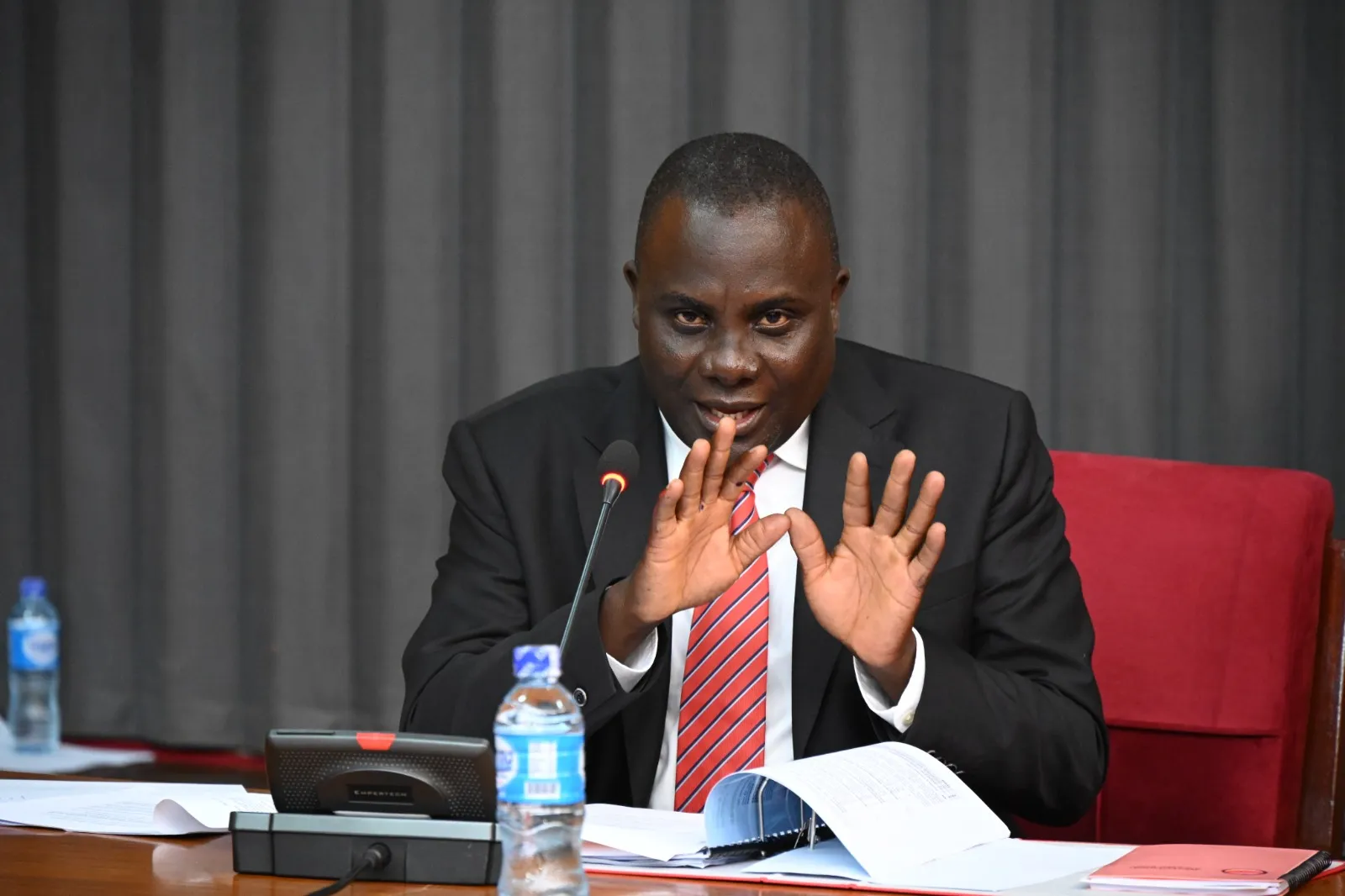
Attorney General Sam Mayanja rejected suggestions that Uganda had adopted a “new normal” regarding arrests.
“The terms ‘new normal’ and ‘old normal’ do not exist in my legal vocabulary,” Mayanja said.
Holding up a copy of the Constitution, he reiterated that Uganda remains governed by constitutional principles and that arrested persons retain legal protections under Article 23.
At the same time, Mayanja acknowledged that the government had not yet independently verified the circumstances surrounding Kivumbi’s alleged arrest.
“I do not have the facts regarding the alleged arrest. All I know is that we remain under a constitutional dispensation and Mr Kivumbi’s rights are protected.”
Also Read: MP Kivumbi arrested after Museveni links him and NUP to ‘panga’ attacks
The Attorney General pledged to return to Parliament with a detailed account once the facts had been established.
The controversy comes amid continued scrutiny of arrest and detention procedures in Uganda, particularly in politically sensitive cases.
Legal experts note that Uganda’s Constitution, the Police Act, the Criminal Procedure Code Act and international human rights instruments—including the International Covenant on Civil and Political Rights (ICCPR) and the African Charter on Human and Peoples’ Rights—require authorities to follow due process and promptly account for individuals taken into custody.
As Parliament awaits the government’s response, the case is likely to intensify debate over the balance between national security operations and constitutional protections for individual liberty.
