


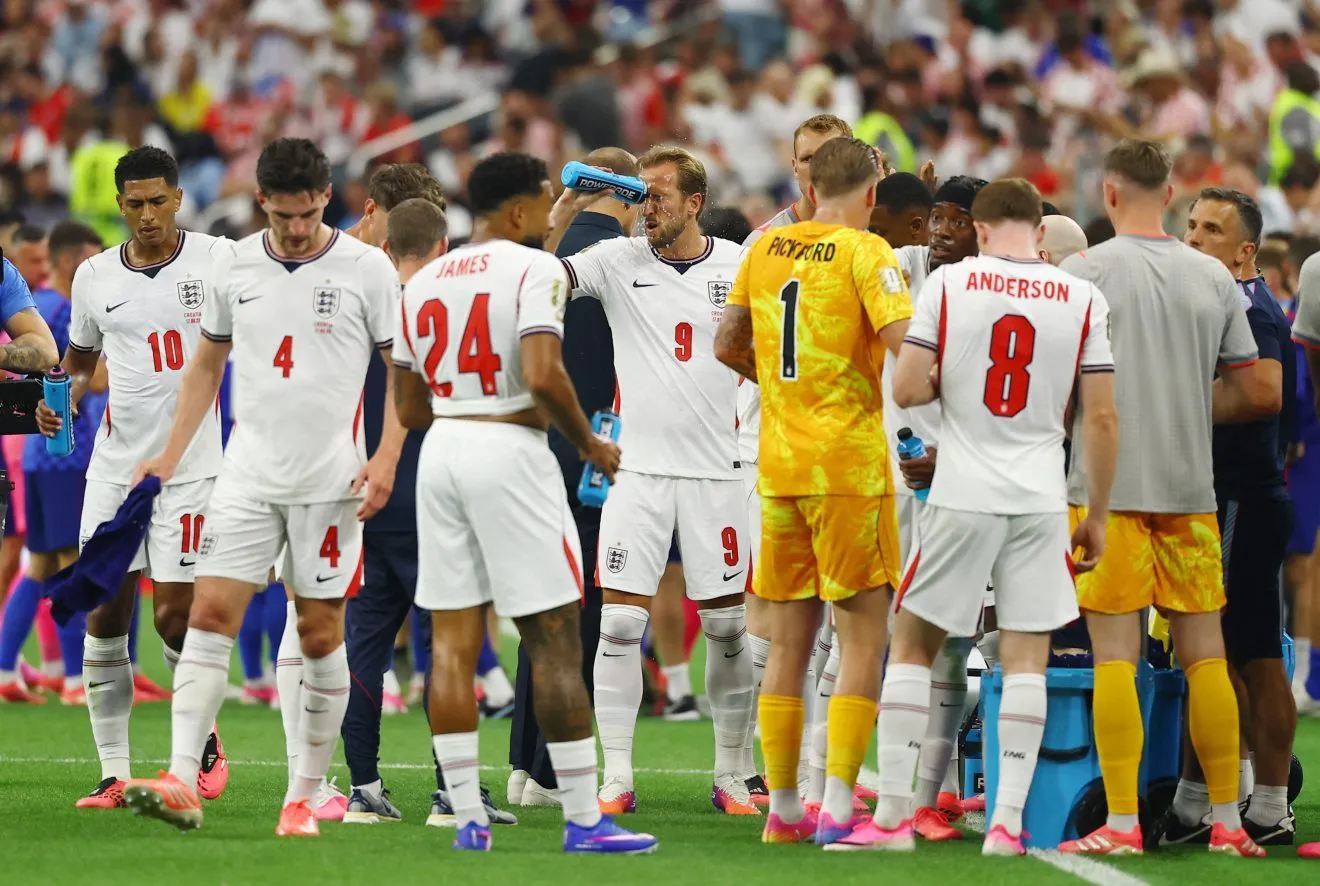
FIFA’s newly introduced hydration breaks faced growing resistance from supporters on Wednesday after loud boos echoed around stadiums during World Cup matches in the United States and Canada.
Fans attending Group L fixtures between England and Croatia in Dallas, as well as Ghana and Panama in Toronto, openly voiced their frustration as referees halted play for mandatory three-minute cooling breaks introduced for the 2026 World Cup.
The hydration pauses, implemented to help players cope with the intense heat and humidity of the North American summer, have quickly become one of the tournament’s most debated innovations.
Fans voice frustration
At Dallas Stadium, boos erupted from both England and Croatia supporters when French referee Clement Turpin stopped play in the 22nd minute for the scheduled hydration break.
The reaction followed growing criticism on social media, where many fans had already pledged to protest the interruptions, arguing that they disrupt the rhythm and intensity of matches.
The negative reception was repeated later in Toronto during Ghana’s 1-0 victory over Panama.
Despite cool temperatures and steady rainfall throughout the match, supporters again expressed their displeasure as players walked towards the benches for the mandatory pause.
The incident raised fresh questions about whether hydration breaks should be applied uniformly regardless of weather conditions.
Critics question FIFA’s motives
While FIFA has defended the measure as a player welfare initiative, critics argue that the breaks unnecessarily interrupt the flow of matches and alter the natural rhythm of competition.
Others have suggested the move serves commercial interests by creating additional windows for broadcasters and advertisers during live coverage.
Panama head coach Thomas Christiansen appeared to echo those concerns after his side’s defeat.
“If you have a break, it’s to do corrections,” Christiansen said after the match.
“It was not hot, but we have to accept that the advertisers on television are what’s paying for all these things.”
His remarks are likely to fuel further debate over the balance between player safety and commercial considerations at major sporting events.
Similar scenes in earlier matches
Wednesday’s incidents were not isolated.
Fans also booed during Norway’s Group I match against Iraq at Boston Stadium on Tuesday when play was halted despite relatively mild temperatures of approximately 23 degrees Celsius.
The interruption proved costly for Iraq, who had successfully frustrated Norway and held them to a goalless draw before the break.
Just four minutes after play resumed, Norway scored and eventually cruised to a 4-1 victory.
Although there is no evidence directly linking the result to the cooling break, the sequence has been cited by some critics as an example of how such stoppages can alter the momentum of matches.
FIFA Defends Player Welfare Measures
The hydration breaks form part of FIFA’s broader strategy to protect players competing in challenging summer conditions across North America.
Several tournament venues have experienced high temperatures and humidity levels, prompting concerns from player unions, coaches and medical experts about the risks of heat-related illness.
Also Read: Co-hosts Mexico become first team to reach World Cup knockout stage
Under the current regulations, referees are required to stop matches for a three-minute cooling break in each half when conditions meet predetermined thresholds.
FIFA maintains that player safety remains the primary objective of the policy.
However, with opposition from supporters growing and criticism emerging from coaches, the governing body may face increasing pressure to review how and when the breaks are applied as the tournament progresses.
For now, the controversy surrounding hydration breaks has become an unexpected subplot of the World Cup, highlighting the challenge of balancing athlete welfare, fan experience and commercial demands on football’s biggest stage.
