


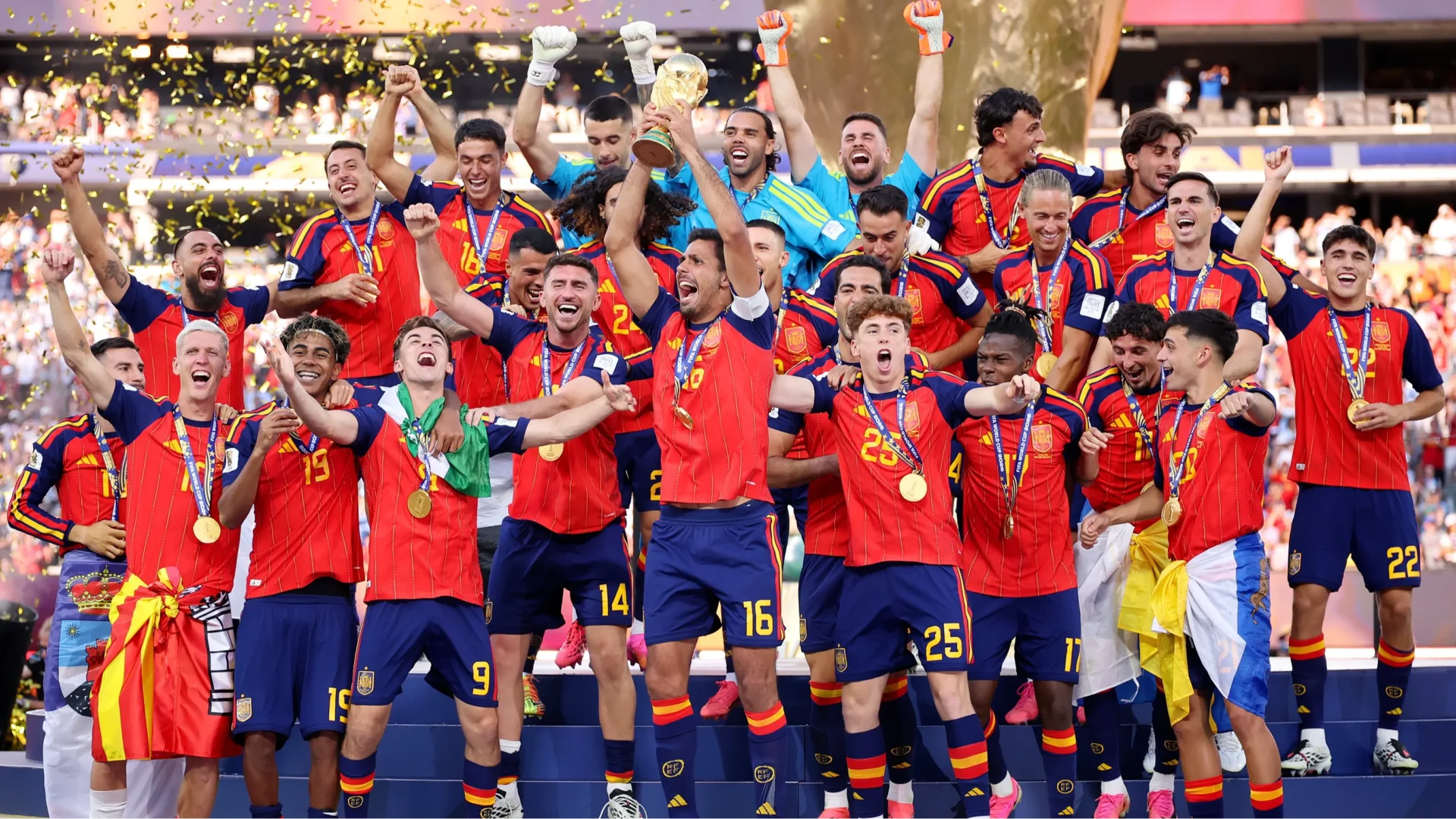
NEW JERSEY, United States — For more than 100 minutes, Spain kept knocking on a door that refused to open.
They passed with purpose, pressed with discipline and moved the ball around Argentina’s defensive structure with the patience of a team convinced that the opportunity would eventually arrive. They stretched the defending champions from side to side, forced them deeper into their own half and created the feeling that the goal was not a question of whether, but when.
Yet the World Cup final refused to follow the script.
Every Spanish attack seemed to end in the same frustrating pattern — an Argentine clearance, a desperate block or another extraordinary intervention from Emiliano Martínez.
The longer the 2026 FIFA World Cup final remained goalless, the more Spain appeared trapped inside a match they controlled but could not finish.
Then came the moment that changed everything.
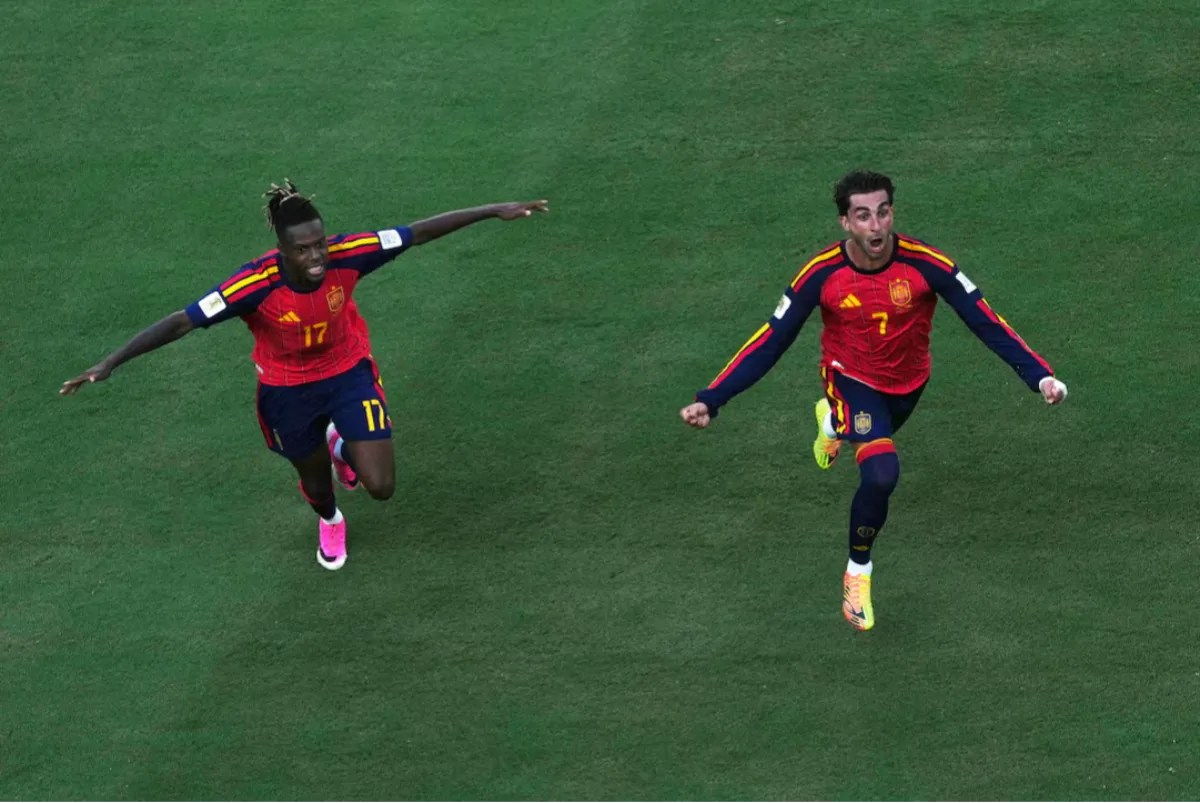
In the 106th minute of extra time, Pedro Porro sent a dangerous cross towards the far post. Nico Williams refused to let the opportunity disappear, stretching to keep the ball alive inside the penalty area.
As Argentina attempted to clear the danger, the ball fell into the path of Ferran Torres, who reacted instantly and fired a left-footed finish beyond Martínez.
After more than 100 minutes of pressure, Spain had finally found the breakthrough.
The goal delivered Spain their second men’s World Cup title, ended Argentina’s reign as champions and denied Lionel Messi what would have been the perfect final chapter to his extraordinary international career.
The scoreline carried echoes of history.
Sixteen years after Andrés Iniesta’s extra-time winner secured Spain’s first World Cup triumph against the Netherlands in Johannesburg, another extra-time strike once again placed Spain at the summit of world football.
But this victory was not simply about one goal.
It was about a football philosophy that refused to disappear.
It was about patience under pressure.
And it was about a generation of Spanish players proving that control, intelligence and technical excellence can still conquer the biggest stage.
A final between control and resistance
From the opening minutes at the New York New Jersey Stadium, the contrast between the two teams was clear.
Spain wanted the ball.
Argentina wanted to survive without it.
Luis de la Fuente’s team arrived at the final as one of the most complete sides of the tournament. Their football was built around Rodri’s authority in midfield, the creativity of Dani Olmo, the movement of Lamine Yamal and Nico Williams, and a defensive structure that had frustrated every opponent they faced.
Argentina, however, understood the danger.
Rather than attempting to match Spain’s rhythm, Lionel Scaloni’s side adopted a compact approach designed to slow the game, disrupt Spain’s passing patterns and deny space between the lines.
For long periods, that strategy worked.
Spain controlled possession.
Spain controlled territory.
Spain controlled the tempo.
But Argentina controlled the scoreline.
The defending champions absorbed pressure, defended narrow spaces and waited for the possibility of one decisive counterattack.
The problem was that Argentina never truly found a way to hurt Spain.
The statistics eventually told the story.
Spain finished the match with 20 shots, while Argentina managed only two attempts across 120 minutes. Most remarkably, Argentina recorded zero shots on target — a reflection of how effectively Spain’s defensive structure suffocated the world champions.
Martínez stands between Spain and history
If Argentina remained alive deep into extra time, the reason was simple.
Emiliano Martínez.
The Aston Villa goalkeeper produced one of the greatest individual performances ever seen in a World Cup final, repeatedly denying Spain when the game appeared ready to break open.
He stopped efforts from Spain’s attacking players, reacted brilliantly in crowded penalty areas and gave Argentina hope long after the balance of play had shifted against them.
Martínez finished with 11 saves, a remarkable total that underlined just how heavily Argentina relied on him throughout the contest.
For much of the night, he appeared capable of delaying Spain’s celebration forever.
But even one of the world’s best goalkeepers could not withstand endless pressure.
The final eventually became a battle between Spain’s persistence and Martínez’s resistance.
Eventually, persistence won.
Argentina’s defensive gamble reaches its limit
Argentina’s plan depended on one fundamental idea: survive long enough for a moment to appear.
Against most teams, that approach can work.
Against Spain, it became increasingly difficult.
The defending champions spent long periods without possession and were forced to defend deeper as the match progressed. Their midfield, normally a source of creativity and control, became focused almost entirely on containment.
The turning point came late in normal time when Enzo Fernández received a second yellow card after a reckless challenge on Pau Cubarsí.
Argentina entered extra time with 10 players.
The discipline that had kept Spain frustrated for 90 minutes became much harder to maintain.
Spaces began to appear.
Spain began to attack with greater freedom.
And eventually, the pressure produced the decisive moment.
Even after Torres scored, Argentina refused to disappear. Spain appeared to have scored again on a late counterattack, only for VAR to rule the goal out for a tight offside decision, ensuring the final remained tense until the final whistle.
Argentina pushed forward desperately in the closing moments, but Spain held firm.
The equaliser never arrived.
Messi’s final World Cup ends without another miracle
Every World Cup final carries a human story.
This one belonged to Lionel Messi.
At 39 years old, the Argentine captain arrived knowing this could be his final appearance at football’s greatest tournament.
The possibility of another trophy created the perfect narrative.
The greatest player of his generation adding one final chapter.
But football does not always follow the storylines written for it.
Spain’s defensive organisation denied Messi the spaces where he normally creates danger. Every time he received the ball, Spanish players closed quickly around him.
He was not invisible.
But he was contained.
Argentina’s greatest player searched for moments of inspiration, but Spain’s structure prevented him from controlling the final in the way he had controlled so many matches throughout his career.
If this was his final World Cup appearance, it ended with disappointment rather than celebration.
Yet defeat does not diminish what Messi has achieved.
He leaves the World Cup as a champion, a record-setting footballer and one of the defining figures in the history of the sport.
Spain’s historic defensive achievement
Spain’s victory was built not only on attacking quality but on defensive excellence.
They lifted the trophy after conceding just one goal throughout their eight matches — the fewest goals ever allowed by a World Cup-winning team.
Goalkeeper Unai Simón finished the tournament with a record-setting number of clean sheets, continuing a defensive campaign in which Spain restricted opponents with remarkable consistency.
Their defensive discipline complemented their attacking identity.
Spain did not simply outscore opponents.
They controlled matches.
They controlled spaces.
They controlled the rhythm of football’s biggest tournament.
The victory also extended Spain’s unbeaten international run to 38 matches, surpassing Italy’s previous European record of 37 games and strengthening De la Fuente’s place in Spanish football history.
At 65 years old, De la Fuente became the oldest manager to win the men’s World Cup, adding another milestone to a remarkable tournament.
A new Spanish generation reaches the summit
When Spain won the World Cup in 2010, many believed they were witnessing the peak of a golden generation.
Sixteen years later, another generation has created its own legacy.
This Spain team is different.
It is younger.
More dynamic.
More direct.
But the foundations remain familiar.
Technical quality.
Midfield intelligence.
Movement.
Patience.
Faith in the football.
Those principles carried Spain through the tournament and ultimately back to the top of the sport.
Their victory also created another historic achievement: Spain became the first country to simultaneously hold both the men’s and women’s FIFA World Cup titles.
A final surrounded by spectacle
The match was more than a football game.
It was designed as a global event.
The final attracted political leaders, royalty, sporting legends and entertainment icons, including United States President Donald Trump, Tom Cruise and Brad Pitt.
The ceremony and halftime entertainment reflected FIFA’s growing ambition to combine sport with global entertainment.
Also Read: World Cup final halftime show features Madonna, Justin Bieber, BTS and Shakira
But when the final whistle arrived, the celebrities, performances and spectacle became secondary.
The match was decided by football itself.
By a team that trusted its identity.
By a goalkeeper who delayed the inevitable.
By one decisive finish.
Spain are world champions again
As red and gold confetti fell inside the stadium, Spain’s players celebrated a victory built on belief.
They defeated the defending champions.
They overcame one of the greatest players in football history.
They conquered the biggest World Cup tournament ever staged.
And they did it without abandoning who they were.
For more than 100 minutes, Spain waited for the opening.
They trusted their football.
Eventually, it arrived.
Ferran Torres delivered the moment.
Spain delivered the triumph.
And once again, they became world champions.
