


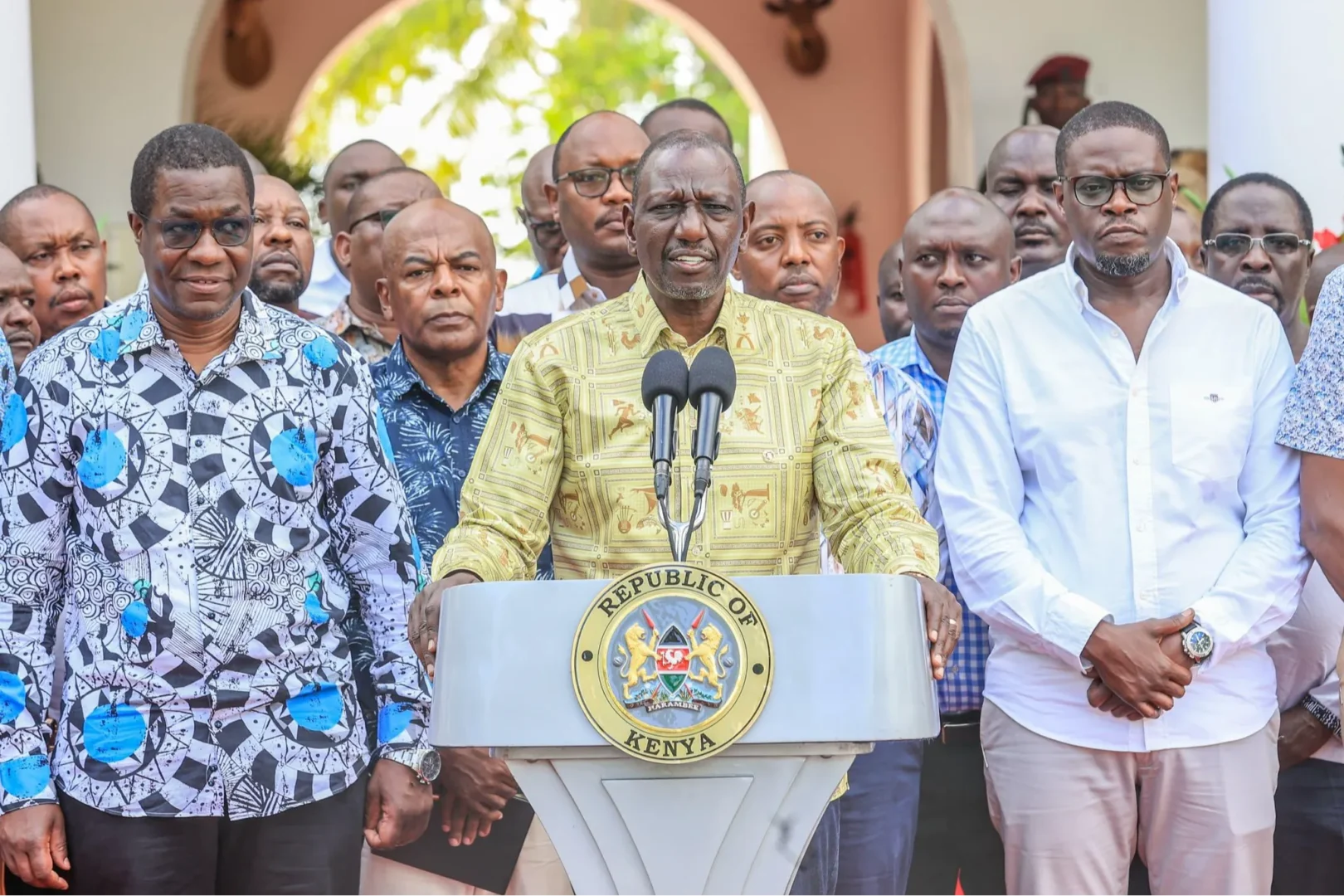
MOMBASA, Kenya — President William Ruto has announced a further reduction in diesel prices for the June–July fuel pricing cycle, as the government moves to ease pressure on households and businesses amid a deepening global fuel crisis.
Speaking during a live address from State House, Mombasa, on Friday, the President said the price of diesel would be reduced by KSh10 per litre following consultations with transport sector stakeholders.
“I have directed that in the next pricing cycle, we’re going to further reduce the price of diesel by a further KSh10 for the June–July cycle to help stabilise pump prices and provide additional relief to consumers,” Ruto said.
The announcement comes against the backdrop of rising fuel prices that have triggered protests and disruptions in the transport sector, with operators citing unsustainable operating costs.
Ruto said the latest intervention forms part of broader efforts to stabilise pump prices and cushion Kenyans grappling with a high cost of living.
The President attributed the current fuel price pressures to global market disruptions linked to escalating geopolitical tensions involving Iran since late February 2026, which have affected oil supply routes through the Strait of Hormuz, a key global transit corridor.
According to Ruto, the disruptions have significantly driven up global fuel prices, with diesel costs rising sharply on international markets.
Kenya, which relies entirely on imported petroleum products from the Gulf region, has been directly exposed to the supply shock.
Ruto defended the government’s intervention measures, saying the State had spent KSh28.19 billion across the April–May and May–June pricing cycles to cushion consumers through subsidies and tax relief.
He added that the government had reduced Value Added Tax (VAT) on petroleum products from 16% to 8%, foregoing an estimated KSh14.4 billion in revenue to ease pressure on households and businesses.
According to the President, without these measures, diesel prices would currently be significantly higher.
The President also defended the government-to-government (G2G) fuel import framework introduced in 2023, arguing that it has played a critical role in stabilising supply and shielding the Kenyan shilling from volatility.
“Through the government-to-government fuel supply framework, we have secured guaranteed fuel supplies despite global disruptions… Without it, the country’s situation would be much worse,” he said.
The arrangement, he added, has reduced pressure on foreign exchange demand by easing the need for oil importers to source large amounts of US dollars within short timelines.
Earlier this week, the Energy and Petroleum Regulatory Authority (EPRA) lowered diesel prices by KSh10.06 per litre in a mid-cycle adjustment, while increasing kerosene prices by KSh38.60.
Also Read: Ruto unveils fuel relief measures as transport strike called off
The regulator said the adjustment was necessary to minimise the risk of fuel adulteration arising from widening price differences between diesel and kerosene.
Under the current pricing structure, Super Petrol, Diesel and Kerosene retail at KSh214.25, KSh232.86 and KSh191.38 per litre respectively.
The latest measures come after a nationwide transport strike that disrupted movement in several towns, as public service vehicle operators demanded tax cuts and broader government intervention to address rising fuel costs.
The diesel price reduction is expected to provide partial relief to the transport sector, which remains one of the most directly affected by fuel price fluctuations.
