


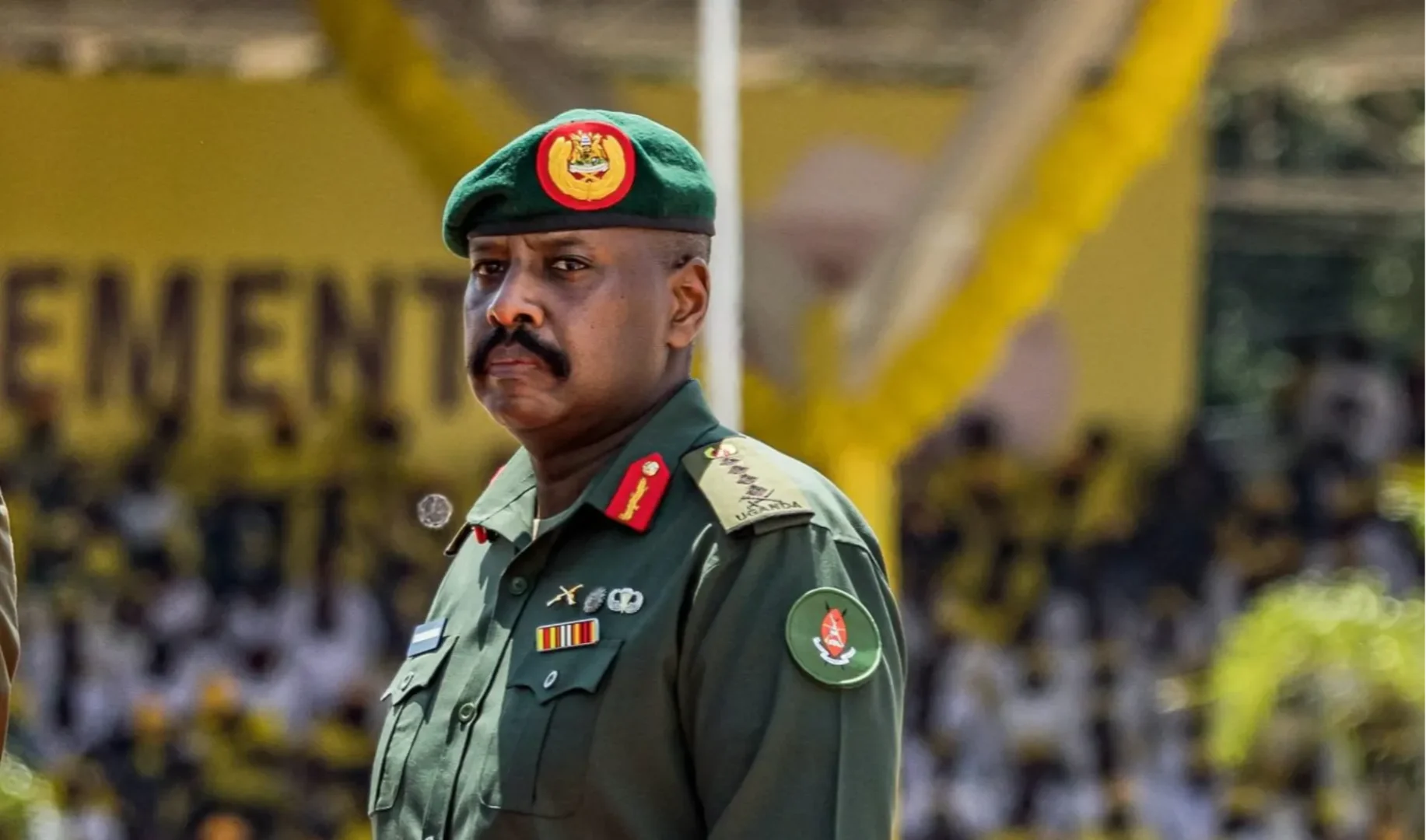
KINSHASA, DR Congo — The Democratic Republic of Congo (DRC) has summoned Uganda’s diplomatic representative in Kinshasa after a series of social media posts by Ugandan military chief Gen Muhoozi Kainerugaba appeared to endorse a rebel advance in the country’s conflict-hit east.
The controversy centres on Kainerugaba’s comments about Walikale, a strategically important and mineral-rich territory in North Kivu province. The general indicated that Uganda’s military would not oppose an attempt by the Front for the Refoundation of the Nation (FRN), a movement associated with former Congolese President Joseph Kabila, to take control of the area.
In one of the posts, he warned that Ugandan forces could seize Walikale themselves if the group delayed its advance.
The remarks prompted an official protest from Kinshasa, which considers them a serious breach of the diplomatic restraint expected between neighbouring sovereign states.
In a statement, the Congolese Ministry of Foreign Affairs said it had summoned the head of mission at Uganda’s embassy to demand an explanation from Kampala.
The ministry described the statements as particularly serious, arguing that they had created a major diplomatic and media incident and undermined the principles governing relations between independent countries.
Kinshasa said it expected Uganda to clarify its official position and take measures to prevent similar statements from recurring.
The Ugandan government had not publicly responded to the protest by Thursday, November 26, 2026.
Muhoozi’s remarks raise questions over Uganda’s military role
The diplomatic dispute is particularly sensitive because Uganda and DR Congo have maintained military cooperation against armed groups operating in the region.
Kainerugaba, who serves as Chief of Defence Forces (CDF) of the Uganda People’s Defence Forces (UPDF), has defended Uganda’s military presence in eastern DR Congo as a security necessity.
Ugandan troops have operated alongside Congolese forces since November 2021 under Operation Shujaa, a joint campaign targeting the Allied Democratic Forces (ADF), an armed group linked to Islamic State.
The ADF has carried out attacks in both countries, making its activities a shared security concern for Kampala and Kinshasa.
However, Kainerugaba’s latest statements have complicated that relationship by appearing to support the territorial ambitions of another armed movement operating in eastern Congo.
The controversy is not simply about an outspoken general expressing an opinion online. His position as Uganda’s military chief gives his public statements particular significance, especially when they concern the possible deployment or actions of Ugandan troops inside another country.
Kinshasa is therefore seeking to establish whether the comments represent an official Ugandan position or reflect the general’s personal views.
That distinction is important because any suggestion that one country’s armed forces could seize territory in another sovereign state raises questions about territorial integrity, military coordination and regional security.
Why Walikale matters in the eastern Congo conflict
Walikale is located in North Kivu, a province that has experienced years of fighting involving Congolese government forces and multiple armed groups.
The territory is also economically significant because of its mineral wealth, including tin and gold deposits that form part of the wider natural-resource economy of eastern DR Congo.
Control of mineral-producing areas can provide armed groups with access to revenue, trading networks and strategic territory, making them important in the wider conflict.
Kainerugaba’s comments therefore carry implications beyond the immediate diplomatic disagreement. An advance towards Walikale could alter the balance of power among armed groups and government forces in an already volatile region.
The FRN is associated with former Congolese president Joseph Kabila and has been linked in recent reporting to the wider political and military landscape surrounding the AFC/M23 movement.
Its reported ambitions in North Kivu have become an additional concern for Kinshasa, which is already facing multiple security challenges across the east.
The general’s apparent endorsement of the group’s advance has consequently raised questions about Uganda’s position towards competing armed actors in the conflict.
Foreign mercenaries and the aircraft incident
The latest controversy also followed reports that a Congolese military aircraft had been shot down in eastern DR Congo, with foreign personnel reportedly among those on board.
The incident drew attention to the presence of foreign military contractors and mercenaries in the country’s conflict.
Kainerugaba criticised the involvement of foreign mercenaries, reiterating his opposition to their presence in DR Congo.
His comments added another layer to the diplomatic dispute, given that Uganda has its own military personnel operating inside Congolese territory under a bilateral security arrangement.
The general’s criticism of foreign military contractors has not, however, established that Uganda has a mandate to support the territorial advance of an armed group.
Kinshasa’s objection is centred on the implications of his statements for the country’s sovereignty and the conduct expected between governments.
Muhoozi’s X account becomes inaccessible
Kainerugaba’s posts were published on his X account, which had close to 1.4 million followers before becoming inaccessible.
It remains unclear whether the general deactivated the account himself or whether the platform suspended it.
The disappearance of the account has made it more difficult for the public to access the original posts directly, although several media organisations have reported on their contents.
During the same period, Kainerugaba also declared: “My tweets in Uganda are directives that must be obeyed.”
The remark has drawn attention because it raises questions about the authority he attaches to his social media statements, particularly when they touch on military and diplomatic affairs.
For Uganda’s regional partners, the central concern is whether public comments by a serving military chief could be interpreted as signals of government policy or military intentions.
A history of diplomatic tensions over Muhoozi’s posts
The latest dispute is not the first time Kainerugaba’s social media activity has strained relations between Uganda and its neighbours.
In 2022, he triggered a diplomatic row with Kenya after posting threats about invading the country and capturing Nairobi. His father, President Yoweri Museveni, subsequently apologised for the remarks and sought to reassure Kenya about the relationship between the two countries.
In 2024, DR Congo also summoned Uganda’s diplomatic representative following threats by Kainerugaba against foreign mercenaries operating in eastern Congo.
Also Read: Why Muhoozi deactivated X after attacking Uganda’s Vice President Jessica Alupo
In February 2025, he again drew criticism after threatening to seize Bunia, the capital of Ituri province, amid claims that members of the Bahima community were facing attacks.
The latest statements have revived concerns about the diplomatic consequences of remarks made by a senior military official on a public platform.
Uganda and DR Congo face a delicate diplomatic test
The dispute presents a difficult challenge for two countries whose security interests remain closely connected.
Uganda has a stated interest in preventing armed groups such as the ADF from using eastern Congo as a base for attacks against its territory. DR Congo, meanwhile, must manage several armed conflicts while protecting its territorial integrity and maintaining relations with neighbouring states involved in regional security operations.
Kinshasa’s demand for an official explanation places responsibility on Kampala to clarify whether Kainerugaba’s comments reflect government policy.
The Congolese government has reiterated its commitment to regional peace and stability but warned that it would defend its sovereignty, institutions and national dignity against interference or provocation.
For now, the immediate question is whether Uganda will formally distance itself from the general’s remarks and reassure Kinshasa that its military operations in DR Congo remain governed by the existing bilateral security arrangements.
The answer could have implications for military cooperation between the neighbours at a time when eastern Congo remains one of the Great Lakes region’s most volatile security theatres.
