


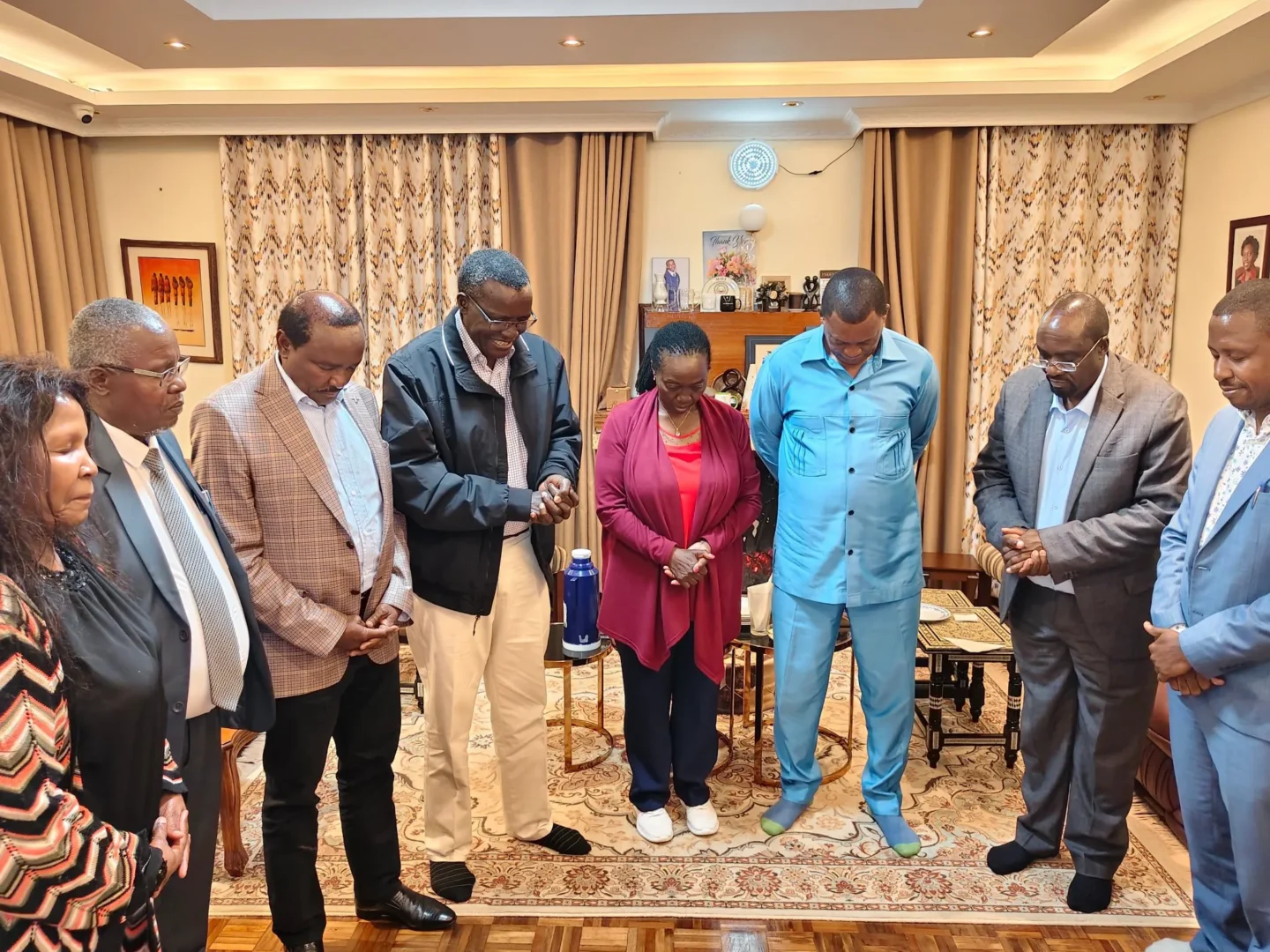
NAIROBI, Kenya — A section of Kenyan political and legal leaders has expressed solidarity with People’s Liberation Party (PLP) leader and Senior Counsel Martha Karua following her detention and deportation from Uganda, an incident that has triggered fresh debate about democratic freedoms, regional integration and access to legal representation within the East African Community (EAC).
Karua was denied entry into Uganda on Monday after arriving at Entebbe International Airport for a court-related engagement involving detained Ugandan opposition figure Dr Kizza Besigye.
She had travelled alongside Law Society of Kenya (LSK) President Charles Kanjama to attend proceedings connected to Besigye’s legal team and the bail application of opposition politician Erias Lukwago.
Ugandan immigration authorities reportedly barred Karua from entering the country and ordered her to return to Kenya, a move that has since attracted criticism from political leaders, lawyers and human rights advocates across the region.
Kenyan leaders condemn deportation
Among those who publicly backed Karua was Wiper Democratic Movement leader Kalonzo Musyoka, who said he met the senior lawyer after her return to Kenya alongside former Public Service Cabinet Secretary Justin Muturi, former Chief Justice David Maraga, Democratic Action Party-Kenya (DAP-K) leader Eugene Wamalwa and other leaders.
Kalonzo described the incident as troubling and warned that it could undermine the principles underpinning regional cooperation within the East African Community.
“What transpired is deeply troubling and sets a dangerous precedent for our region. The arbitrary denial of entry to a respected leader and Senior Counsel is not only an affront to her dignity, but also a direct violation of the principles that underpin the East African Community,” Kalonzo said.
He argued that the incident reflects broader concerns about democratic governance and shrinking civic space within the region.
“We must not allow the continued shrinking of democratic space within our region to become the norm. Today it is Martha Karua, tomorrow it could be any voice that dares to stand for justice,” he added.
The former Vice President said leaders across East Africa should defend democratic freedoms, the rule of law and the principle of free movement guaranteed under regional agreements.
“We stand in full solidarity with Martha Karua and with all those who continue to champion a just, open and democratic East Africa,” he said.
Karua alleges political interference
Speaking after returning to Nairobi, Karua accused Ugandan authorities of interfering with the legal defence of Besigye, who is facing treason charges in Uganda.
The veteran lawyer said immigration officials detained her shortly after arrival and confiscated her mobile phones before informing her that she would not be allowed into the country.
“After being taken around offices, I was taken to a man who told me he’s the principal immigration officer at the airport, and he told me that I would not be allowed to enter. I told them there was no problem, but by then two of his junior officers had snatched both my phones,” Karua said.
She maintained that the decision was politically motivated and intended to frustrate the legal representation of opposition figures facing prosecution.
“This is political persecution of Besigye, and it is interference with his defence because the hearing of his case was even supposed to start last week,” she said.
Regional legal concerns
The deportation has reignited debate over the treatment of lawyers involved in politically sensitive cases across East Africa and raised questions about the ability of legal practitioners to participate in judicial proceedings beyond their national borders.
Also Read: Martha Karua’s deportation from Tanzania exposes cracks in East African integration
Legal observers argue that the incident could have broader implications for regional integration, particularly within the East African Community, which promotes the free movement of persons, services and professionals among member states.
Karua has previously been involved in several high-profile legal and political matters across the region and has emerged as one of the most prominent legal figures representing opposition leaders in East Africa.
Her deportation comes amid heightened political tensions in Uganda, where several opposition figures and activists have recently faced arrest, prosecution and court proceedings linked to national security and treason-related allegations.
As of press time, Ugandan authorities had not publicly explained the reasons for denying Karua entry into the country, while calls for clarification from legal bodies and political leaders continued to grow.
