


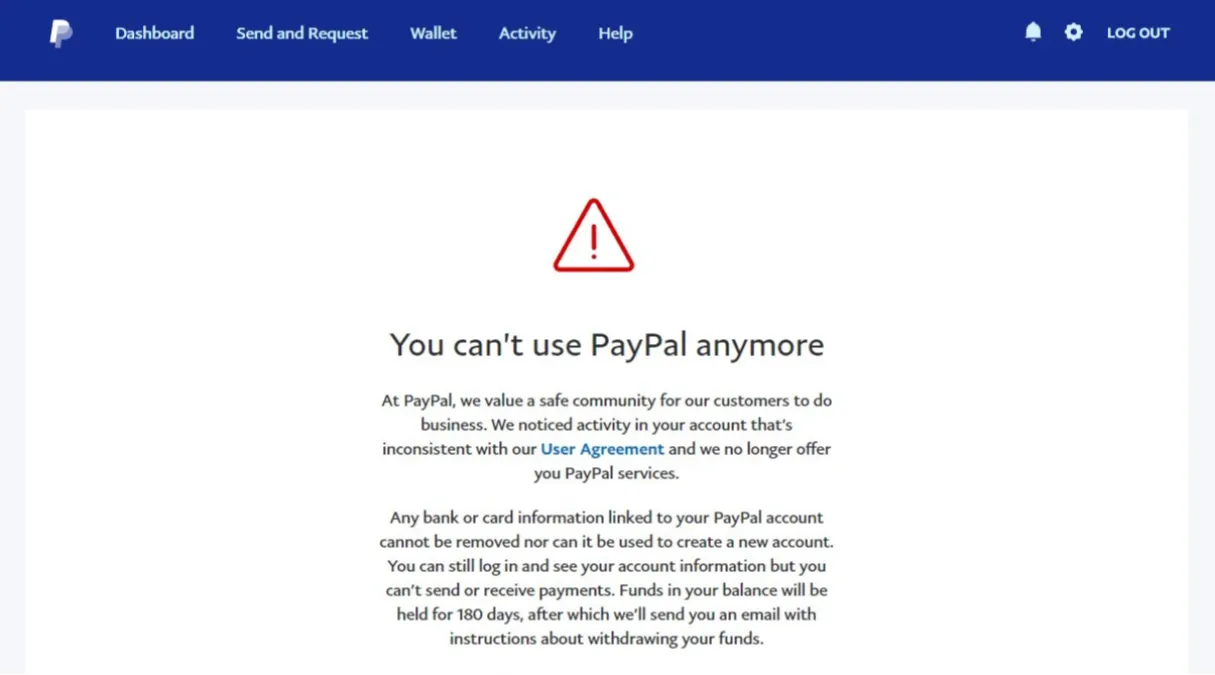
NAIROBI, Kenya — Thousands of Kenyan freelancers, online traders, startups, and digital entrepreneurs are facing uncertainty after PayPal intensified account verification and anti-money laundering compliance checks, leading to reports of frozen funds, temporary restrictions, and permanent account limitations.
The development has sparked concern across Kenya’s growing digital economy, where PayPal remains one of the most widely used platforms for receiving payments from international clients.
Recent reports indicate that some Kenyan users have had access to their funds restricted after the company requested additional documentation, including employment contracts, bank statements, proof of business activity, and evidence of residential addresses.
Users who fail to provide the requested information risk having their accounts limited for up to 180 days or permanently deactivated.
Why PayPal is tightening verification requirements
While PayPal has not announced any Kenya-specific sanctions or suspension of services, the company says account limitations are part of its global compliance framework designed to combat money laundering, fraud, terrorism financing, and other financial crimes.
According to PayPal’s official policy, accounts may be restricted when the company requires additional documentation to meet anti-money laundering and counter-terrorism financing obligations or when unusual account activity triggers internal risk reviews.
The stricter scrutiny comes as Kenya remains under increased monitoring by the Financial Action Task Force (FATF), the global anti-money laundering watchdog.
Kenya was placed on the FATF “grey list” in February 2024 due to concerns over deficiencies in its anti-money laundering and counter-terrorism financing framework.
Countries on the grey list are often subjected to heightened due diligence by international financial institutions and payment providers.
Financial analysts say global payment firms such as PayPal are under pressure to strengthen customer verification procedures in jurisdictions considered higher risk for illicit financial flows.
Kenyan users face unique challenges
One of the biggest obstacles cited by affected users is PayPal’s requirement for proof of physical residential addresses.
Many Kenyans, particularly freelancers and remote workers, operate in areas where formal street addressing systems remain limited.
Utility bills, tenancy agreements, or municipal address documentation commonly required by international financial institutions are often unavailable or difficult to obtain.
Several affected users told local media they had submitted identification documents and evidence of legitimate business activity but still struggled to satisfy address verification requirements.
Others reported receiving notices informing them that their funds would remain inaccessible for up to 180 days while PayPal completed compliance reviews.
The restrictions have particularly affected:
- Freelancers receiving overseas payments
- Software developers and digital consultants
- Content creators and creative professionals
- Small e-commerce businesses
- Online service providers
- Startup founders receiving international payments
Is PayPal leaving Kenya?
No.
Despite widespread speculation on social media, there is no evidence that PayPal is withdrawing from Kenya or terminating services for Kenyan customers.
The platform remains operational and continues to support transactions through existing integrations, including partnerships with Kenyan financial institutions and mobile money services.
Reports suggesting a complete exit from Kenya have been dismissed as false.
What appears to be happening is an intensification of compliance and risk-management procedures rather than a withdrawal from the market.
Impact on Kenya’s digital economy
The issue highlights the vulnerability of Kenya’s digital workforce, which increasingly depends on cross-border payment platforms to earn income from global markets.
Over the past decade, thousands of Kenyan freelancers have built careers serving clients in North America, Europe, Asia, and the Middle East.
For many of them, PayPal remains a primary payment channel because of its widespread international acceptance.
Industry observers warn that prolonged account freezes could disrupt cash flow for small businesses and independent professionals who rely on timely access to international earnings.
Also Read: PayPal expands digital dollar payment services to Uganda through PYUSD
The situation has also renewed discussions about the need for greater diversification of payment options.
Some freelancers have increasingly turned to alternatives such as Wise, Payoneer, direct bank transfers, and other international payment platforms to reduce reliance on a single service provider.
What users should do
Financial compliance experts advise PayPal users to ensure that their account information remains accurate and up to date.
Users receiving international payments are encouraged to maintain:
- Valid government-issued identification documents
- Proof of address where available
- Client contracts or invoices
- Business registration documents where applicable
- Consistent banking and payment information
They also recommend keeping alternative payment channels available in case funds become temporarily inaccessible during compliance reviews.
The bigger picture
The PayPal restrictions underscore the growing tension between global financial regulation and the realities of digital commerce in emerging markets.
As international regulators intensify efforts to combat money laundering and financial crime, payment providers are increasingly required to verify customer identities and transaction sources.
While such measures are intended to strengthen financial security, they can also create significant challenges for legitimate users operating in countries with less developed address systems and informal economic structures.
For Kenya’s rapidly expanding digital economy, the latest developments serve as a reminder that access to global financial platforms is becoming increasingly tied to compliance standards that continue to evolve alongside international anti-money laundering regulations.
