


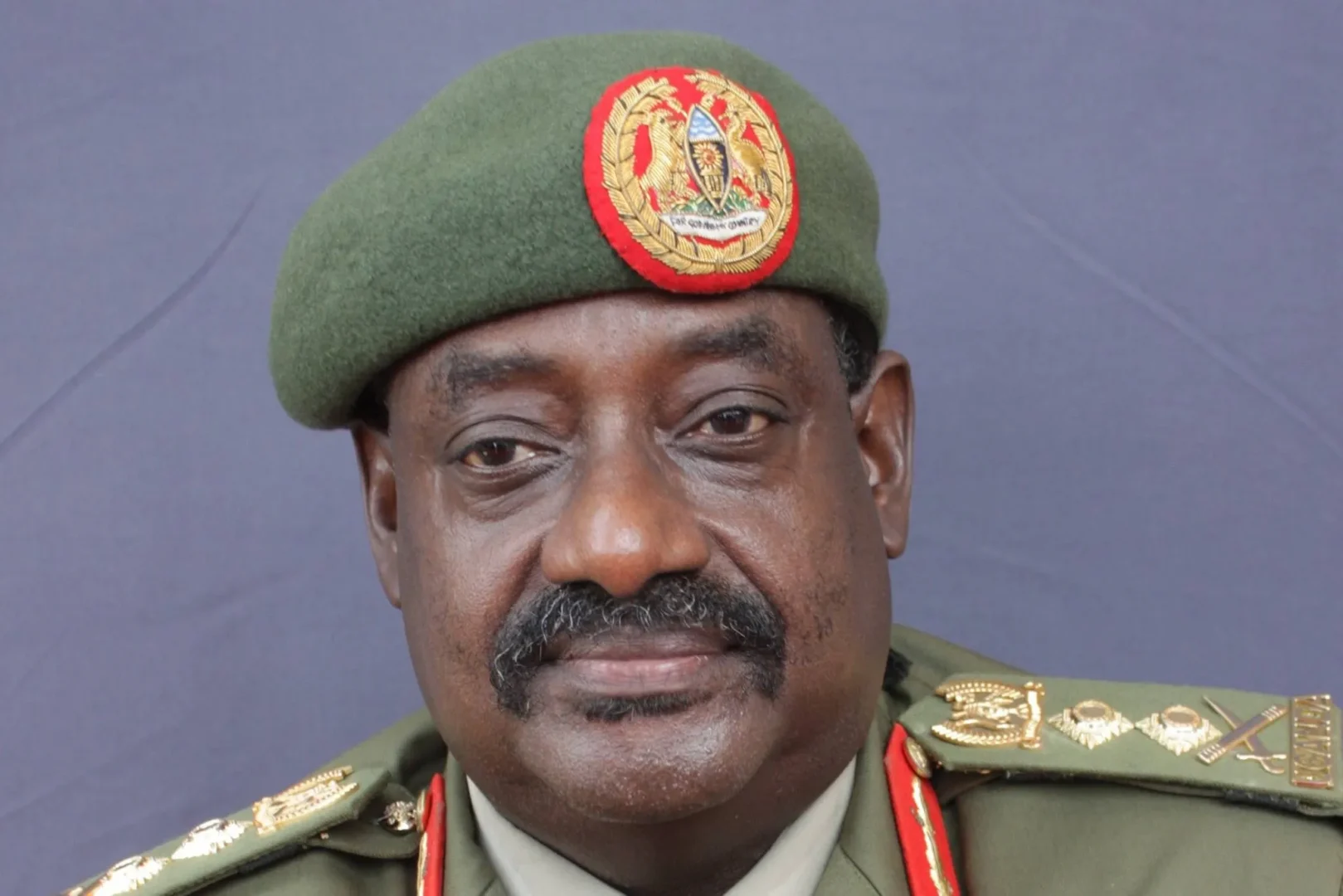
KAMPALA, Uganda — Retired army general David Sejusa has offered a blunt and deeply personal assessment of the political downfall of former Speaker Anita Annet Among, arguing that a combination of ambition, inexperience and proximity to power led to what he described as a fatal misreading of Uganda’s political system.
In a lengthy social media reflection published amid intensifying corruption investigations, Sejusa framed Among’s fall primarily as a consequence of wealth accumulation and political overconfidence rather than external conspiracies or ideological conflict.
“AAA’s fall was about HER MONEY, and nothing else,” he wrote, referring to the former Speaker by her initials.
Gen Sejusa, a former intelligence coordinator and long-time insider within Uganda’s ruling establishment, dismissed suggestions that Among’s troubles were linked to religion or external political forces.
Instead, he described her trajectory as one shaped by patronage and rapid elevation within the system, followed by a gradual misinterpretation of signals from Yoweri Kaguta Museveni.
According to Gen Sejusa, public displays of closeness to the President, including shared appearances, visits to State House and symbolic gestures of support, may have contributed to a perception of political immunity.
“Like the President taking her on his farm, driving her in his car, giving her all those cows… it started getting into her mind that maybe she was being prepared for something bigger,” he wrote.
He argued that this perceived proximity may have encouraged Among to believe she enjoyed exceptional protection within the system.
Gen Sejusa further suggested that Among consolidated her power by building extensive political networks and aligning herself with influential factions.
He cited her association with the Patriotic League of Uganda (PLU) and proximity to Gen Muhoozi Kainerugaba as part of a broader strategy to entrench her influence.
“She boarded the PLU ship and worked overdrive to show proximity,” he wrote.
Her growing confidence, he added, was reinforced by political victories, including her defeat of former Speaker Rebecca Kadaga in internal party contests.
But Gen Sejusa argued that such momentum may have masked deeper vulnerabilities.
“It could only lead to what we see now,” he said.
Gen Sejusa’s remarks come as security agencies intensify investigations into Among’s wealth, assets and financial dealings.
Authorities have already seized multiple luxury vehicles, including a Rolls-Royce and high-end SUVs, while forensic teams examine documents, electronic devices and financial records recovered during coordinated searches at her residences.
The investigation has widened into a multi-agency operation involving financial, digital and asset-tracing components, signalling a shift from political pressure to structured legal scrutiny.
Among has denied wrongdoing and pledged to cooperate with investigators following her withdrawal from the Speakership race ahead of the 12th Parliament.
In one of his most pointed observations, Sejusa suggested that visible displays of wealth may have accelerated Among’s political exposure.
“I doubt she fully understood what was happening, otherwise she wouldn’t have brought in a Rolls Royce,” he wrote.
The comment reflects a broader theme emerging from the crisis, the role of public perception in shaping political vulnerability.
In a country where economic pressures remain significant, such symbols of wealth can quickly transform into political liabilities.
Sejusa went further, linking large-scale corruption to potential national security risks.
“Corruption of this magnitude is many times with an underbelly of high treason,” he argued.
“Why would someone want that much money?”
While not providing specific evidence, the assertion highlights concerns within sections of Uganda’s security establishment about the scale and implications of alleged financial misconduct among senior officials.
Analysts say such views reflect a long-standing belief within security circles that corruption at high levels can intersect with broader state vulnerabilities.
Sejusa’s intervention is significant not only for its content but also for its source.
Also Read: Uganda’s ex-spy chief David Sejusa, who ‘opposed Museveni’s monarchy,’ defends UK exile
As a former senior military and intelligence figure who played a key role during Uganda’s bush war era, his comments offer a rare glimpse into how parts of the country’s historical power structure interpret the rapid rise and sudden isolation of a senior political figure.
His analysis has since sparked debate across political and security circles, with some viewing it as candid insight and others as a subjective interpretation shaped by internal power dynamics.
As investigations into Among continue to expand, attention is likely to shift toward whether prosecutors will pursue formal charges and how far the inquiry will extend within Uganda’s political system.
For now, Gen Sejusa’s remarks add another layer to an already complex narrative—one that blends personal ambition, institutional power and the shifting dynamics of political survival at the highest levels of government.
