


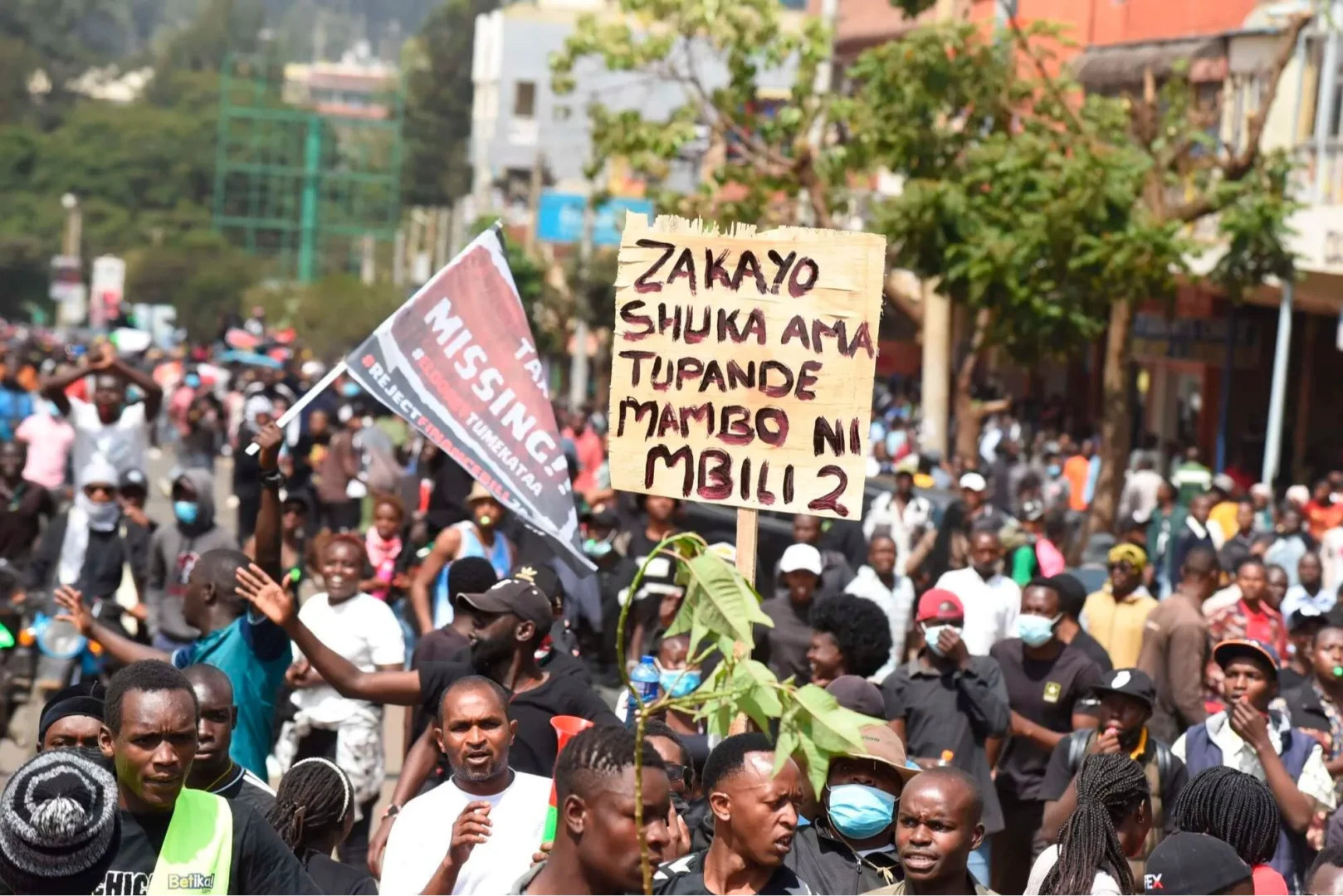
NAIROBI, Kenya — A new political force is emerging across East Africa, driven not by traditional party structures or long-established movements, but by digitally connected young people reshaping how dissent is expressed and organised.
From Kenya to Uganda and Tanzania, Generation Z is increasingly using social media platforms to mobilise, document, and amplify political grievances—often in real time.
What distinguishes this wave of activism is its decentralised nature.
Unlike previous movements led by identifiable figures or organisations, Gen Z-driven protests tend to be fluid, leaderless, and rapidly evolving.
Online platforms serve as both coordination tools and information hubs, enabling participants to bypass traditional gatekeepers such as political parties and mainstream media.
In Kenya, recent demonstrations have highlighted the power of digital mobilisation, with hashtags translating into physical turnout and sustained public pressure.
Young people have used platforms to share live updates, fact-check official narratives, and document interactions with authorities.
This has altered the dynamics of protest.
Governments are no longer responding only to crowds on the streets, but also to narratives unfolding online, where public perception can shift quickly and globally.
At the same time, digital activism has introduced new risks.
Authorities across the region have expressed concern over misinformation, cyber mobilisation, and the potential for online narratives to escalate tensions.
In some cases, this has led to increased monitoring of digital spaces and debates over regulation.
Yet for many young people, digital activism is less about confrontation and more about participation.
It represents an attempt to engage in governance processes that they often feel excluded from, particularly in contexts where youth unemployment and economic inequality remain high.
The movement is also redefining political identity.
Rather than aligning strictly along ethnic or party lines, many young activists frame their demands around issues such as economic justice, governance, accountability, and opportunity.
This shift could have long-term implications for electoral politics in the region.
Analysts suggest that as Gen Z becomes a larger share of the voting population, their priorities—and methods of engagement—could reshape political strategies.
Also Read: ‘Tuko Kadi’: How a viral sheng phrase is driving Kenya’s Gen Z to the ballot
Traditional campaign models may need to adapt to a generation that values transparency, responsiveness, and direct communication.
Still, questions remain about sustainability.
Leaderless movements can mobilise quickly, but maintaining momentum and translating protest into policy outcomes remains a challenge.
For now, however, the message is clear.
Across East Africa, political power is no longer defined solely by institutions—it is increasingly influenced by networks, narratives, and a generation that is learning to organise itself in real time.
