


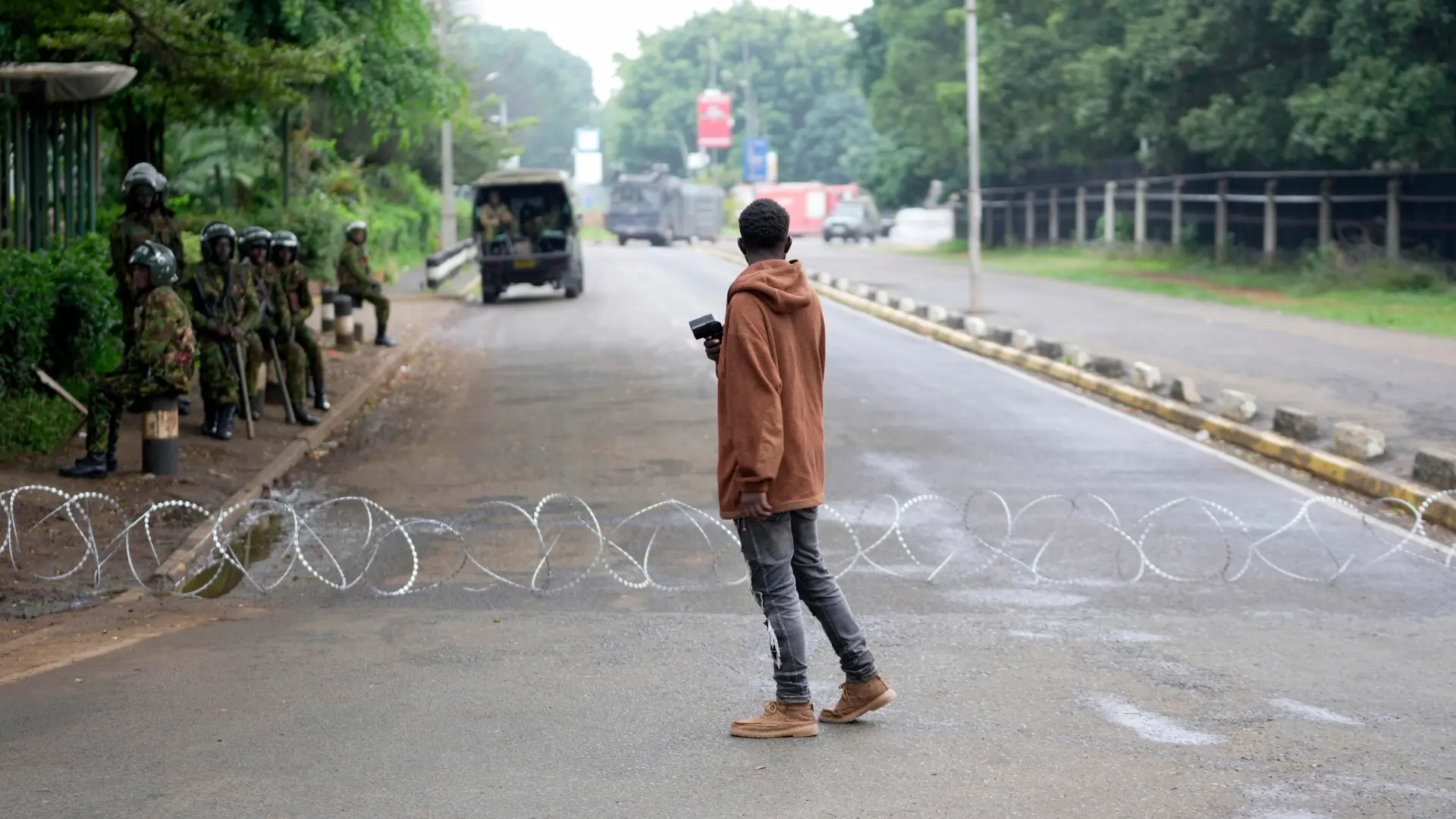
NAIROBI, Kenya — Kenya’s security forces have implemented a comprehensive lockdown of all major roads leading into central Nairobi, effectively paralyzing much of the city ahead of today’s planned nationwide Saba Saba protests.
The city center remains largely deserted, with businesses shut and a formidable police presence dominating the streets. Some schools have advised students to remain at home, reflecting the prevailing apprehension.
Hundreds of early-morning commuters and overnight travelers found themselves stranded at checkpoints, some situated more than 10 kilometers (six miles) from the city center, with only a limited number of essential vehicles permitted to pass.
Within Nairobi, roads accessing critical government installations, including State House (the president’s official residence) and the Kenyan Parliament, have been heavily barricaded with razor wire. In a statement issued on Sunday evening, the National Police Service (NPS) reiterated its constitutional duty to safeguard lives and property while upholding public order.
The NPS warned against any unlawful activity during the demonstrations, emphasizing that violations of peaceful protest would be met with “firm and appropriate action.”
Monday’s protests, known as Saba Saba (Swahili for July 7), commemorate the pivotal 1990s struggle that ultimately led to the reintroduction of multiparty democracy in Kenya. This year’s demonstrations have been primarily organized by Gen-Z youth, who are demanding good governance, enhanced accountability, and justice for victims of police brutality. These rallies represent the latest in a series of anti-government protests that began last year.
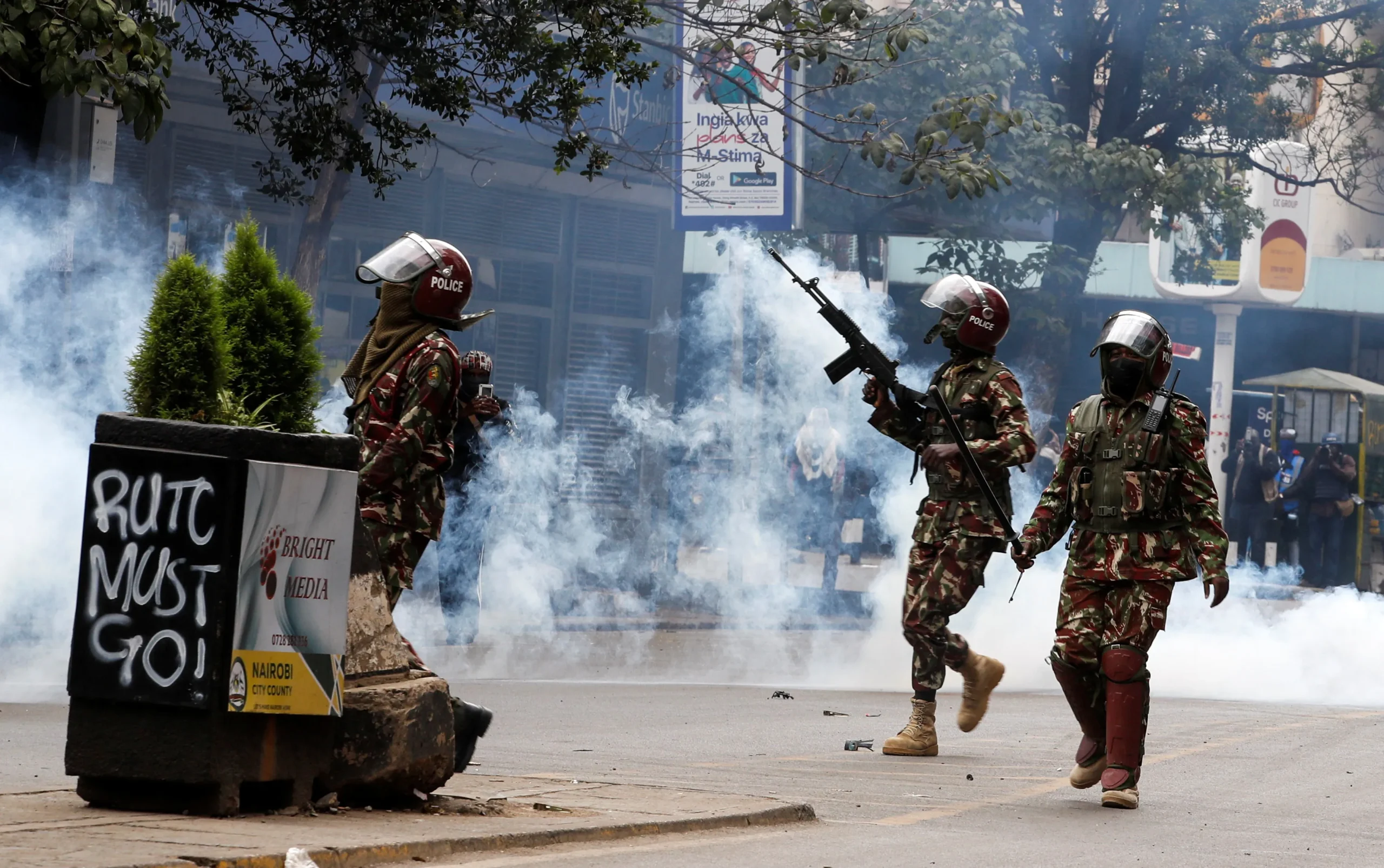
On June 25, at least 19 individuals were killed and thousands of businesses were looted and destroyed during nationwide protests held in honor of those who died in last year’s anti-tax demonstrations. Recent protests have frequently descended into violence, with recurring reports of infiltration by “goons” accused of looting and assaulting protesters.
Civil society groups have alleged collusion between these groups and the police, accusations that the police have vehemently denied.
Adding to the escalating tensions, an armed gang attacked the headquarters of the Kenya Human Rights Commission (KHRC) in Nairobi on Sunday. The KHRC had been hosting a press conference organized by women advocating for an end to state violence ahead of Monday’s protests.
Ernest Cornel, a KHRC spokesman, recounted the incident: “They were carrying stones, they were carrying clubs… they stole laptops, they stole a phone and they also took some valuables from journalists who were there.” He stated that the gang, comprising at least 25 individuals on motorbikes, chanted that “there will be no protest today.”
This year marks the 35th anniversary of the original Saba Saba protests – a watershed moment that helped usher in multiparty democracy after years of one-party rule under then-President Daniel arap Moi.
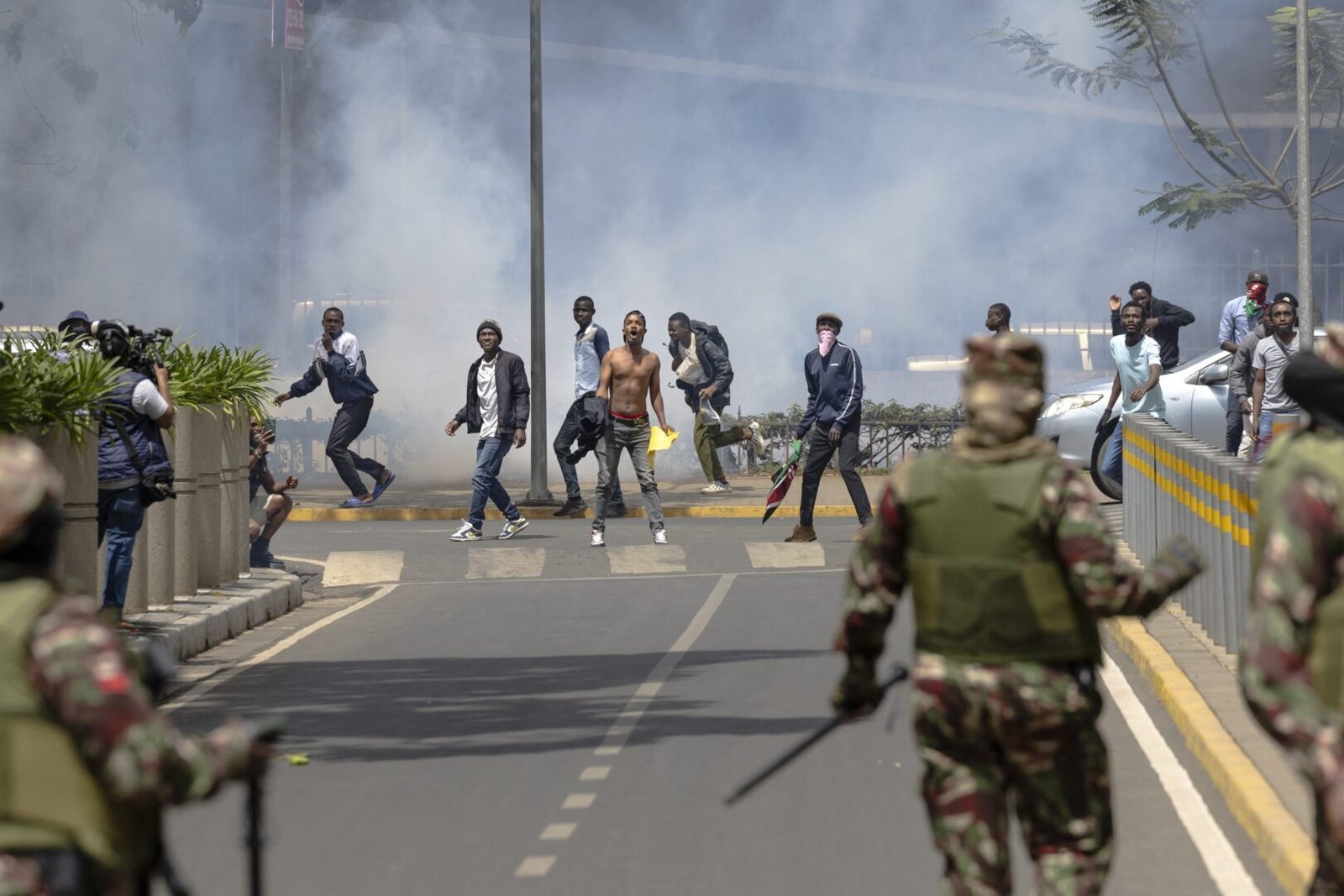
The government’s response in 1990 was brutal, with numerous arrests and reports of at least 20 fatalities. Since then, Saba Saba has become a potent symbol of civic resistance and the ongoing fight for democratic freedoms in Kenya.
Also Read: Raila Odinga to join Saba Saba rally at Kamukunji Grounds over rights violations, economy
By mid-morning on Monday, hundreds of overnight passengers remained stranded outside the city center due to continued road closures. Long-distance buses, such as those at the Kabete area (approximately 13km from the city center), held passengers who could not afford alternative transport like motorcycle rides to their destinations.
Humphrey Gumbishi, a bus driver, expressed the frustration: “We started travelling at 8:30pm last night… We want the government to engage in a dialogue with Gen Zs so all this can come to an end.”
Elsewhere around the city, police confronted groups attempting to breach the security cordon, deploying tear gas to disperse individuals on Thika Road and in Kitengela, a town on the outskirts of the capital. In Kamukunji, near the historical site of the original Saba Saba protests, police engaged groups of demonstrators who had lit fires on the streets.
While some clashes were reported in a few towns, most other areas across the country remained largely quiet.
