


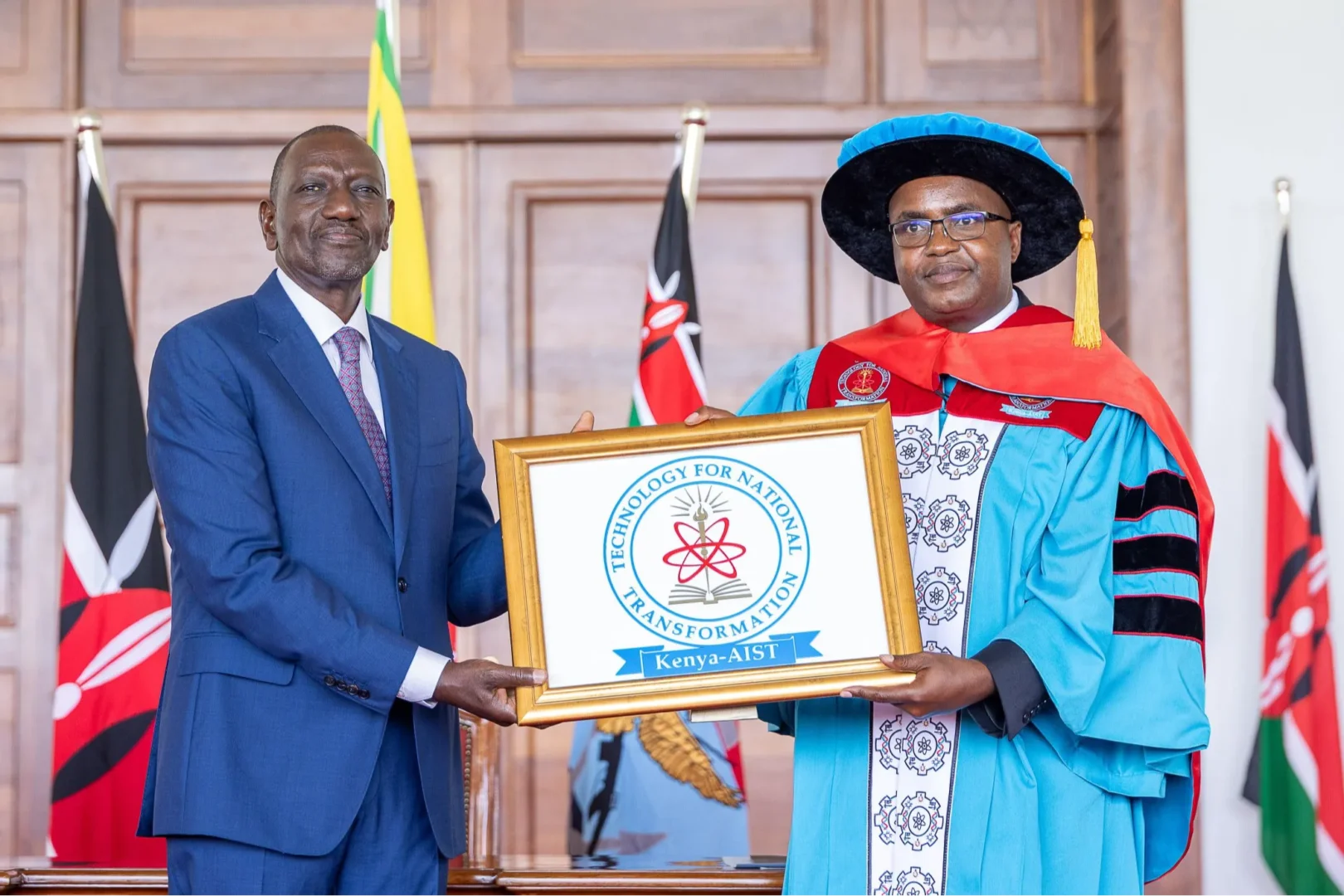
NAIROBI, Kenya — President William Ruto has announced plans to establish a private research laboratory at his farm, saying Kenya’s long-term development will depend on sustained investment in scientific research, innovation, and knowledge creation.
The President made the remarks on Thursday 14, May 2026 during a ceremony at State House, Nairobi, where he presided over the awarding of university charters to the Kenya Advanced Institute of Science and Technology (KAIST) and the Kenya Medical Research Institute (KEMRI) University.
The event marked a significant milestone in Kenya’s higher education and research sector, with government officials positioning it as part of a broader strategy to strengthen science-driven development.
Ruto’s comments came after Health Cabinet Secretary Aden Duale jokingly invited him to join KEMRI as a researcher after leaving office in 2032.
“I know the CS for Health has said that I should consider taking up research at this great institution, and it is true; some of my classmates already joined KEMRI after we graduated, and I would be very happy to join some of my classmates that are there,” Ruto said.
The President said the elevation of KEMRI into a fully chartered university institution would strengthen Kenya’s capacity to generate scientific knowledge, particularly in the health sector.
“But let me say this, I am very happy that finally a great institution like KEMRI has now been elevated to a level where they can produce more scientists and create new knowledge in the space that is relevant to the health of the nation,” he said.
Ruto further revealed that he had already initiated the development of a private laboratory at his farm, noting that equipment for the facility was already being procured.
“I am already developing a lab on my farm. I have got some equipment which is on its way for a lab at my farm because I believe the future of a nation is making sure that research becomes front and centre of everything,” he said.
He emphasised that research and innovation are central to improving healthcare outcomes, advancing knowledge systems, and strengthening national development.
“So that we not only keep on improving on the knowledge and the experience, but we also begin to share the knowledge with others,” he added.
Health Cabinet Secretary Aden Duale described KEMRI as one of the region’s leading scientific institutions, saying its upgrade to a university charter represented a major step forward for Kenya’s research ecosystem.
“KEMRI is the home of researchers and scientists, and we will welcome you when you retire because you are a scientist,” Duale told the President.
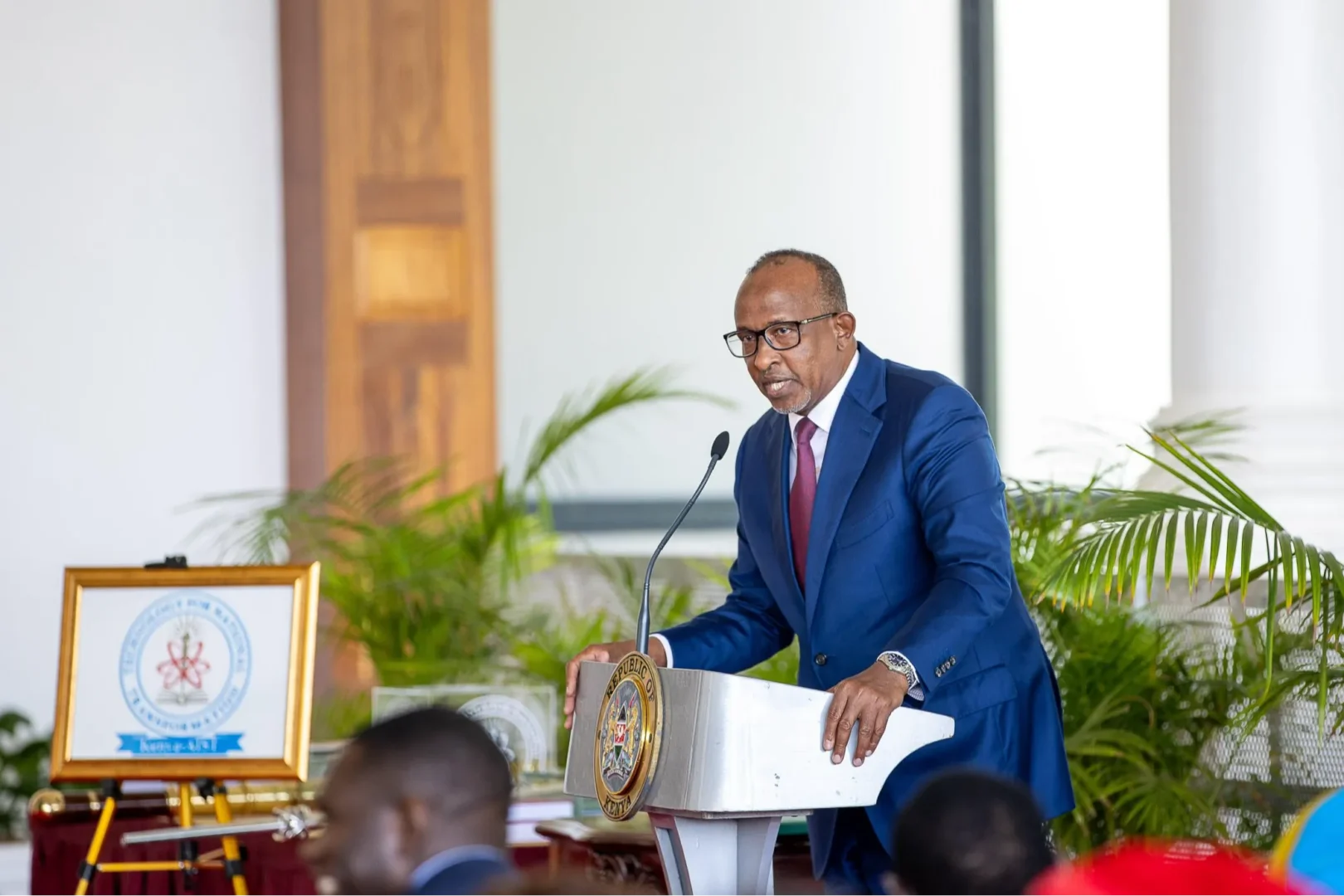
Duale added that KEMRI hosts advanced laboratories supporting high-level research, including biosecurity systems, polio diagnostics, and vaccine-related work developed in partnership with global organisations such as the World Health Organization (WHO) and Africa Centres for Disease Control and Prevention.
“KEMRI has become one of the best regional hubs in terms of innovation, diagnostics, therapeutics and vaccine production,” he said.
The newly chartered KEMRI University is expected to focus on postgraduate training and advanced scientific research, aimed at strengthening Kenya’s capacity in medical science and innovation.
Also Read: Kenya set to host World Farmers’ Organization Assembly in Nairobi
The developments come as Kenya continues to position science, technology, and research at the centre of its development agenda, particularly in healthcare delivery, innovation ecosystems, and higher education reform.
This announcement aligns with Kenya’s broader shift toward a knowledge-based economy, where institutions such as the Kenya Medical Research Institute (KEMRI) are increasingly being restructured to support advanced scientific training and regional research leadership.
Globally, governments investing in national research capacity have often focused on expanding public-private innovation hubs, biotechnology development, and agricultural science—areas Kenya is also prioritising under its long-term development framework.
The integration of universities with research institutions reflects a wider African trend aimed at reducing dependency on external scientific expertise while strengthening local innovation capacity in health, climate resilience, and food systems.
