


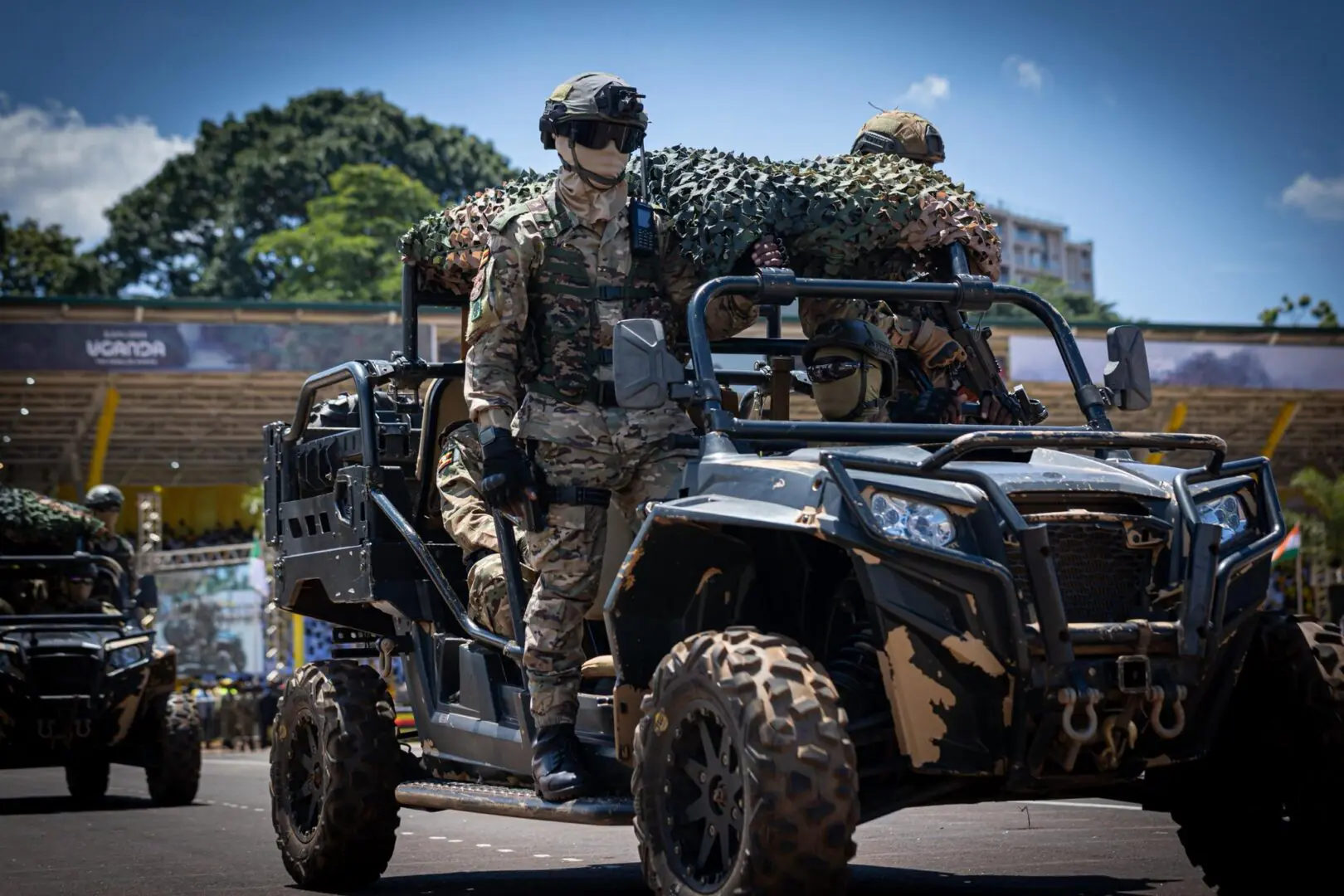
KAMPALA, Uganda — The skies above Kampala turned into a theatre of military power on Tuesday as Uganda staged a large-scale defence display during President Yoweri Museveni’s swearing-in ceremony for a seventh term in office at Kololo Independence Grounds.
The carefully choreographed parade drew crowds estimated at over 1,000 attendees and featured aerial fly-pasts, armoured formations, and Special Forces Command (SFC) demonstrations designed to project Uganda’s military capability and operational readiness.
Air power on full display
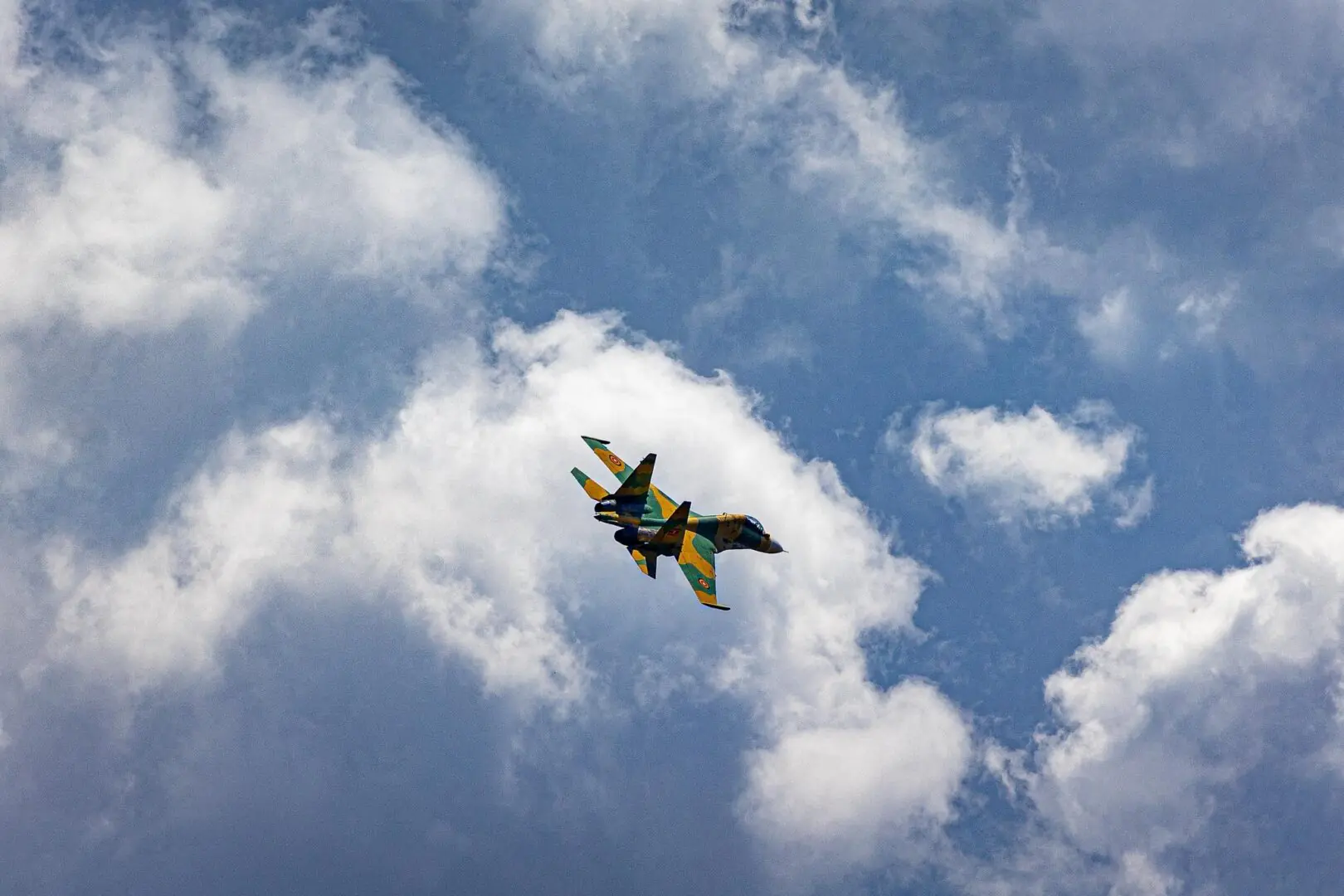
The aerial segment was led by fighter jets, including the Russian-made Sukhoi Su-30MK2, part of Uganda’s modern combat aircraft fleet.
The display also featured MiG-21 and MiG-23 jets, underscoring the country’s legacy air assets still in active service.
Military helicopters, including MI-17 transport aircraft and MI-24 and MI-28 attack helicopters, carried out coordinated manoeuvres.
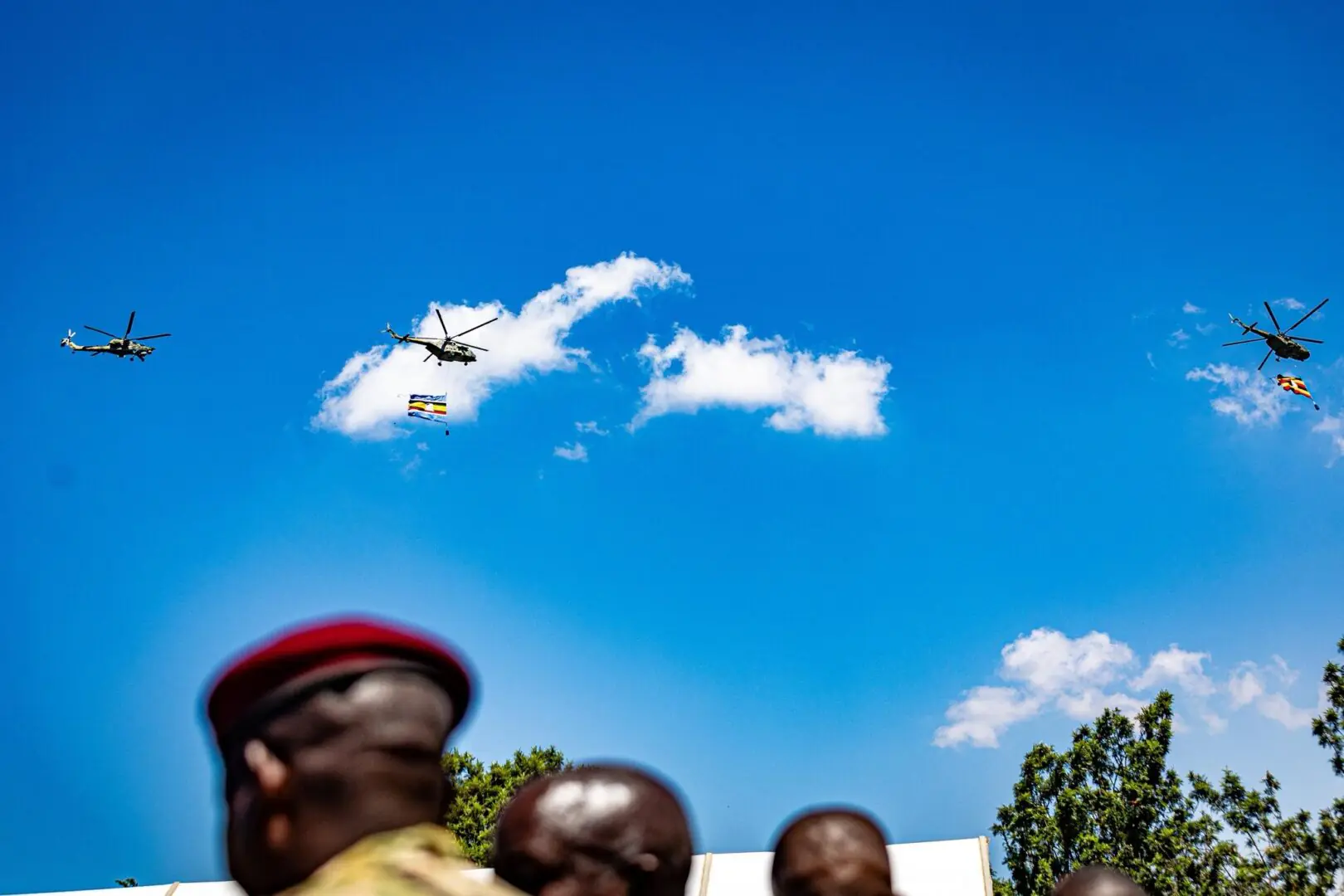
These platforms are widely deployed by the Uganda People’s Defence Forces (UPDF) in both domestic operations and regional missions.
Armoured formations and heavy artillery
On the ground, Uganda’s armoured capability was demonstrated through a convoy of vehicles including Mamba/Nyoka and Hizir armoured personnel carriers, alongside main battle tanks such as the T-55 and T-90.
Other hardware included BM-21 Grad multiple rocket launch systems, 105mm and 122mm artillery guns, and various air defence systems.
The display highlighted what military planners described as Uganda’s capacity for long-range engagement and aerial defence.
Infantry fighting vehicles were also showcased, including models produced by the National Enterprises Corporation (NEC), the UPDF’s commercial and manufacturing arm.
Special Forces operations simulation
One of the most closely watched segments came from the Special Forces Command (SFC), whose paratroopers conducted tactical jump demonstrations simulating operations in complex environments, including night drops and high-altitude insertions.
The exercise was presented as a demonstration of rapid deployment capability and elite battlefield readiness.
Regional role and security footprint
Uganda’s military is frequently deployed beyond its borders, particularly in regional stabilisation operations.
According to defence assessments such as the Global Firepower Index, the UPDF is ranked among Africa’s notable mid-tier forces, reflecting its manpower strength and operational experience.
Uganda has played long-standing roles in peace and security operations across the Great Lakes region, including interventions in South Sudan, Somalia, and the Democratic Republic of the Congo (DRC).
Also Read: Museveni defends 40-year NRM rule, unveils ‘Seven-Brick’ development model
In Somalia, Uganda was among the first contributors to the African Union Mission in Somalia (AMISOM) in 2007. Its forces were instrumental in early operations that pushed Al-Shabaab out of Mogadishu, where the group had maintained a stronghold.
Ugandan troops continue to serve in key protection roles in Somalia, including guarding government installations such as the Somali Parliament and State House.
The UPDF also contributes personnel to the United Nations Guard Unit, tasked with protecting UN personnel, facilities, and assets.
The parade formed part of wider inauguration events in Kampala, which combined military spectacle, political ceremony, and diplomatic engagement, reflecting both Uganda’s internal power structure and its regional security ambitions.
