


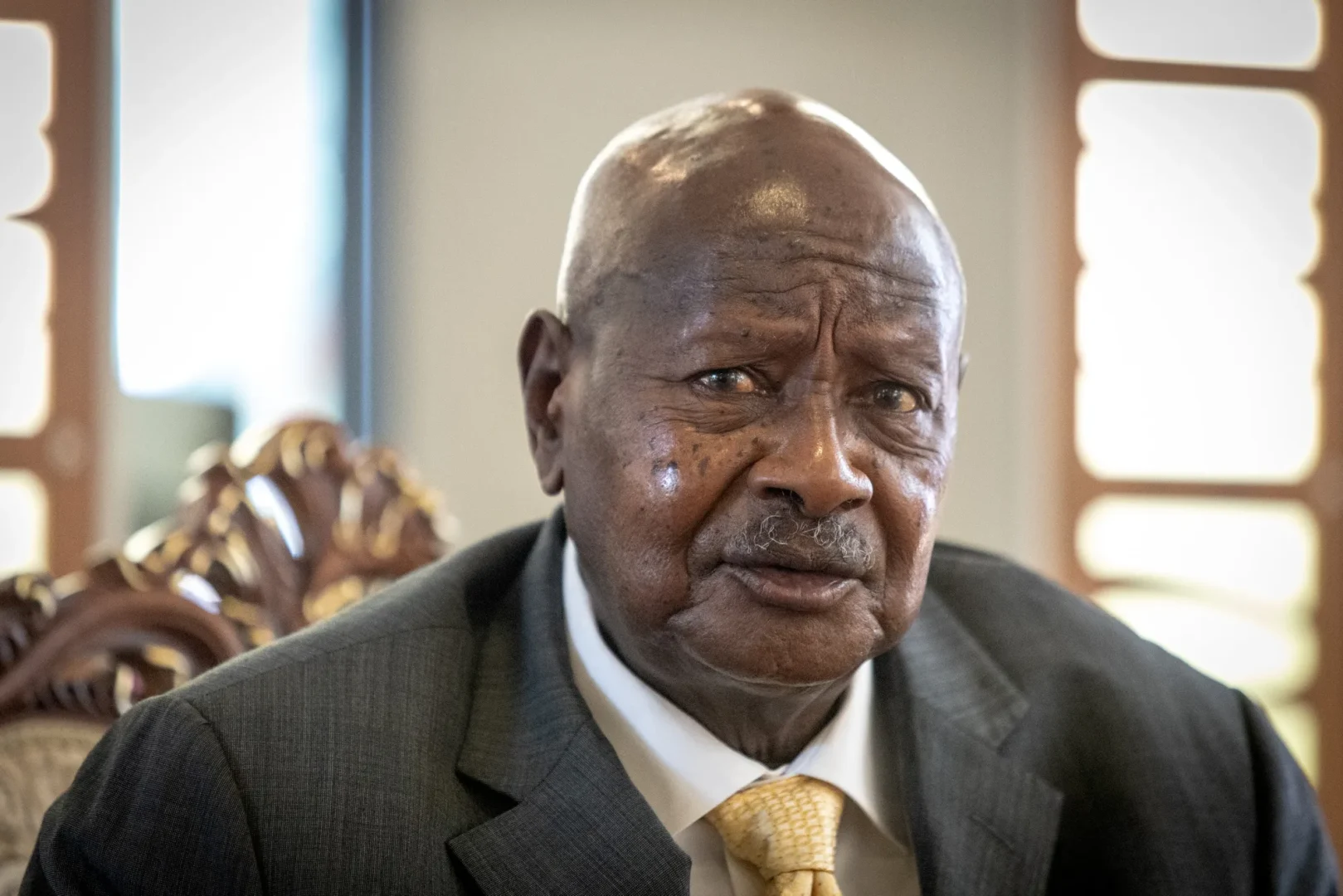
KAMPALA, Uganda — As President Yoweri Museveni prepares to begin a seventh term in office, his international reputation reflects not only the transformation of Uganda over nearly four decades, but also shifting global political realities.
Over the years, Museveni has been viewed through dramatically different lenses: first as a revolutionary guerrilla fighter, then a reformist African leader admired by Western powers, later a key regional security ally, and increasingly in recent years, a veteran strongman criticised over democracy and human rights concerns.
His political longevity has made him one of Africa’s most consequential and controversial leaders, with his global image evolving alongside changing geopolitical interests, regional conflicts and domestic political tensions.
From guerrilla fighter to reformist leader
When Museveni launched a guerrilla war against the government of Milton Obote in 1981, he was initially portrayed by opponents as a rebel insurgent destabilising Uganda.
However, international perceptions shifted rapidly after his National Resistance Army (NRA) captured power in 1986 following years of conflict and political instability under the regimes of Obote and Idi Amin.
At the time, Uganda had emerged from years of economic collapse, insecurity and state violence. Museveni projected himself as part of a new generation of African leaders promising democratic reform, economic liberalisation and institutional rebuilding.
Western governments, international financial institutions and development partners increasingly embraced him as a symbol of post-Cold War African renewal.
As a student at the University of Dar es Salaam, Museveni had been influenced by pan-African and socialist intellectual movements. Yet after taking power, he adopted market-oriented economic reforms backed by the World Bank and IMF, helping Uganda attract international support and donor financing.
During the 1990s, Uganda was frequently presented by Western capitals as a model of economic recovery and stability in East Africa.
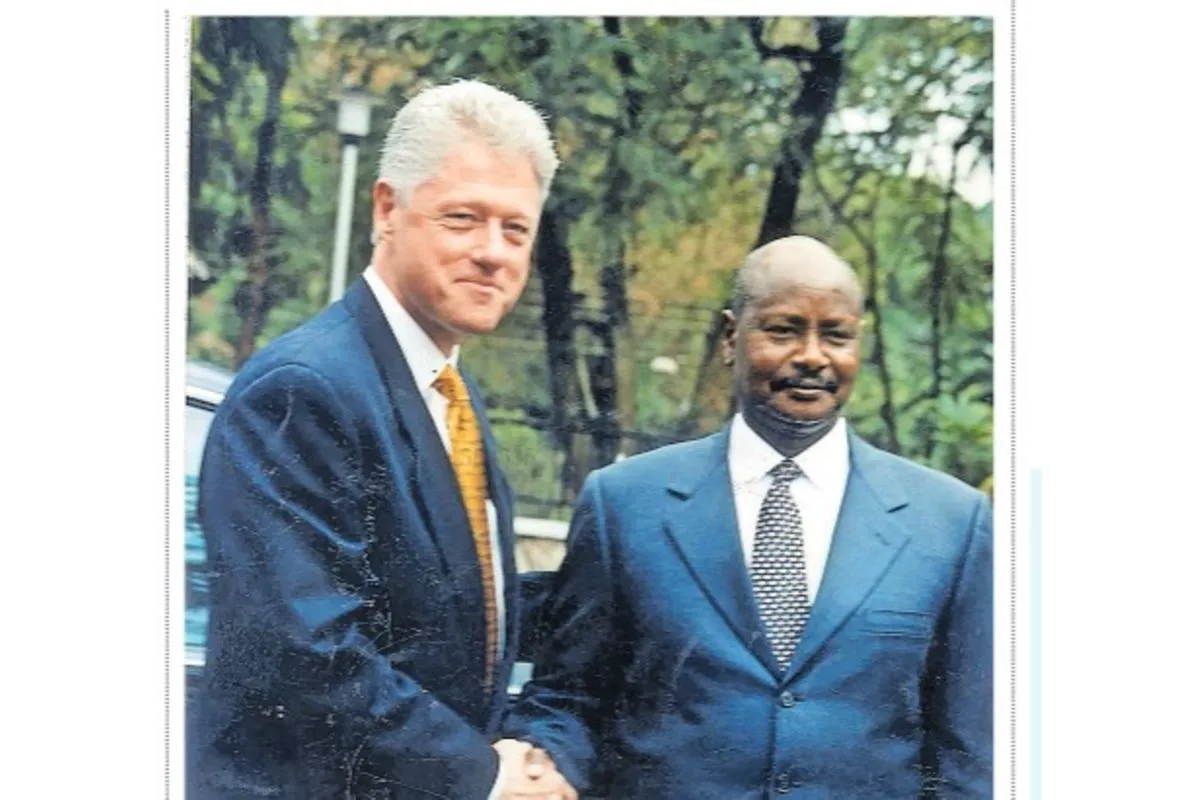
Former US President Bill Clinton was among Western leaders who cultivated close relations with Museveni during that era.
Strategic ally in regional security
Museveni’s international standing strengthened further as Uganda became a major regional security actor.
Uganda played significant military and diplomatic roles in conflicts and peacekeeping operations across the Horn of Africa and Great Lakes region, including in South Sudan, Somalia and the eastern Democratic Republic of Congo (DRC).
Ugandan troops became central contributors to African Union peacekeeping missions, particularly in Somalia under the AU mission fighting Islamist militants linked to al-Shabaab.
Security cooperation with Western governments, especially the United States and Britain, elevated Museveni’s profile as a reliable strategic partner in counterterrorism and regional stability.
This relationship often insulated Uganda from stronger international pressure over governance concerns, analysts say.
Foreign policy observers note that Museveni skillfully positioned Uganda as indispensable to Western security interests in East Africa during the post-9/11 era.
He also played a prominent role in reviving the East African Community (EAC) alongside Kenya and Tanzania after the bloc’s earlier collapse in the 1970s.
Rising criticism over democracy and human rights
Despite earlier praise, Museveni’s global reputation began to shift significantly as concerns mounted over political repression, constitutional changes and shrinking democratic space in Uganda.
The removal of presidential term limits in 2005 and the later removal of the presidential age limit reinforced perceptions that Museveni intended to rule indefinitely.
International human rights organisations increasingly criticised Uganda over restrictions on opposition activity, arrests of critics, media crackdowns and alleged abuses by security agencies.
The emergence of opposition figures such as Kizza Besigye and later Bobi Wine intensified international scrutiny of Uganda’s electoral processes.
Human rights groups reported widespread intimidation, arrests and restrictions during multiple election cycles, including the 2021 and 2026 polls. Human Rights Watch and other rights bodies argued that Uganda’s political environment had become increasingly authoritarian.
Recent debates surrounding Uganda’s controversial Protection of Sovereignty Bill have further amplified criticism from international observers, who warn that the legislation could suppress civil society, independent media and foreign-funded organisations.
The Muhoozi factor and succession questions
In recent years, international attention has increasingly shifted toward the growing influence of Museveni’s son, Gen. Muhoozi Kainerugaba.
Gen. Muhoozi’s controversial social media posts targeting foreign governments and diplomats have repeatedly triggered diplomatic tensions, forcing Museveni to publicly reassure allies and regional partners.
Analysts say foreign governments increasingly view Gen. Muhoozi not simply as a military figure, but as a potential centre of political power and succession influence inside Uganda.
Research groups including the International Crisis Group and Center for Strategic and International Studies have argued that Uganda’s political system has become increasingly personalised around Museveni’s family and inner circle.
Members of Museveni’s family occupy several influential positions within government and security structures.
First Lady Janet Museveni serves as Minister of Education and Sports, while his son Gen. Muhoozi Kainerugaba is Chief of Defence Forces (CDF).
The succession question is now emerging as one of the defining issues shaping Museveni’s international standing as he enters another term at the age of 81.
Balancing global powers in a multipolar world
Museveni’s foreign policy has also evolved alongside broader global power shifts.
While maintaining longstanding ties with Western governments, Uganda has increasingly deepened engagement with China, Gulf states, Türkiye and Russia as global competition for influence in Africa intensifies.
Observers note that President Museveni has consistently adapted Uganda’s diplomatic positioning to changing geopolitical realities, balancing aid, trade and security relationships across rival global powers.
However, tightening global aid budgets, growing scrutiny over governance and changing Western foreign policy priorities are beginning to reshape Uganda’s external partnerships.
Analysts argue that Museveni no longer enjoys the near-unquestioned support he once received from Western capitals during the 1990s and early 2000s.
Stability Vs. democratic accountability
Supporters of President Museveni argue that his government restored stability to Uganda after years of turmoil and transformed the economy through infrastructure development, market reforms and regional integration.
Uganda’s economy has expanded significantly since 1986, while poverty levels have declined over the past three decades.
Critics, however, contend that economic progress has been accompanied by growing political repression, concentration of power and weakening democratic institutions.
Also Read: Uganda under Museveni: The achievements and controversies of a 40-year rule
The debate surrounding Museveni’s international image increasingly reflects a broader global tension between stability and democratic accountability.
For some foreign governments, Museveni remains a valuable regional security ally and experienced statesman in an unstable region.
For critics, he has become a symbol of entrenched incumbency and democratic backsliding in Africa.
A seventh-term test
As Uganda enters another Museveni term, ahead of the swearing-in ceremony scheduled for May 12 at Kololo Ceremonial Grounds, international perceptions of his leadership appear more divided than at any point in his presidency.
The coming years are expected to test Uganda’s ability to manage political succession, rising youth frustrations, oil-driven economic transformation and mounting demands for political reform.
After four decades in power, Museveni’s international legacy is no longer defined solely by the stability he brought to post-conflict Uganda.
It is now equally shaped by questions surrounding governance, succession, democratic freedoms and the future direction of the Ugandan state.
