



KAMPALA, Uganda — Ugandan authorities have arrested a suspected international fugitive identified as Keith Mugisha, also known as “King Keith,” following what officials described as an intelligence-led operation involving local security agencies and international law enforcement networks.
The arrest, announced by the Ministry of Internal Affairs, has triggered a widening investigation into possible links to transnational organised crime, including alleged drug trafficking activities spanning multiple countries.
According to Ministry of Internal Affairs spokesperson Simon Peter Mundeyi, the operation was initiated after security agencies received multiple reports from members of the public concerning the suspect’s alleged conduct.
“This was intelligence we normally rely on—from the public, from people who have been observing him, and even those who have been victims,” Mundeyi said. “We acted on that intelligence to arrest this gentleman.”
Interpol links and Brazil drug allegations
Preliminary investigations indicate that Mugisha may have been linked to international criminal networks previously under investigation outside Uganda.
Authorities say information shared through Interpol revealed that the suspect had earlier been arrested in Brazil over alleged drug-related offences.
Officials claim Mugisha was using a Ugandan passport while in Brazil and is believed to have later acquired Brazilian documentation before allegedly escaping custody.
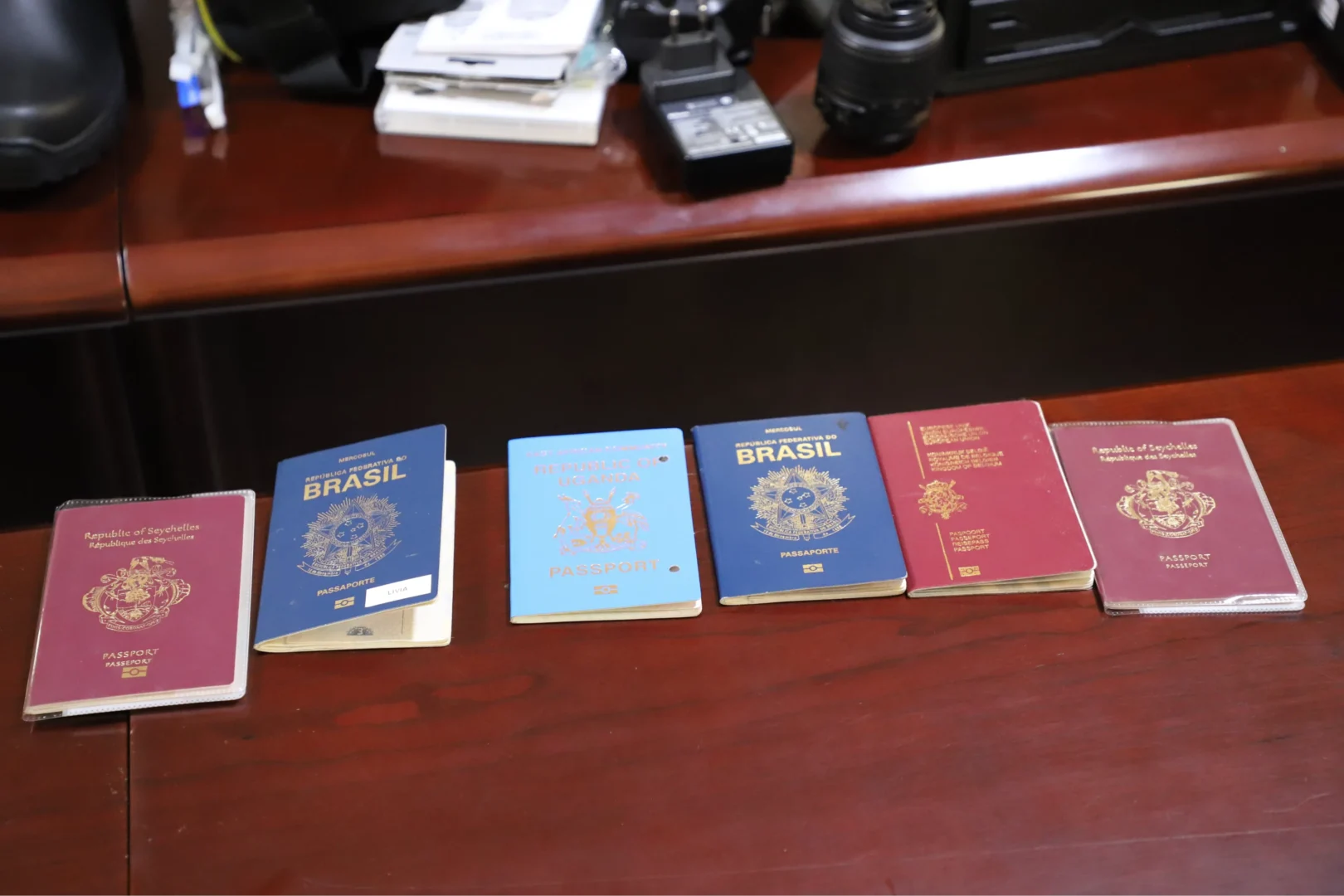
Ugandan authorities say the suspect has since appeared on international watchlists associated with narcotics trafficking investigations.
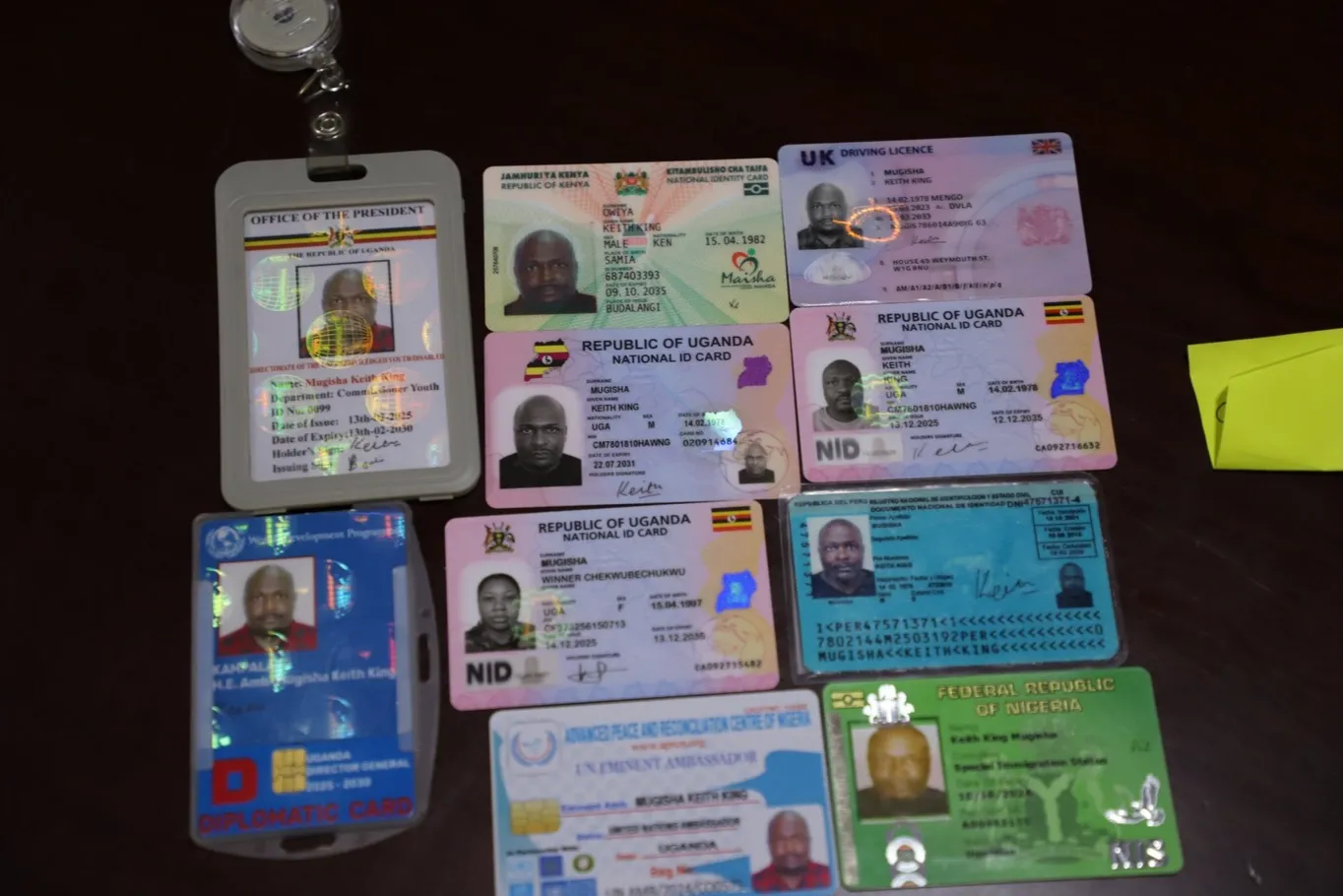
“When we flagged Interpol after his arrest, we were informed that he is on a wanted list,” Mundeyi said, adding that a suspected Nigerian associate connected to the same case remains in custody in Brazil.
The case now places Uganda within a broader international investigation into cross-border criminal syndicates increasingly operating across Africa, South America and the Middle East through interconnected trafficking and financial networks.
Firearm, toxic substance recovered during arrest
Security operatives also recovered a firearm and several suspicious items during the arrest operation, according to investigators.
Officials described the weapon as “very serious,” while confirming that the suspect claimed to possess a valid firearm licence. Authorities say verification of the documentation is ongoing.
Investigators further disclosed that an unidentified liquid substance suspected to be highly toxic was recovered from the suspect.
Forensic experts are currently analysing the substance to establish its chemical composition and determine whether it may have been linked to criminal activities, including potential poisoning incidents.
“We are not yet sure what it is, but it could be a very effective poison,” Mundeyi said. “We don’t know whether some people may have died as a result of his activities, but these are lines of inquiry we are pursuing.”
Authorities also reported inconsistencies involving recovered ammunition, prompting investigations into whether some rounds may already have been used in unresolved criminal incidents.
Uganda intensifies focus on transnational crime
The arrest comes amid growing regional concern over transnational criminal operations exploiting porous borders, digital networks and weak enforcement coordination across jurisdictions.
Ugandan security agencies have in recent years strengthened cooperation with international policing bodies, particularly on:
- Drug trafficking
- Human trafficking
- Financial crimes
- Illegal arms networks
- Cyber-enabled organised crime
Analysts say intelligence-sharing arrangements between African governments and global law enforcement institutions have become increasingly important as organised criminal groups adopt more sophisticated cross-border operations.
The Uganda Police Force and other security agencies are now expected to investigate whether Mugisha had operational links within Uganda or connections to wider criminal cells operating across East Africa.
“We shall be able to furnish the public with more details as soon as investigations progress,” Mundeyi said.
Also Read: INTERPOL arrests 27 Kenyans in major Africa cybercrime crackdown
Officials also highlighted the growing role of public reporting and community intelligence in supporting security operations.
The arrest reflects a broader strategy increasingly adopted by security agencies across the region, where authorities rely on civilian reports, surveillance coordination and international databases to identify suspects operating under multiple identities or across several countries.
Security analysts warn that organised criminal groups often exploit global mobility systems, dual documentation and online communication channels to evade detection.
The investigation remains active, with authorities expected to release further details once forensic and intelligence assessments are completed.
