


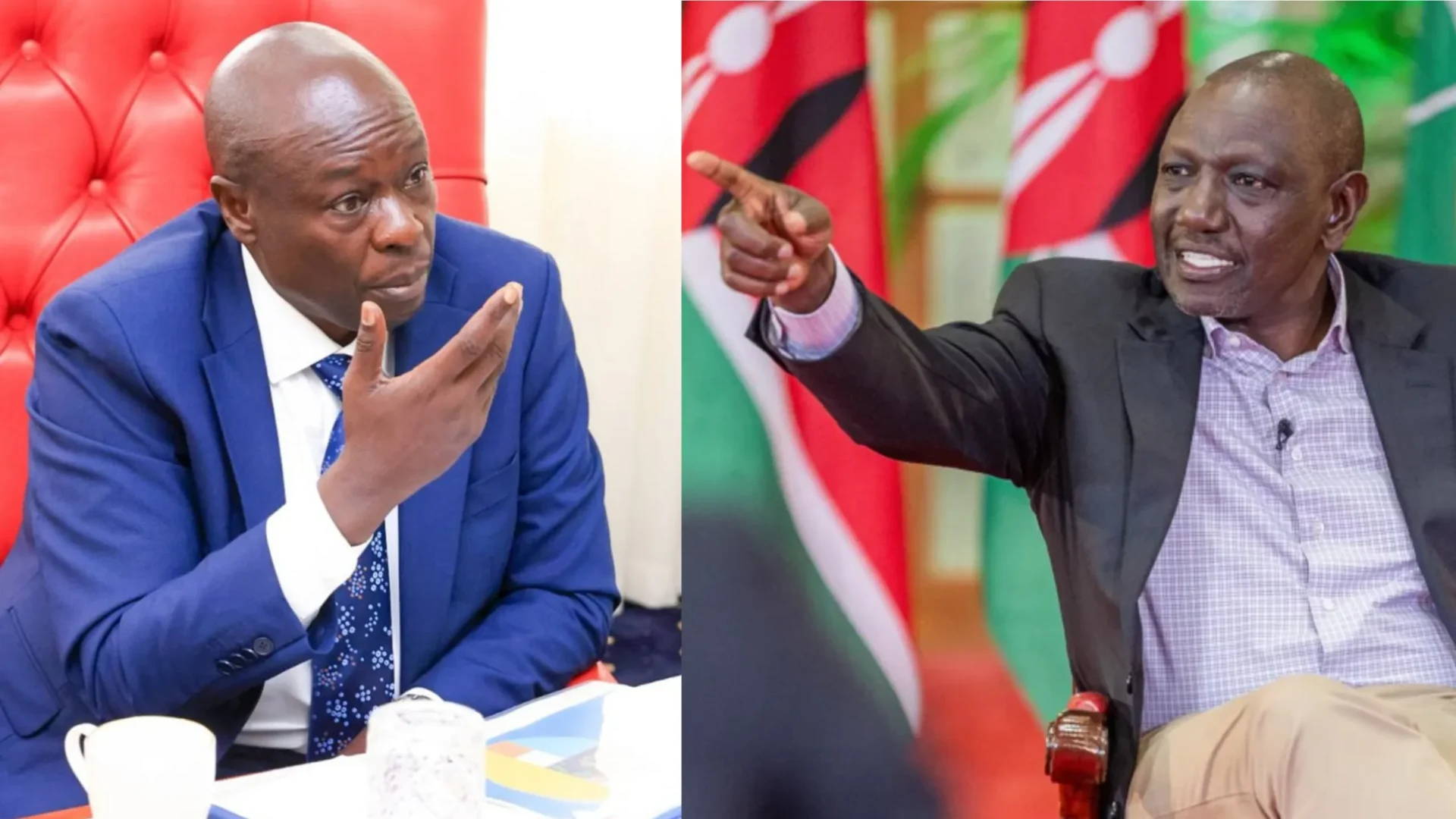
NAIROBI, Kenya — President William Ruto has pledged justice for the family of the late Nderitu Gachagua, as a dispute over the administration of the deceased’s estate continues to draw national attention.
Speaking on Sunday in Nakuru, the President described the matter as both a legal and moral issue, invoking the need to protect vulnerable members of society, including widows and orphans.
“Continue with the insults, but the wealth of widows and orphans you must return… Widows and orphans cannot defend themselves, but we shall speak on their behalf,” he said.
His remarks signal an escalation in the public dimension of the dispute, which involves former Deputy President Rigathi Gachagua, the late governor’s brother.
Nakuru Governor Susan Kihika backed the president’s position, expressing concern over the handling of the estate and urging that the interests of the widow and children be prioritised.
She described the situation as distressing and called for decisive action to ensure fairness in the distribution process.
In response, Rigathi Gachagua maintained that the administration of the estate is being conducted strictly in accordance with the law and the wishes outlined in his late brother’s will.
“The law of succession is handled by courts of law. If anybody is dissatisfied with what is happening in a succession implementation, you go to court,” he said.
He explained that the dispute relates to the estate of his brother, who died in 2017, leaving behind a detailed will specifying how his assets should be distributed.
According to Gachagua, the will named 21 beneficiaries, with clearly defined shares following the sale of assets and settlement of liabilities.
“Some were getting 10 per cent, others 5 per cent, others 2 per cent or 3 per cent, all clearly indicated in the will,” he said.
He added that three executors; including the deceased’s lawyer, a long-time associate, and a family member, were appointed to oversee the process and ensure compliance with the will.
Gachagua further stated that all beneficiaries initially agreed to the terms when the will was read, and that the court subsequently validated the process.
“The court adopted the will and allowed the executors to go ahead and execute it in accordance with the wishes of the deceased person,” he said.
He noted that the succession process was concluded several years ago, with properties sold, debts settled, and proceeds distributed directly to beneficiaries.
Despite these assertions, the family of the late Nderitu Gachagua has appealed to the government to intervene, citing unresolved concerns.
In a statement dated March 27, 2026, family members said they had gone public after attempts to resolve the dispute privately failed.
“After careful and thoughtful consideration, we… have made the very difficult decision to go public on matters concerning our rightful inheritance,” the statement read.
Also Read: Gachagua tells Ruto to ‘keep off family affairs’ as political rift deepens
The Gachagua family dispute illustrates the complex intersection of law, politics, and family dynamics in high-profile inheritance cases.
While Rigathi Gachagua’s defence rests on legal procedure and court-sanctioned execution of the will, President Ruto’s intervention introduces a moral and political dimension that elevates the matter beyond a private legal dispute.
The situation underscores a broader tension: the balance between judicial processes and public expectations of justice, particularly when vulnerable beneficiaries are involved.
It also reflects how personal matters can quickly evolve into political flashpoints in Kenya’s highly charged environment.
For the government, the challenge lies in addressing public concern without undermining the independence of the judiciary. For the family, the path forward may ultimately depend on renewed legal action rather than political mediation.
As the dispute continues to unfold, it is likely to test both institutional credibility and political alliances, especially given the broader fallout between President Ruto and his former deputy.
