


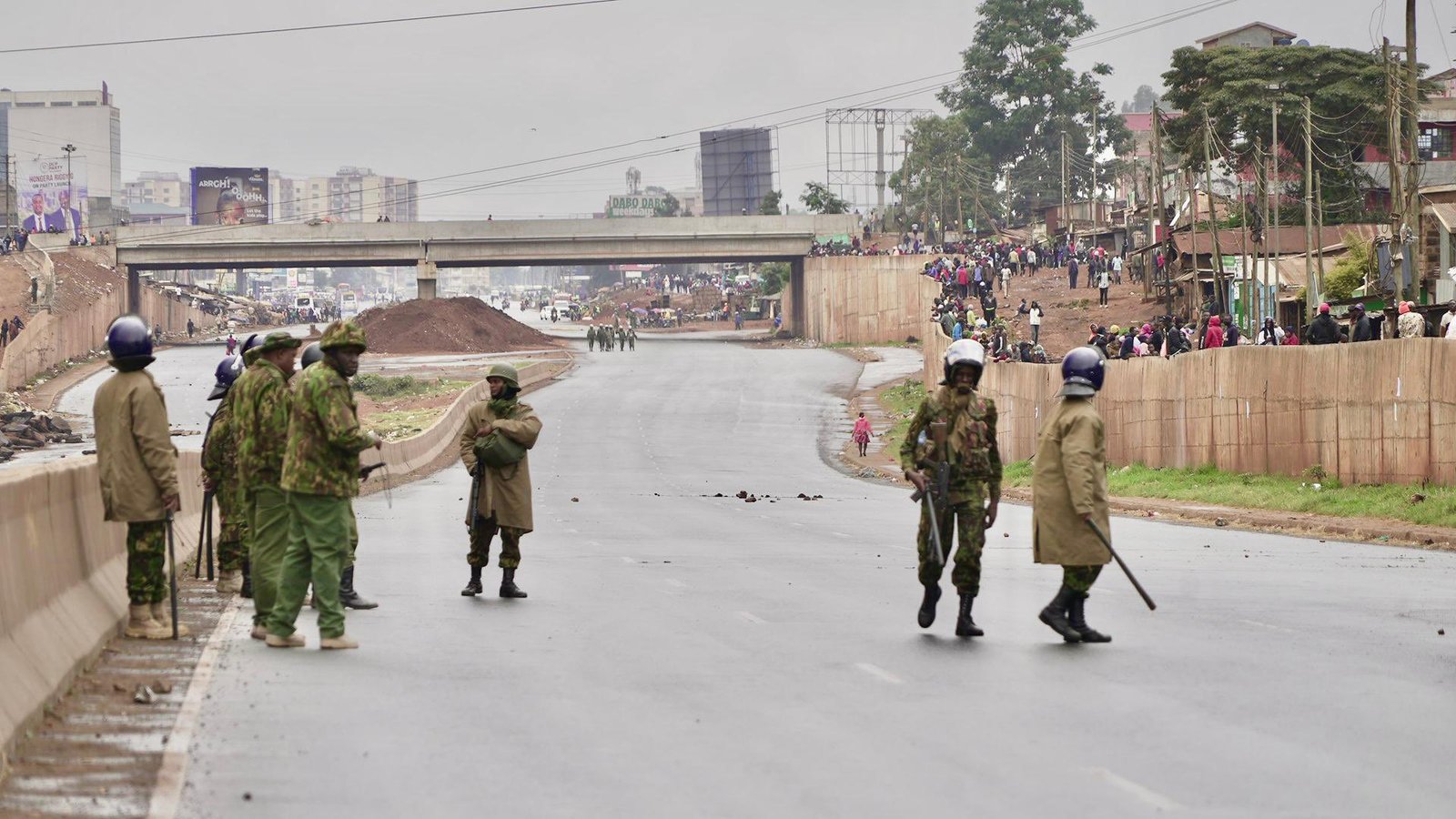
NAIROBI, Kenya — Two individuals were tragically shot dead in Kagemi on Monday during violent clashes between police and demonstrators, as Kenya commemorated its historic Saba Saba Day.
The victims were killed in separate incidents as anti-riot police units moved to disperse protesters who had lit bonfires and were chanting slogans in the area.
Tensions remained exceptionally high throughout the morning, with local residents reporting a heavy police presence and extensive road blockages.
According to a witness who spoke to Vivid Voice News, emergency response efforts were severely hampered after police barricaded several roads leading into and out of Kagemi, making it exceedingly difficult for ambulances to reach the injured.
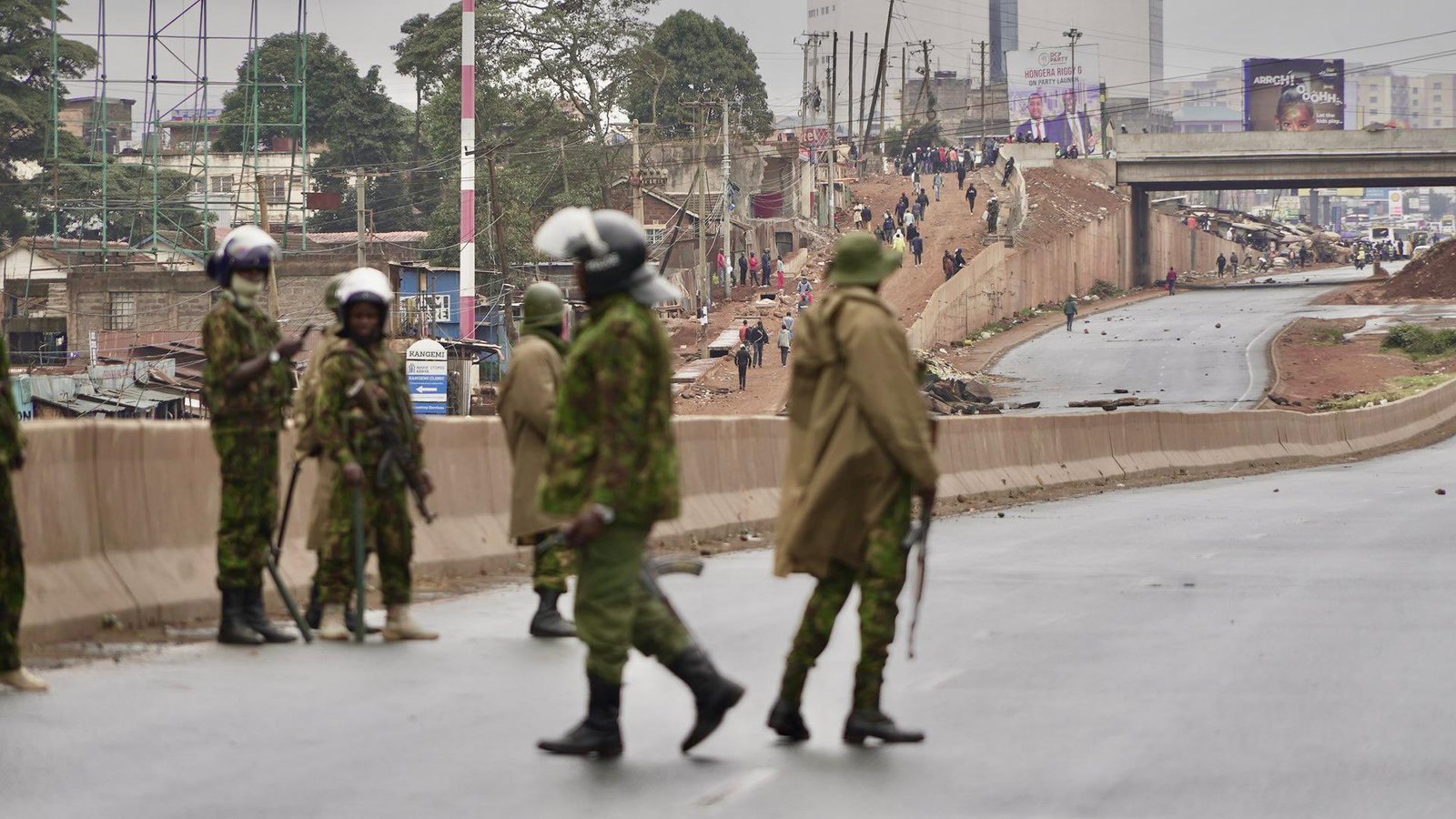
“The two were shot by armed police officers who were confronting the youths in the protests. The bodies are still lying on the ground,” the witness stated.
Earlier in the day, police had established roadblocks on key streets and highways leading to the Nairobi Central Business District (CBD), aiming to prevent protesters from accessing the city center.
This intensified security measure was part of a broader effort to manage the nationwide Saba Saba demonstrations, which historically mark the fight for multiparty democracy in Kenya.
Within the city, roads leading to key government sites – including the president’s official residence, State House, and the Kenyan parliament – were barricaded with razor wire.
Some schools advised students to stay at home.
By mid-morning on Monday, hundreds of overnight passengers found themselves stranded outside Nairobi’s city center as major roads remained closed, a consequence of the ongoing Saba Saba Day protests.
Long-distance buses, some parked as far as Kabete—approximately 13 kilometers from the central business district—held numerous passengers unable to afford alternative transport like motorcycle rides to their destinations.
Humphrey Gumbishi, a bus driver, recounted the sudden disruption: “We started travelling at 8:30pm last night… We want the government to engage in a dialogue with Gen Zs so all this can come to an end,” he told our reporter.
The extensive road closures were part of security measures taken by the National Police Service. In a statement issued on Sunday evening, the police affirmed their constitutional duty to “protect lives and property while maintaining public order,” warning against any illegal activity during the demonstrations.
Monday’s protests were primarily organized by Gen-Z youth, who are advocating for good governance, increased accountability, and justice for victims of police brutality. These demonstrations mark the latest in a wave of anti-government protests that have persisted since last year.
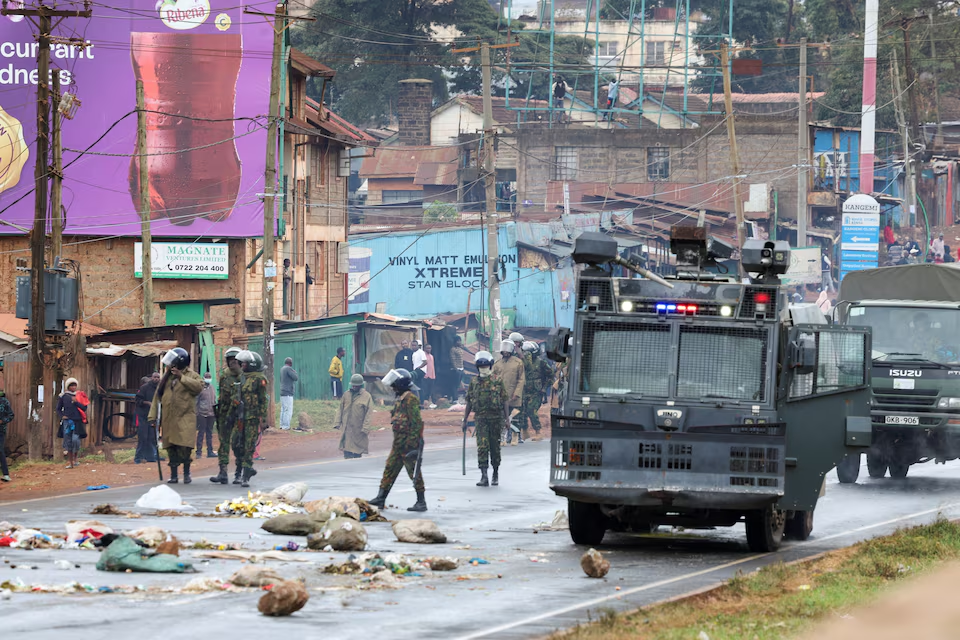
On June 25, at least 19 individuals tragically lost their lives, and thousands of businesses were looted and destroyed during nationwide protests held in remembrance of those killed in last year’s anti-tax demonstrations.
Recent protests have frequently escalated into violence, with reports detailing the infiltration of “goons” accused of looting and attacking protesters. Civil society groups have voiced allegations of collusion between these groups and the police, accusations which the police have vehemently denied.
Also Read: Police retreat as protesters take over Kiserian streets on Saba Saba Day
Further escalating tensions, an armed gang attacked the headquarters of the Kenya Human Rights Commission (KHRC) in Nairobi on Sunday. The KHRC had been hosting a press conference convened by women calling for an end to state violence ahead of Monday’s protests.
Ernest Cornel, a KHRC spokesman, detailed the assault to Vivid Voice News, stating that the gang consisted of at least 25 individuals on motorbikes, who chanted “There will be no protest today.” Cornel added, “They were carrying stones, they were carrying clubs… they stole laptops, they stole a phone and they also took some valuables from journalists who were there.”
The original Saba Saba protests, held on July 7, 1990, represent a pivotal moment that helped usher in multiparty democracy in Kenya after years of one-party rule under then-President Daniel arap Moi.
The government’s response to those historical demonstrations was brutal, leading to numerous arrests and reports of at least 20 fatalities. Since that time, Saba Saba has come to symbolize civic resistance and the ongoing fight for democratic freedoms in Kenya.
The demonstrations mark the 35th anniversary of the historic Saba Saba (7 July 1990) protests that launched Kenya’s push for multiparty democracy.
