


NAIROBI, Kenya — A new United States government report has raised fresh questions about alleged official complicity in the recruitment of more than 1,000 Kenyans who travelled to Russia after reportedly being promised lucrative civilian jobs, only to end up in the country’s military amid the war against Ukraine.
The 2026 Trafficking in Persons Report, released by the US Department of State on Thursday, October 8, alleges that some Kenyan officials worked with recruitment agencies and Russian government officers to facilitate the fraudulent recruitment of Kenyan men for military service.
“Officials reported that some Kenyan officials colluded with recruitment agencies and government officials from Russia to facilitate the fraudulent recruitment of more than 1,000 Kenyan men to fight for the Russian military,” the report states.
The findings intensify scrutiny of recruitment networks that have targeted Kenyans seeking employment abroad, as families continue searching for relatives who have died, disappeared, been hospitalised or remain in the conflict zone.
The report does not name the officials allegedly involved or establish individual criminal liability. Its findings nevertheless raise questions about whether public officers helped facilitate the recruitment networks and whether authorities adequately investigated agencies suspected of participating in the scheme.
The allegations come as the Kenyan government pursues diplomatic efforts to secure the return of its citizens and establish the whereabouts of those whose status remains uncertain.
US report questions Kenya’s response to suspected trafficking
Beyond the alleged recruitment of Kenyans for Russia’s military, the report criticises the government’s handling of recruitment agencies suspected of facilitating trafficking-related offences.
It says authorities did not report taking action against agencies reportedly owned by government employees that were allegedly involved in trafficking crimes.
“The government did not report taking action against recruitment agencies reportedly owned by government employees that were allegedly complicit in facilitating trafficking crimes; lesser charges, such as failing to register a recruitment company, were frequently levied,” the report states.
The report also cites Kenyan media accounts indicating that more than 10 per cent of government officials hold ownership interests in private employment agencies, raising concerns about potential conflicts of interest.
Such interests do not, by themselves, establish wrongdoing. However, if public officers have financial stakes in agencies involved in overseas recruitment, questions arise over the effectiveness of licensing, oversight and enforcement safeguards.
The US assessment points to a wider challenge for Kenya: distinguishing legitimate labour migration from recruitment practices that expose jobseekers to deception, coercion and exploitation.
Promises of security and construction jobs
According to the report, some Kenyan men were attracted by offers of well-paying work in security or construction.
The recruits were allegedly channelled into contracts with Russia’s Defence Ministry, with some subsequently pressured into military service rather than being employed in the civilian roles they expected.
The recruitment concerns are not entirely new.
In February 2026, Kenyan lawmakers received an intelligence briefing indicating that more than 1,000 Kenyans had been recruited for Russia’s military operations. The allegations included the use of tourist visas and transit routes through third countries to facilitate travel.
A Reuters report at the time said recruiters had targeted former security personnel and unemployed people with promises of high salaries and bonuses. It also reported that some recruits were allegedly misled about the nature of the work they would perform.
The Russian Embassy in Nairobi has previously denied illegal recruitment, while acknowledging that foreign nationals can voluntarily enlist in the Russian military.
The distinction between voluntary enlistment and trafficking is central to the allegations. The US report describes fraudulent recruitment and pressure to sign military contracts, but the circumstances of individual recruits may differ and require investigation.
Parliament receives grim update on Kenyans caught in the war
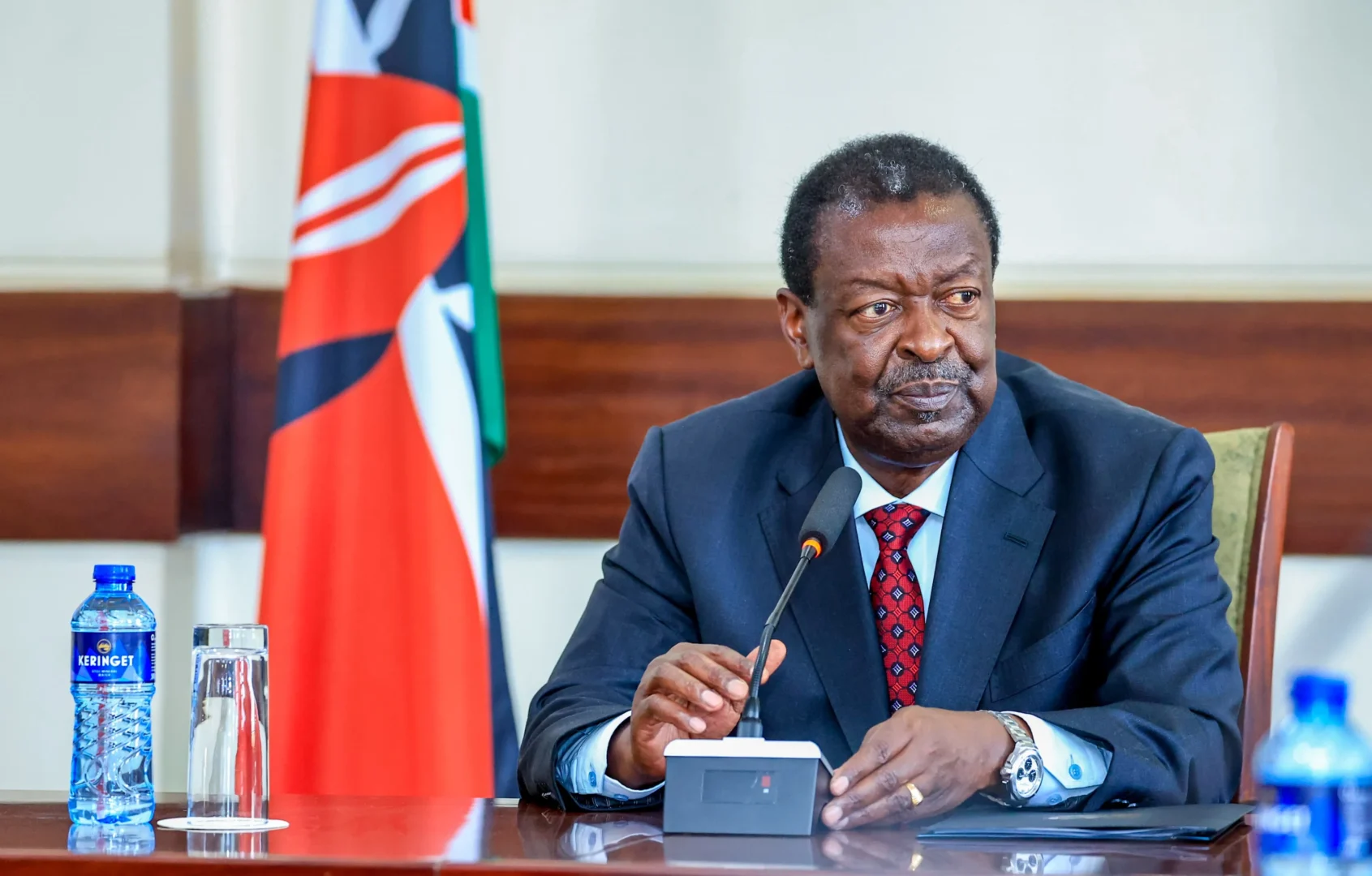
The US findings emerged as Prime Cabinet Secretary and Foreign Affairs Cabinet Secretary Musalia Mudavadi gave Parliament an updated account of Kenyans linked to the Russia-Ukraine conflict.
On October 8, Mudavadi told lawmakers that the government had records of 354 Kenyan nationals involved in the crisis. Of these, 84 were classified as killed or missing in action, while five were being held as prisoners of war in Ukraine.
The government’s figures also showed that 77 Kenyans remained on the front lines, 38 were in camps, 52 had unknown or unclassified whereabouts and 34 were hospitalised. Another 62 had been repatriated, according to the report of his parliamentary appearance.
The figures represent the government’s recorded cases and should not be interpreted as a complete count of every Kenyan who may have travelled to Russia or joined its military.
Mudavadi said Kenya was using diplomatic channels to locate missing nationals, secure the release of those held in Ukraine and facilitate the return of citizens who could leave the conflict.
The government has also said Russia agreed to place Kenya on a recruitment “stop list” during Mudavadi’s visit to Moscow in March 2026, effectively ending further enlistment of Kenyans under the arrangement described by officials.
The latest parliamentary update underscores the human cost behind the recruitment controversy. For affected families, the central questions are whether their relatives are alive, where they are being held or deployed, and what assistance is available to bring them home.
Trafficking concerns extend beyond military recruitment
The US report places the allegations within a broader pattern of fraudulent recruitment targeting foreign nationals, including Africans.
It describes cases in which people were reportedly attracted by offers of vocational training or employment in Russia before being directed into work connected to the country’s military operations, including drone production.
These allegations illustrate how legitimate aspirations for employment and skills training can be exploited by recruitment networks operating across borders.
For jobseekers, the risks may be difficult to identify before departure, particularly when recruiters present themselves as established businesses or claim links to government-backed employment programmes.
The case also highlights the challenges faced by authorities when recruitment, travel arrangements, contracts and alleged exploitation involve several countries and institutions.
Effective investigations may require cooperation among labour regulators, police, immigration authorities, diplomatic missions and prosecutors in Kenya and Russia, as well as other countries used as transit points.
Kenya’s anti-trafficking record under scrutiny
The 2026 report also raises concerns about Kenya’s broader enforcement record on human trafficking.
According to the assessment, six traffickers were convicted in 2025, down from 21 in 2024. Kenya retained its Tier 2 ranking, meaning the government does not fully meet the minimum standards for eliminating trafficking but is making significant efforts to do so.
The ranking is not an endorsement of the government’s response, nor does it establish that every allegation in the report is proven. It reflects the State Department’s assessment of the country’s overall efforts to combat trafficking.
The decline in convictions, alongside the allegations involving recruitment agencies and public officials, raises questions about the deterrent effect of enforcement and whether suspected trafficking networks are being investigated and prosecuted effectively.
The allegations concerning officials also place emphasis on accountability. Investigators would need to establish who was involved, what actions they took, whether they received benefits and whether their conduct breached Kenyan law.
Any criminal responsibility must ultimately be determined through evidence and due process rather than inferred from the report’s broader findings.
Government faces pressure to establish accountability
The government now faces pressure on two fronts: securing assistance for Kenyans caught up in the war and addressing concerns about the recruitment networks that may have exposed them to danger.
Repatriation efforts can help bring affected citizens home, but they do not resolve questions about how the recruitment occurred or whether officials and agencies facilitated it.
Those questions require credible investigations into recruitment advertisements, employment contracts, licensing records, financial transactions, travel arrangements and communications among the parties involved.
Also Read: Kenyan intelligence flags network recruiting youth for Russia-Ukraine war
The US report does not provide a list of the officials allegedly involved or announce criminal findings against specific individuals. Its allegations therefore remain distinct from the outcome of any Kenyan investigation or court case.
For families whose relatives remain missing or are believed to be fighting, however, the consequences are immediate.
The controversy has exposed the dangers facing Kenyans who pursue overseas employment through recruiters whose offers may conceal military service or other forms of exploitation.
The central test for the authorities will be whether they can establish what happened, hold any proven offenders accountable and strengthen safeguards so that legitimate employment opportunities do not become a pathway into a foreign war.
For Kenya, the latest US report turns the recruitment of its citizens for Russia’s military into not only a consular and diplomatic crisis, but also a test of the country’s commitment to combating human trafficking and investigating allegations of official complicity.
