


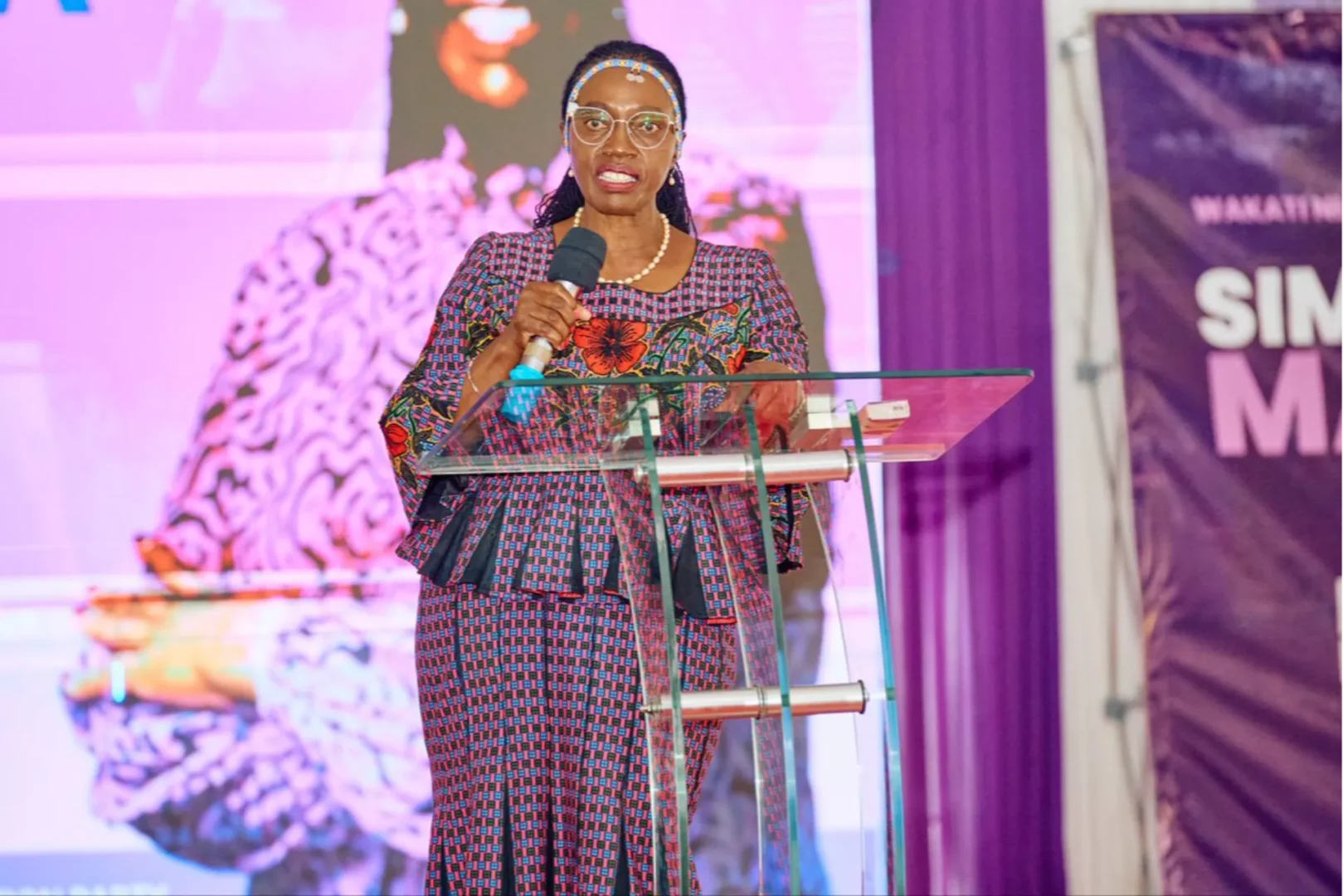
NAIROBI, Kenya — People’s Liberation Party (PLP) leader Martha Karua has officially declared her intention to contest the presidency in the 2027 General Election, adding fresh competition to an opposition movement seeking to build a united challenge against President William Ruto.
The former Justice Minister announced her candidature on Friday, November 27, 2026, during a declaration event in Nairobi held under the banner Simama na Martha Karua for Presidency 2027.
Karua said her decision was driven by the need to rebuild public trust in leadership and establish a country where accountability, equal opportunities, justice and respect for human dignity form the foundation of government.
“A declaration marks a beginning, not a destination,” she said, presenting her candidacy as the start of a broader political journey rather than simply a bid for the country’s highest office.
“I am running for President of the Republic of Kenya in 2027, and I do so with a deep sense of responsibility and an unwavering belief in the promise of our nation,” she added.
The declaration places Karua among the politicians positioning themselves to challenge Ruto’s re-election campaign, while introducing another potential contender into opposition negotiations over the presidential ticket.
Karua’s entry complicates opposition succession politics
Karua’s presidential announcement comes at a sensitive moment for opposition politics, with several influential leaders seeking to consolidate support and establish a common strategy ahead of the 2027 elections.
The opposition has faced the challenge of balancing individual presidential ambitions against calls for a united candidate capable of mounting a serious challenge to the incumbent.
Karua is among the political figures associated with the broader opposition formation, alongside former Deputy President Rigathi Gachagua, Wiper Patriotic Front leader Kalonzo Musyoka and other opposition figures.
Her declaration could complicate negotiations over who eventually carries the opposition’s presidential flag, particularly if multiple leaders maintain their individual ambitions.
However, Karua has previously indicated that opposition leaders should not simply select a presidential candidate through private political negotiations.
She has argued that research and the views of ordinary Kenyans should help determine who is best placed to represent the opposition in the election.
That position suggests her presidential declaration does not necessarily close the door to negotiations, but establishes her as a contender in any eventual process to identify a joint candidate.
The central challenge for the opposition will be finding a formula that accommodates competing political interests without weakening its electoral prospects.
A second presidential bid after the 2013 election
Karua is not entering the presidential contest as a newcomer to national politics.
A lawyer by profession, she represented Gichugu Constituency in Parliament for four terms and previously served as Minister for Justice, National Cohesion and Constitutional Affairs.
She first contested the presidency in the 2013 General Election, finishing outside the leading presidential contenders.
In 2022, she returned to the centre of national politics as the running mate to former Prime Minister Raila Odinga in the presidential election.
Their ticket lost to Ruto and his running mate, Rigathi Gachagua, in a closely contested election.
Karua’s latest declaration therefore marks another attempt to reach State House, this time as the presidential candidate of her own political party.
Her experience in Parliament, government and opposition politics gives her an established national profile. The bigger question is whether she can translate that experience into a broad electoral coalition capable of competing nationally.
What Karua promises if elected
Beyond announcing her candidacy, Karua has begun outlining the governing priorities she wants associated with her campaign.
Her proposed agenda centres on accountable leadership, responsible management of public resources, accessible economic opportunities, stronger public services and protection of constitutional institutions.
One of her most prominent commitments is a proposed first-100-days accountability programme.
Under the plan, a Karua administration would publish an initial statement of national government debt, major repayment obligations and verified pending bills.
She also pledged to disclose stalled government projects, including the amounts already spent, the work remaining and the public offices responsible for explaining delays.
Another proposed measure would involve publishing outstanding government payments to health facilities and schools, alongside a timetable for settling verified arrears.
The fourth commitment would introduce project-level expenditure records, allowing citizens to track public funds from allocation through implementation.
Karua said she would report publicly on progress at the end of the first 100 days, including outstanding work and the officials responsible for delivering it.
The proposals seek to make government performance more measurable, shifting political accountability from campaign promises to information that citizens can independently scrutinise.
Cost of living, healthcare and education take centre stage
Karua has also placed the cost of living at the centre of her political message, arguing that economic pressures should be assessed through the daily experiences of ordinary households rather than abstract economic statistics.
She has criticised excessive public expenditure and pledged to pursue fair taxation, reduce corruption and eliminate wasteful government spending.
On healthcare, she has promised to progressively pursue universal healthcare that is free at the point of treatment, supported by reliable medicine supplies, properly equipped facilities and timely payments to healthcare providers.
Her education proposals include expanding free public education from pre-primary through secondary school and eventually to university, subject to a phased implementation plan.
She has also pledged to strengthen protections against gender-based violence, abductions, extrajudicial killings and enforced disappearances.
On governance, Karua has promised to respect the independence of Parliament, the Judiciary and the Auditor-General, while strengthening devolution through predictable and timely transfers of funds to county governments.
These commitments provide a broader picture of the policy direction she intends to pursue if elected, although their implementation would depend on available public resources, legislation and the ability to secure support within Parliament and county governments.
Can Karua turn her political experience into an electoral advantage?
Karua’s candidacy introduces another significant variable into the 2027 presidential calculations.
Her political identity has long been associated with constitutionalism, accountability and a firm approach to public leadership. These credentials could appeal to voters seeking an alternative centred on institutional reform and the rule of law.
However, presidential elections in Kenya require more than a strong political profile or an attractive policy agenda.
A successful candidate must build a nationwide campaign, establish effective party structures, secure regional support and assemble alliances capable of translating political popularity into votes.
Also Read: Kenyan opposition leader Martha Karua pledges one-term presidency if elected in 2027
For the PLP leader, the challenge will be expanding beyond her established political support while convincing undecided voters that her proposed reforms can be translated into practical government action.
Her declaration also raises questions about the future of opposition cooperation. If several opposition leaders insist on pursuing individual presidential ambitions, negotiations over a common candidate could become increasingly difficult.
For now, Karua has formally entered the race and placed her political vision before the country.
Whether her candidacy becomes an independent presidential campaign or forms part of a negotiated opposition ticket will be one of the important questions shaping Kenya’s road to the 2027 General Election.
