


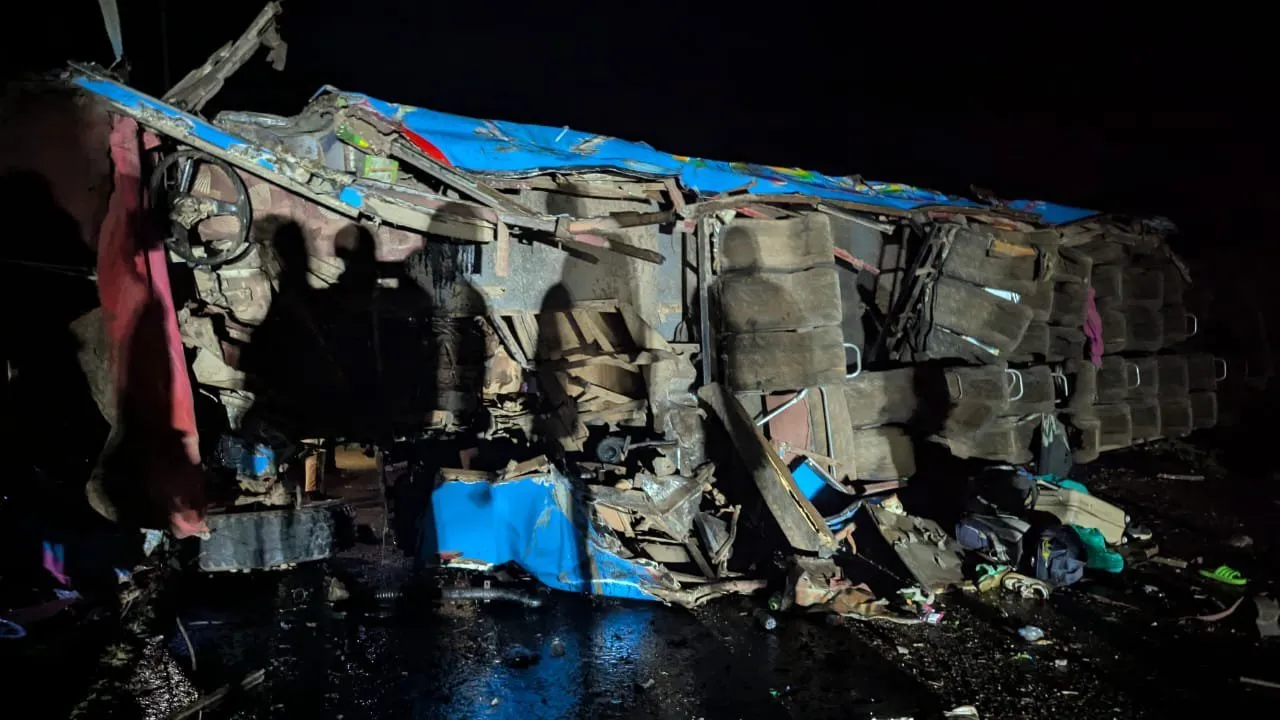
KAMPALA, Uganda — For many Ugandan parents, the most dangerous part of the school day may not be what happens inside the classroom.
It may be the journey there.
Every morning across Uganda, thousands of children climb into school vans, buses, taxis and boda bodas long before sunrise. Some travel short distances through crowded urban neighbourhoods. Others endure long journeys on winding rural roads. Most arrive safely.
Some do not.
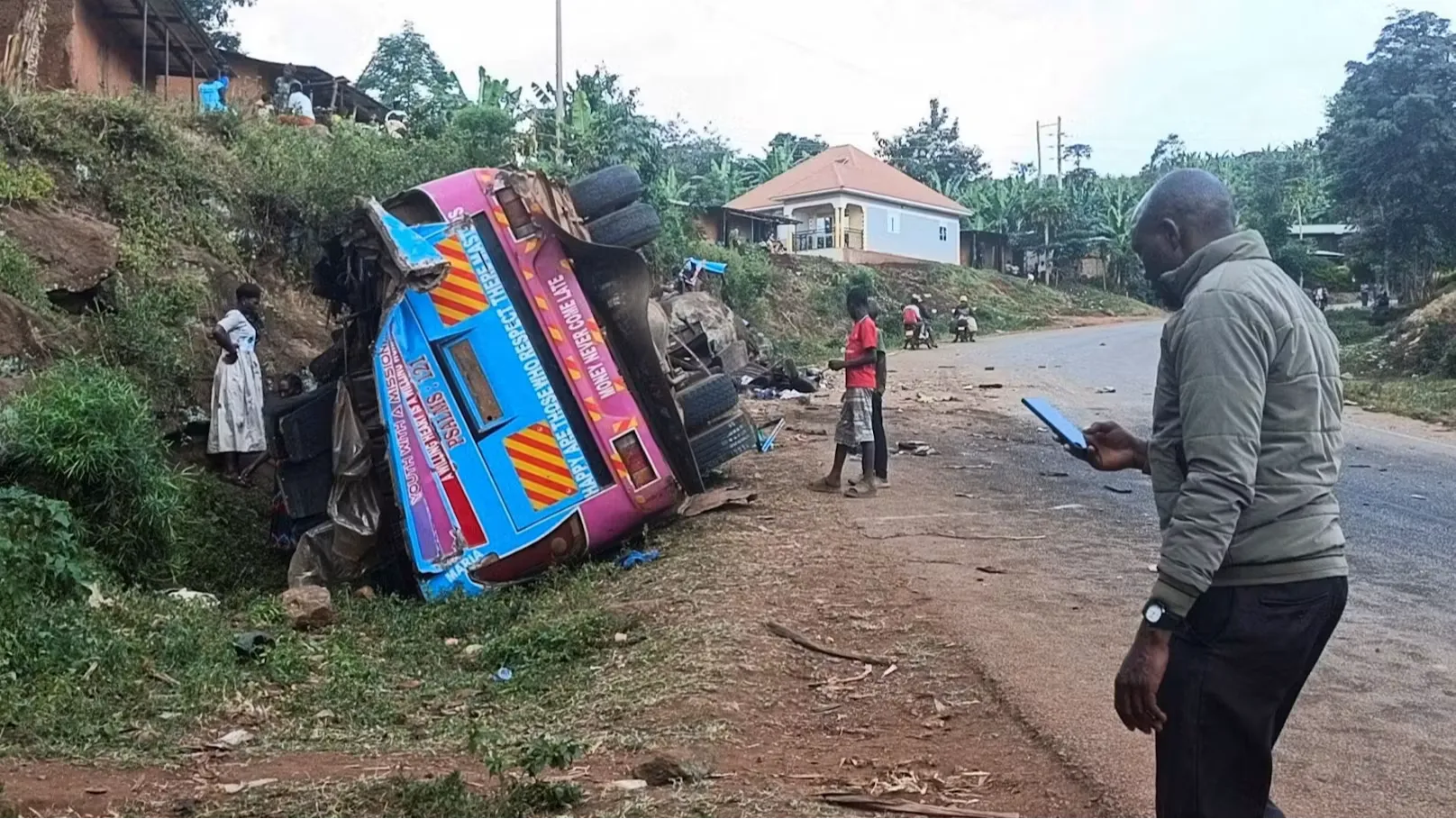
The devastating accident in Kapchorwa that recently claimed the lives of several pupils and a teacher returning from a school trip has once again forced the country to confront an uncomfortable reality: Uganda’s school transport system has grown rapidly, but the safeguards meant to protect learners have struggled to keep pace.
The government’s response has been swift.
Officials are now preparing to introduce mandatory colour-coding for all school vans and buses, one of several measures being considered by an inter-ministerial committee tasked with reviewing school transportation nationwide.
Yet beneath the proposed colour changes lies a much larger conversation.
The question facing policymakers is no longer simply how to make school trips safer.
It is how to make every school journey safer.
A tragedy that exposed a wider problem
Road crashes involving schoolchildren often trigger national outrage.
For a few days, attention turns to driver behaviour, vehicle condition and road safety enforcement. Questions are asked. Promises are made. Investigations begin.
Then, as public attention shifts elsewhere, the daily routines resume.
The Kapchorwa tragedy appears to have interrupted that cycle.
According to Assistant Inspector General of Police Lawrence Nuwabiine, Director of Traffic and Road Safety, what began as an investigation into school trip safety has evolved into something broader.
“We are going to look at the entire school transport system. All aspects will be reviewed, and there will be strict enforcement of the measures that will be put in place,” AIGP Nuwabiine said.
The statement reflects a growing recognition that school transport risks are not confined to occasional excursions.
They are embedded in the everyday movement of children.
From overcrowded vans navigating congested city streets to motorcycles carrying multiple pupils without protective gear, concerns about learner transportation have become increasingly difficult to ignore.
The hidden risks of the daily school run
The image of a yellow school bus often dominates public discussions about learner transport.
The reality in Uganda is considerably more complex.
Many schools operate private vans. Others contract independent transport providers. In rural areas, motorcycles frequently serve as the primary means of getting children to school.
The result is a fragmented system with varying standards of safety.
Traffic officers and education officials have repeatedly raised concerns about overloaded vehicles, unroadworthy vans, inexperienced drivers and unsafe operating schedules.
Just days before the Kapchorwa accident, Minister for Children and Youth Affairs Dr Mercy Faith Lakisa personally intervened after discovering a school van carrying children in dangerous conditions.
The incident highlighted a recurring challenge.
Safety regulations already exist.
Enforcement often does not.
Road safety analyst Peter Kaggwa says this gap between policy and implementation has long undermined efforts to improve learner protection.
“The issue is rarely the absence of rules,” he explains.
“The issue is whether those rules are consistently applied and monitored.”
For many operators, compliance becomes optional when inspections are infrequent and penalties are rarely enforced.
Why colour matters
Among the committee’s proposals, mandatory colour-coding may appear relatively simple.
Yet officials believe it could significantly improve oversight.
The logic is straightforward.
A vehicle that is immediately recognisable as a school transport vehicle becomes easier for traffic officers, regulators and the public to monitor.
It also creates accountability.
If a school van is speeding, overloaded or operating dangerously, it becomes far more difficult to blend into ordinary traffic.
The approach is not new.
In many countries, distinctive colours serve as visual warnings to other road users while helping authorities identify vehicles carrying children.
The most famous example is the bright yellow school bus, a design now associated with learner transport across much of North America.
Neighbouring Kenya has also adopted highly visible school transport requirements as part of broader reforms.
Uganda’s final colour choice has not yet been announced, but officials believe visibility alone could contribute to improved compliance and road awareness.
Lessons from Kenya’s tougher approach
As Uganda reviews its options, policymakers are closely observing developments across the border.
In 2025, Kenya introduced comprehensive school transport regulations through the Traffic (School Transport) Rules, 2025.
The framework goes far beyond vehicle identification.
School transport vehicles are required to operate only between 5:00 am and 10:00 pm. Learners must have designated seats. Drivers must stop completely during loading and unloading. Flashing warning lights and stop-signal arms are mandatory.
Perhaps most importantly, the regulations are backed by enforcement mechanisms.
Operators face fines, licence suspensions and potential imprisonment for serious violations.
Authorities are also empowered to conduct random inspections.
Transport governance expert Dr Samuel Mugisha believes enforcement is where Uganda’s reforms will ultimately succeed or fail.
“The effectiveness of any school transport policy depends on whether institutions have the capacity and commitment to enforce it consistently,” he says.
“Visibility measures are important, but accountability is what changes behaviour.”
A system built around convenience
One reason school transport challenges persist is that convenience often outweighs safety.
Parents want children to arrive at school on time.
Schools want transport services that are affordable.
Operators want to maximise profitability.
Those incentives can create dangerous compromises.
A van designed for ten passengers carries fifteen.
A driver takes one extra trip before maintenance.
A motorcycle carries three children instead of one.
Each individual decision may appear minor.
Collectively, they increase risk.
Road safety researchers often describe transport accidents as the result of accumulated vulnerabilities rather than isolated mistakes.
The Kapchorwa crash has renewed attention on how many of those vulnerabilities exist within learner transportation.
The broader challenge of protecting children
The debate ultimately extends beyond roads and vehicles.
It touches on a fundamental question of public policy.
How much responsibility should society assume for protecting children during their daily commute?
Education experts note that parents often evaluate schools based on academic performance, infrastructure and examination results.
Transport safety rarely receives equivalent scrutiny until tragedy occurs.
Yet the journey to school is an extension of the educational environment.
Children cannot learn if they do not arrive safely.
Also Read: Uganda suspends school trips after bus crash kills 20 pupils
The government’s renewed focus suggests officials increasingly recognise this connection.
The inter-ministerial committee’s recommendations are expected to address vehicle standards, driver qualifications, operational procedures and enforcement mechanisms alongside colour-coding requirements.
Whether those measures transform learner safety will depend on implementation.
Uganda has produced numerous transport guidelines over the years.
Many have struggled to move from paper to practice.
Beyond paint and regulations
Colour-coded buses may soon become a familiar sight on Ugandan roads.
They will likely improve visibility.
They may help traffic officers identify school vehicles more easily.
They could even encourage safer driving behaviour.
But the deeper challenge remains unchanged.
Road safety is not created by paint.
It is created by systems.
It depends on inspections that actually happen, penalties that are actually enforced, vehicles that are actually maintained and drivers who understand that the lives in their care are not ordinary passengers.
The Kapchorwa tragedy has reminded the country of what is at stake when those systems fail.
Now the challenge facing Uganda is ensuring that the lessons learned from one devastating accident lead to lasting change for the thousands of children who begin another journey to school tomorrow morning.
