


KAPCHORWA, Uganda — For the families of 20 pupils from King David Junior School, Ndejje, Thursday night’s bus crash in Kapchorwa will forever be remembered as the moment an ordinary school trip turned into an unimaginable tragedy.
What began as an educational excursion to the scenic Sipi Falls ended with the deaths of 20 children and the school’s founder, Tadeo Ssekade, leaving a community in mourning and raising fresh questions about road safety in Uganda.
Earlier that day, the pupils had set out like countless schoolchildren before them — excited by the prospect of travelling beyond the classroom, exploring one of Uganda’s best-known tourist attractions and creating memories they would later share with parents and friends.
Instead, the journey home was cut short by one of the deadliest school transport accidents the country has witnessed in recent years, transforming a day of learning and adventure into a national tragedy.
For many families, the journey ended in a phone call no parent ever wishes to receive.
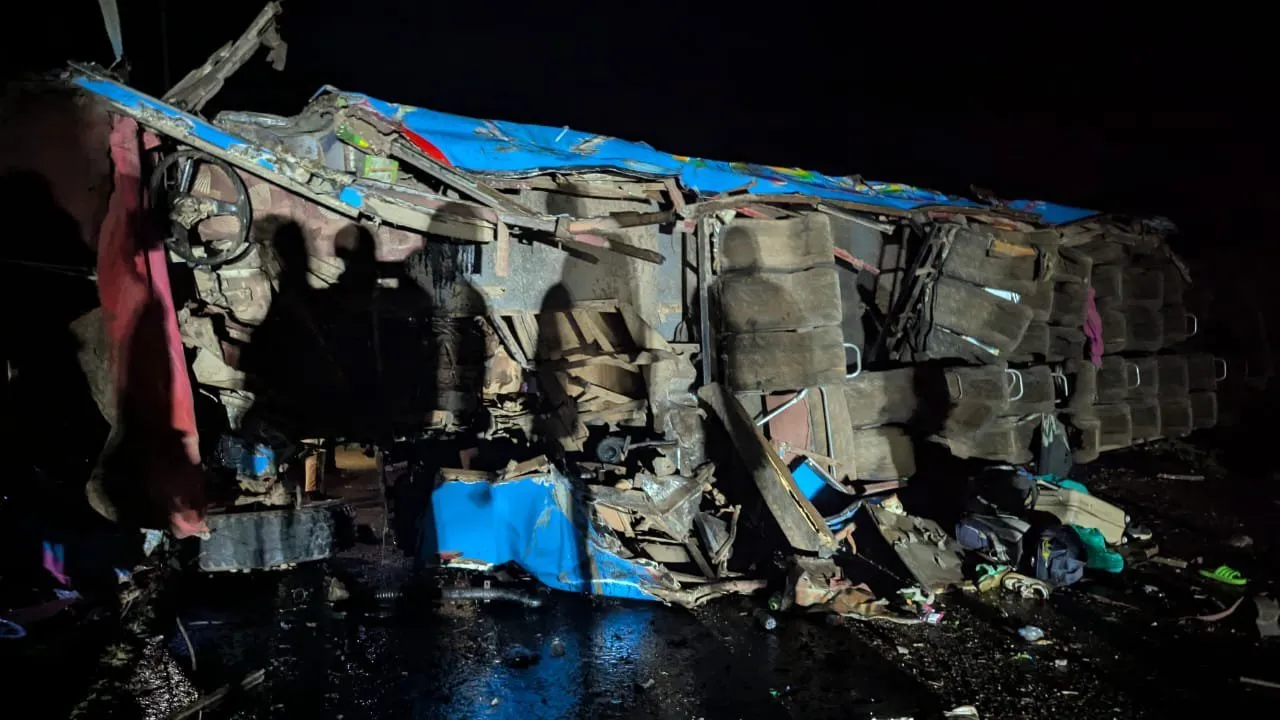
By Friday morning, grief had engulfed homes, hospital wards and an entire school community after a bus, registration number UA 108BQ, carrying pupils back from the trip crashed at Chekwatit Village in Kawowo Sub-county, Kapchorwa District.
The death toll has since risen to 21, including 20 children and the founder and director of the school, Mr Tadeo Ssekade.
Behind the statistics are devastated families, traumatised survivors and a nation once again confronting difficult questions about road safety, school transport and why fatal crashes continue to claim so many lives despite years of warnings.
A night that changed everything
According to authorities, the pupils were returning from an educational tour of Sipi Falls when tragedy struck at about 8:00 p.m. on Thursday, July 16, 2026.
According to police, while returning from the tour, the driver reportedly lost control of the vehicle, which veered off the road, struck a large stone along the roadside, and overturned.
Details of what exactly happened in the final moments before the crash remain under investigation. What is already clear, however, is the scale of the devastation left behind.
The accident immediately triggered a large-scale rescue operation involving residents, health workers and emergency responders who rushed to the scene in darkness to assist injured children.
By the following day, hospitals across the region were treating survivors with varying degrees of injury while families desperately searched for information about their loved ones.
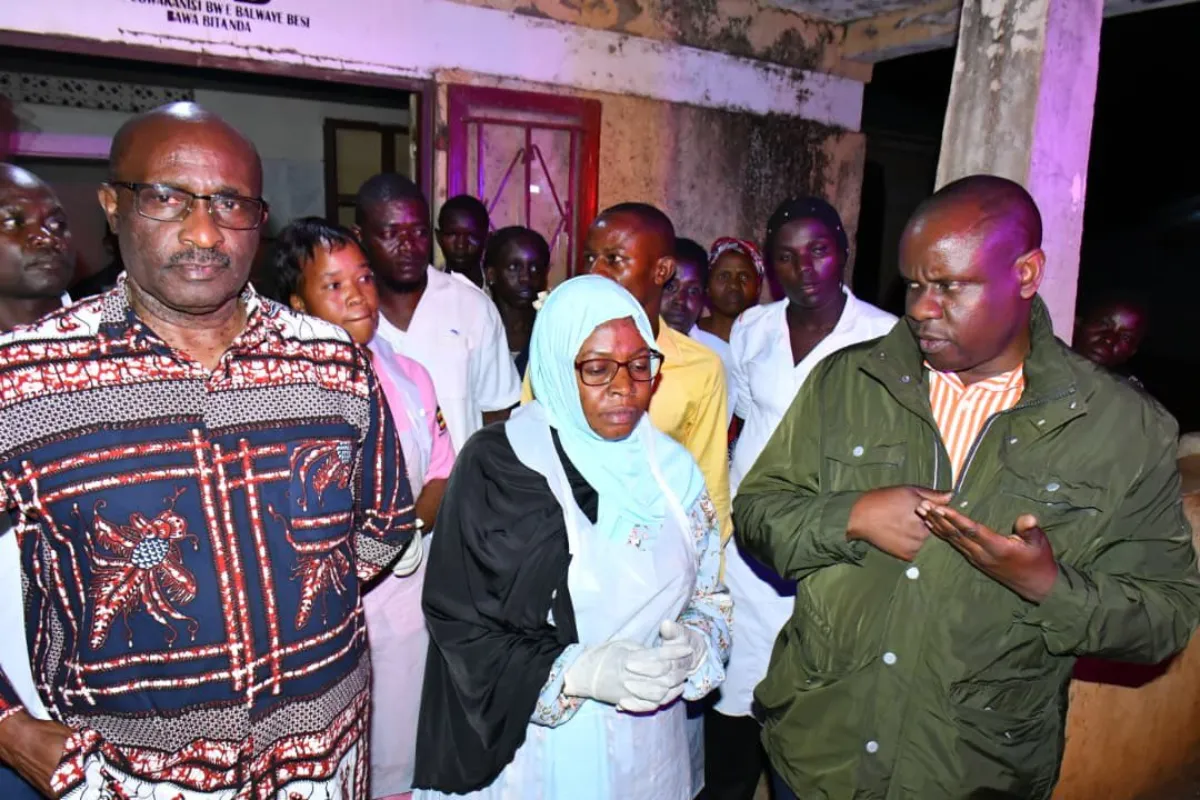
Local Government Minister Balaam Barugahara Ateenyi, who visited the injured alongside Minister of State for Labour, Employment and Industrial Relations Simon Mulongo, described the scale of the tragedy.
“We found nine children in critical condition at Mbale Regional Referral Hospital, 16 children receiving treatment at Kaserem Health Centre, three children at Bulambuli Health Centre IV, and the rest at Kapchorwa Hospital,” Balaam said.
“Sadly, 20 children and one adult, who happens to be the founder and director, Mr. Tadeo Ssekade, have gone to be with the Lord.”
The loss of Ssekade has added another painful dimension to the tragedy.
For many schools, founders are more than administrators. They often embody the institution’s vision and identity, spending years building educational communities from modest beginnings.
In a single night, King David Junior School lost not only pupils but also the man who helped create the institution itself.
The human cost behind the headlines
In the aftermath of major accidents, public attention often gravitates towards casualty figures.
Twenty-one dead.
Dozens injured.
Several critically ill.
Yet numbers rarely capture the true scale of what such tragedies leave behind.
Each child lost represented a future interrupted.
A son or daughter who left home expecting to return.
A pupil whose school books remain on a desk.
A seat at the dinner table that will now remain empty.
For surviving classmates, the psychological impact may endure long after physical wounds heal.
Road safety and trauma experts note that children who survive serious accidents frequently face prolonged emotional challenges, including anxiety, grief and fear associated with travel.
Families, meanwhile, must navigate not only bereavement but also the difficult process of understanding how an ordinary school trip turned into a national tragedy.
Questions inevitably follow.
Could the crash have been prevented?
Were sufficient safety measures in place?
What lessons will emerge from the investigation?
And perhaps most importantly, will anything change?
A familiar pattern on Uganda’s roads
The Kapchorwa crash has shocked the country, but it has not occurred in isolation.
In recent weeks alone, Uganda has witnessed a series of serious road accidents that have once again highlighted the country’s ongoing road safety challenges.
Among them was the recent crash involving a Gulu Secondary School bus in Kigumba that left a conductor dead and 17 students injured.
Another recent tragedy occurred in Mukono District, where a school bus collided with a passenger train at the Namumira–Bukasa railway crossing along Katosi Road in Nakisunga Sub-county. The crash, which happened on July 10, claimed the life of the head teacher’s wife and left several other passengers injured. The bus was transporting students and teachers from Mwebaza High School when it was struck by a Uganda Railways passenger train, adding to growing concerns over the safety of school transportation across the country.
Another accident in Gomba District claimed six lives among people travelling to a wedding.
These incidents differ in circumstances, locations and victims.
What unites them is a growing sense that fatal crashes are becoming an increasingly familiar feature of national life.
Road safety analysts argue that many Ugandans have become accustomed to hearing about deadly crashes with alarming regularity.
The danger lies not only in the crashes themselves but in society gradually accepting them as unavoidable.
Yet experts insist most road deaths are not inevitable.
They are preventable.
The numbers tell a troubling story
Uganda’s latest road safety data paints a concerning picture.
According to the Uganda Police Annual Crime Report, the country recorded 26,044 road crashes in 2025, an increase from 25,107 crashes reported in 2024.
Of those incidents, 4,602 were classified as fatal.
More than 5,300 people lost their lives.
Behind every statistic lies a story similar to Kapchorwa — a family shattered, a journey interrupted and communities left mourning.
Traffic safety specialists say rising vehicle numbers, increasing mobility and rapid urbanisation have contributed to greater pressure on road infrastructure.
However, they also point to behavioural factors that remain stubbornly persistent.
Police data attributes more than 40 percent of crashes to reckless driving behaviours, including speeding, dangerous overtaking and tailgating.
These are not technical failures.
They are human decisions.
And because they are human decisions, many experts argue they are among the easiest causes of road deaths to address — if enforcement is effective.
The first responders who saved lives
Amid the heartbreak, stories of courage have emerged from Kapchorwa.
Many survivors are alive today because ordinary citizens acted immediately.
Residents rushed to the crash site before professional emergency services arrived, helping extract victims and organise transport to medical facilities.
Balaam acknowledged their contribution.
“I sincerely thank the residents of Tingey County, Kaserem, who responded immediately as first responders, together with the regional emergency teams, for their compassion, courage and tireless efforts in rescuing and caring for the victims. Your selfless service has brought hope to many families during this difficult time,” he said.
Emergency response specialists often emphasise that the first minutes after a major crash can determine whether victims survive.
Rapid intervention can reduce fatalities, stabilise injuries and improve long-term recovery outcomes.
In Kapchorwa, those critical early actions may have saved numerous lives.
The debate over enforcement
As investigations continue, attention is once again turning towards road safety enforcement.
Government officials have increasingly promoted the rollout of the revised Electronic Penalty System (EPS), which uses cameras and automated number plate recognition technology to identify speeding and other traffic violations in real time.
Supporters argue that technology offers a practical solution to a longstanding challenge.
Uganda has fewer than 2,000 traffic officers responsible for monitoring a rapidly expanding vehicle population spread across thousands of kilometres of road network.
Continuous human enforcement is impossible.
Continuous technological enforcement is not.
Road safety experts argue that one of the most effective ways to change driver behaviour is increasing the certainty of detection.
Drivers may occasionally evade a traffic officer.
They are less likely to evade a network of cameras operating around the clock.
The central question is whether improved enforcement can move beyond punishment and become a genuine tool for prevention.
If speeding and reckless driving contribute to a substantial share of fatal crashes, then reducing those behaviours could save hundreds of lives annually.
A national moment of reflection
The Kapchorwa tragedy arrives at a moment when Uganda is already debating road safety, transport regulation and emergency preparedness.
But perhaps the most uncomfortable reality is that many of these conversations have happened before.
After previous crashes.
After previous funerals.
After previous investigations.
The challenge has never been understanding the problem.
The challenge has been sustaining the political will, institutional commitment and public attention necessary to address it.
Also Read: American missionary killed in Kampala train crash, URC cites careless driving
Road deaths rarely generate the same sustained focus as epidemics, terrorism or major natural disasters.
Yet year after year they kill thousands.
Quietly.
Consistently.
Relentlessly.
The legacy of Kapchorwa
For the families affected, the significance of this tragedy will never be measured through policy debates, statistics or enforcement technologies.
It will be measured through birthdays that will never be celebrated, school terms that will never be completed and futures that will never be realised.
The names of the children lost will remain known most intimately by parents, siblings, classmates and teachers whose lives have been permanently altered.
For the country, however, Kapchorwa presents a different challenge.
Whether this becomes another tragedy briefly mourned before being forgotten — or a turning point that prompts meaningful action on road safety.
As survivors continue receiving treatment and families prepare to bury their loved ones, Uganda faces a painful but unavoidable question.
How many more school buses must fail to return home before the country’s road safety crisis is treated with the urgency it deserves?
