


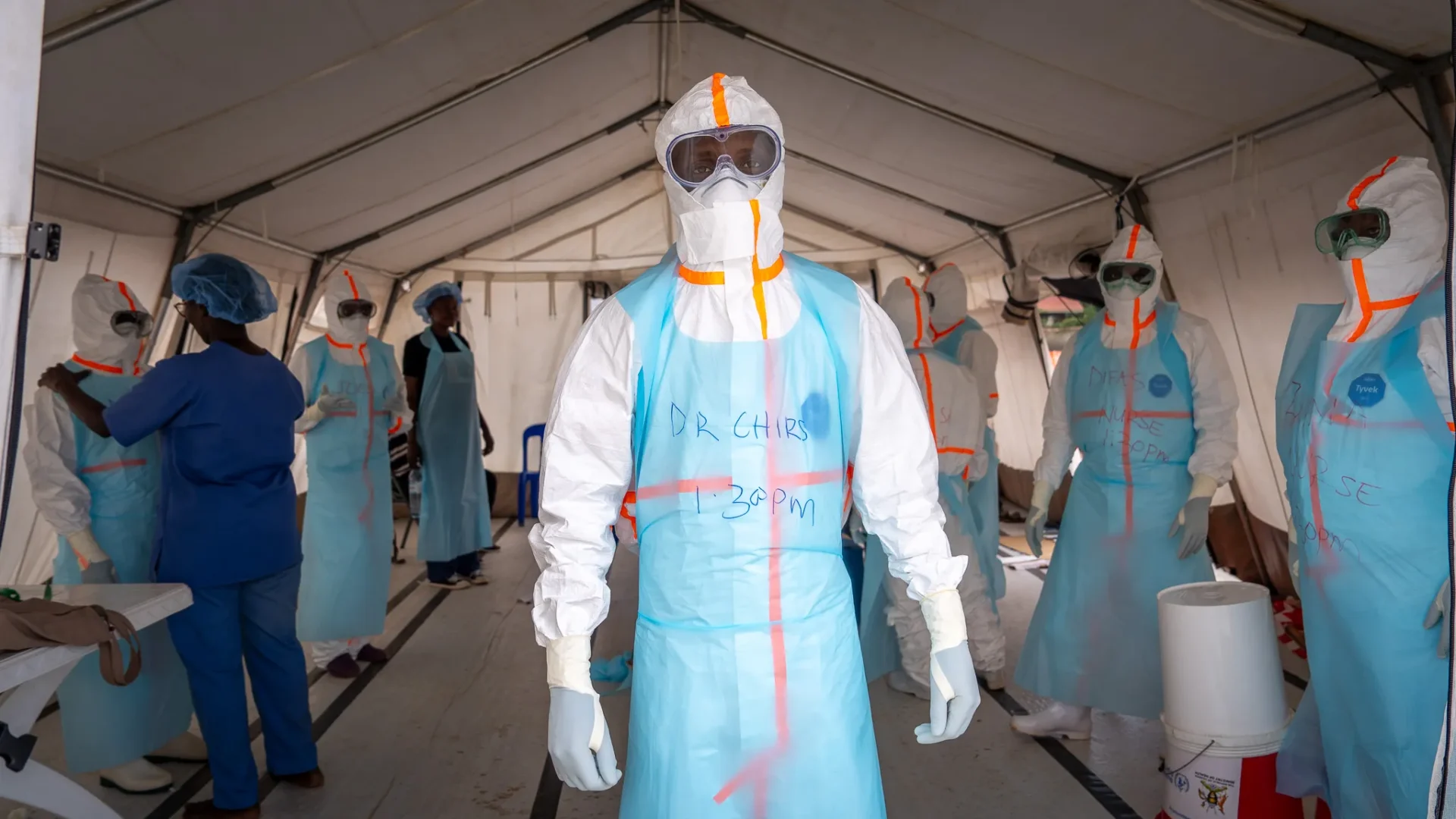
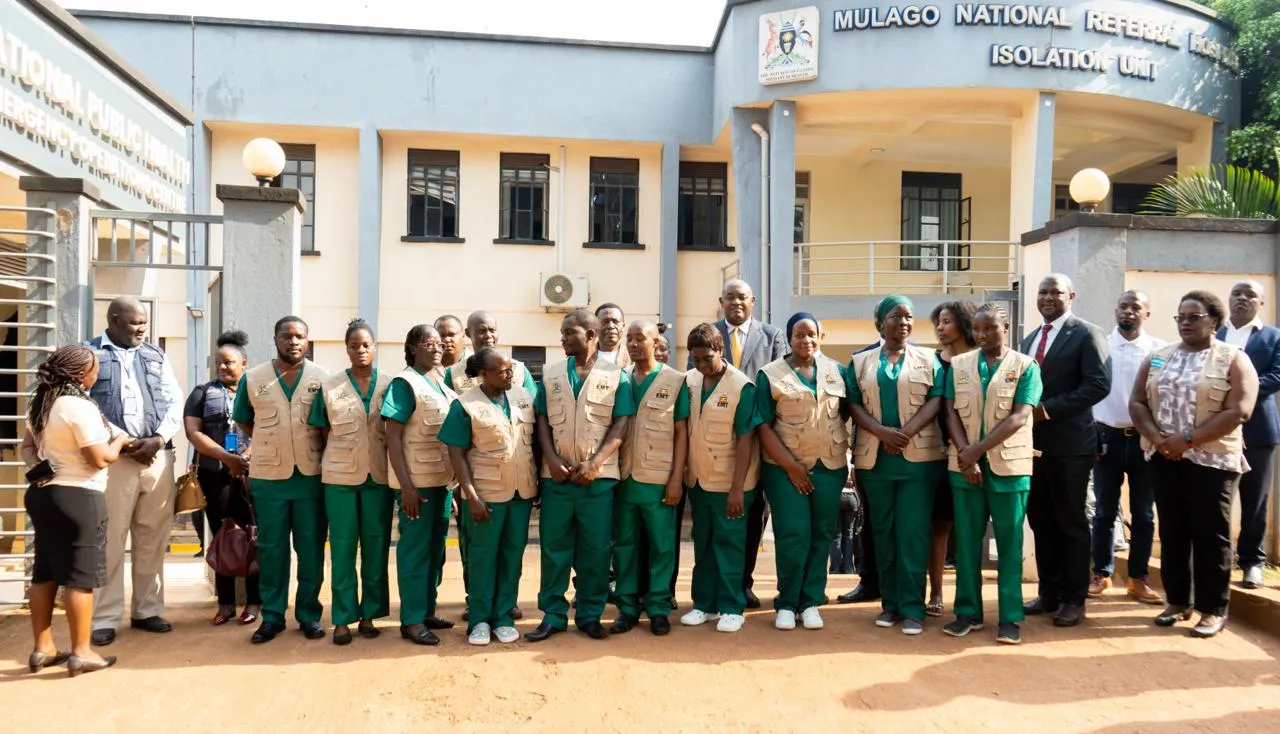
KAMPALA, Uganda — On Thursday 16, July 2026 morning, a quiet but symbolic moment unfolded inside the isolation unit at Mulago National Referral Hospital.
Standing before health officials, doctors and international partners, a Congolese national who had arrived in Uganda seeking treatment for Ebola received a discharge certificate confirming he had tested negative for the virus and was no longer a risk to others.
For many Ugandans, the scene represented more than the recovery of a single patient.
It signalled the possible beginning of the end of the country’s latest Ebola outbreak.
Yet beneath the optimism lies a reality public health officials understand well: outbreaks are not declared over when the last patient leaves hospital. They end when transmission stops completely.
That is why Uganda’s Ebola story has now entered its most critical phase.
The moment Uganda has been waiting for
The discharge means Uganda currently has no active Ebola patients in treatment.
Health Minister Dr Chris Baryomunsi described the development as evidence that early detection, rapid response and coordinated healthcare interventions can contain even one of the world’s most feared diseases.
Dr Baryomunsi the last patient with a discharge certificate at the isolation unit of Mulago National Referral Hospital in the capital, Kampala.
“This certifies that, as of July 16, 2026, the survivor does not present a risk of infecting other persons after testing negative for Ebola virus disease,” Baryomunsi said during the ceremony.
The minister said the man could return to his household and community. “The community and the authorities are requested to accept him in order to promote his social reintegration,” he added.
The patient had crossed into Uganda from the Democratic Republic of Congo (DRC) after developing symptoms associated with Ebola.
After receiving treatment at Mulago’s specialised isolation facility, repeated tests confirmed he had recovered.
The country recorded 20 confirmed cases during the outbreak.
Eighteen patients survived.
Two died.
In outbreak management terms, those numbers tell a significant story.
Ebola outbreaks have historically carried mortality rates ranging from 25 percent to more than 90 percent depending on the strain and circumstances.
Uganda’s ability to limit fatalities while preventing widespread community transmission has drawn attention from regional and international health experts.
But officials insist this is not the time for celebration alone.
It is a time for vigilance.
Why the next 42 days matter more than many realise
Under the World Health Organization (WHO) protocols, an Ebola outbreak can only be declared over after 42 consecutive days without a new confirmed infection.
The period is not arbitrary.
It represents two full incubation cycles of the virus.
In simple terms, health authorities must be confident that every potential chain of transmission has been broken.
Any new confirmed case would reset the clock.
For epidemiologists, this waiting period is often the most nerve-racking stage of outbreak response.
The visible emergency appears to have passed.
Patients leave hospital.
Public attention shifts elsewhere.
Yet surveillance teams continue working around the clock.
Health workers monitor contacts.
Border officials maintain screening procedures.
Laboratories remain on standby.
Response teams remain deployed.
A single undetected infection can quickly undo months of progress.
Uganda knows this better than most countries.
A country that has learned through experience
This is far from Uganda’s first encounter with Ebola.
Since the country’s first major outbreak in 2000, Uganda has repeatedly found itself on the frontline of Ebola response efforts.
Each outbreak has exposed weaknesses.
Each has also strengthened the country’s preparedness.
The Mulago isolation unit where the final patient recovered has become something of a symbol of that evolution.
During previous epidemics, treatment facilities often had to be rapidly assembled during emergencies.
Today, specialised infrastructure exists before outbreaks occur.
Doctors, nurses, laboratory technicians, epidemiologists and psychosocial support teams receive ongoing training long before the next emergency emerges.
That institutional memory appears to have played a decisive role this time.
By the time the latest patient crossed into Uganda, response systems were already activated.
Health workers understood what they were dealing with.
Isolation procedures were familiar.
Contact tracing mechanisms were operational.
The result was a response measured in hours rather than weeks.
Public health experts often describe outbreak management as a race against time.
In Uganda’s case, preparedness may have won that race.
The invisible success story
While headlines often focus on confirmed cases and deaths, epidemiologists frequently measure success differently.
They look at the cases that never happened.
Fifteen of Uganda’s confirmed infections were imported from DR Congo.
Only five occurred among identified contacts already under institutional quarantine.
That distinction is critical.
It suggests the virus struggled to establish sustained community transmission inside Uganda.
Had even a handful of those cases gone undetected, the outbreak could have taken a very different trajectory.
Urban outbreaks are particularly dangerous because of population density and mobility.
Kampala’s role as a regional transport hub heightened those risks.
Yet health officials managed to identify contacts, isolate exposed individuals and interrupt transmission chains before they spread widely.
For disease control specialists, that may represent the outbreak’s greatest achievement.
The Congo factor
Even as Uganda approaches a potential milestone, the broader regional picture remains far more complicated.
Across the border in the Democratic Republic of Congo, transmission continues.
The outbreak that spilled into Uganda remains active.
Thousands of infections have been recorded, with hundreds of deaths reported by Congolese authorities.
For Uganda, geography creates both vulnerability and responsibility.
The two countries share extensive and highly active border crossings.
Families, traders, transport operators and workers move between the nations daily.
Completely sealing such borders is neither practical nor economically sustainable.
Instead, Uganda’s strategy has focused on surveillance.
Health screening continues at key points of entry.
Rapid response teams remain on alert.
Cross-border coordination remains active.
Public health officials understand that an outbreak anywhere in the region remains a threat everywhere in the region.
The discharge of Uganda’s final patient therefore does not eliminate risk.
It merely changes the nature of the response.
Beyond medicine: The human side of survival
The image of a recovered Ebola patient receiving a discharge certificate carries profound significance.
Historically, Ebola survivors have often faced stigma long after leaving treatment centres.
Fear, misinformation and community anxiety can make reintegration difficult.
That is why health authorities deliberately emphasised acceptance and social reintegration during Thursday’s ceremony.
Surviving Ebola is not simply a medical outcome.
It is a psychological and social journey.
Many survivors return home carrying memories of isolation wards, lost relatives and weeks of uncertainty.
Community acceptance becomes an important part of recovery.
Also Read: Can Africa stop Ebola before it becomes another global crisis?
Public health experts increasingly recognise that defeating outbreaks requires more than medicine.
Trust matters.
Communication matters.
Social cohesion matters.
Without them, fear can spread almost as quickly as disease.
A public health victory, not yet a conclusion
Uganda’s latest Ebola outbreak may ultimately be remembered as one of the country’s most effective responses to a deadly infectious disease.
The numbers tell a compelling story.
Twenty confirmed infections.
Eighteen recoveries.
Limited community spread.
No active patients.
An exceptionally low fatality rate by Ebola standards.
Yet health officials are careful not to declare victory prematurely.
The next six weeks will determine whether Uganda earns formal Ebola-free status once again.
Until then, surveillance teams remain at work.
Border monitoring continues.
Laboratories remain ready.
Response units remain prepared.
For now, Uganda finds itself in a position many countries battling Ebola hope to reach: the outbreak appears contained, but caution remains essential.
The last patient has left hospital.
The virus, however, is not officially gone.
And for the men and women tasked with protecting public health, the countdown has only just begun.
