


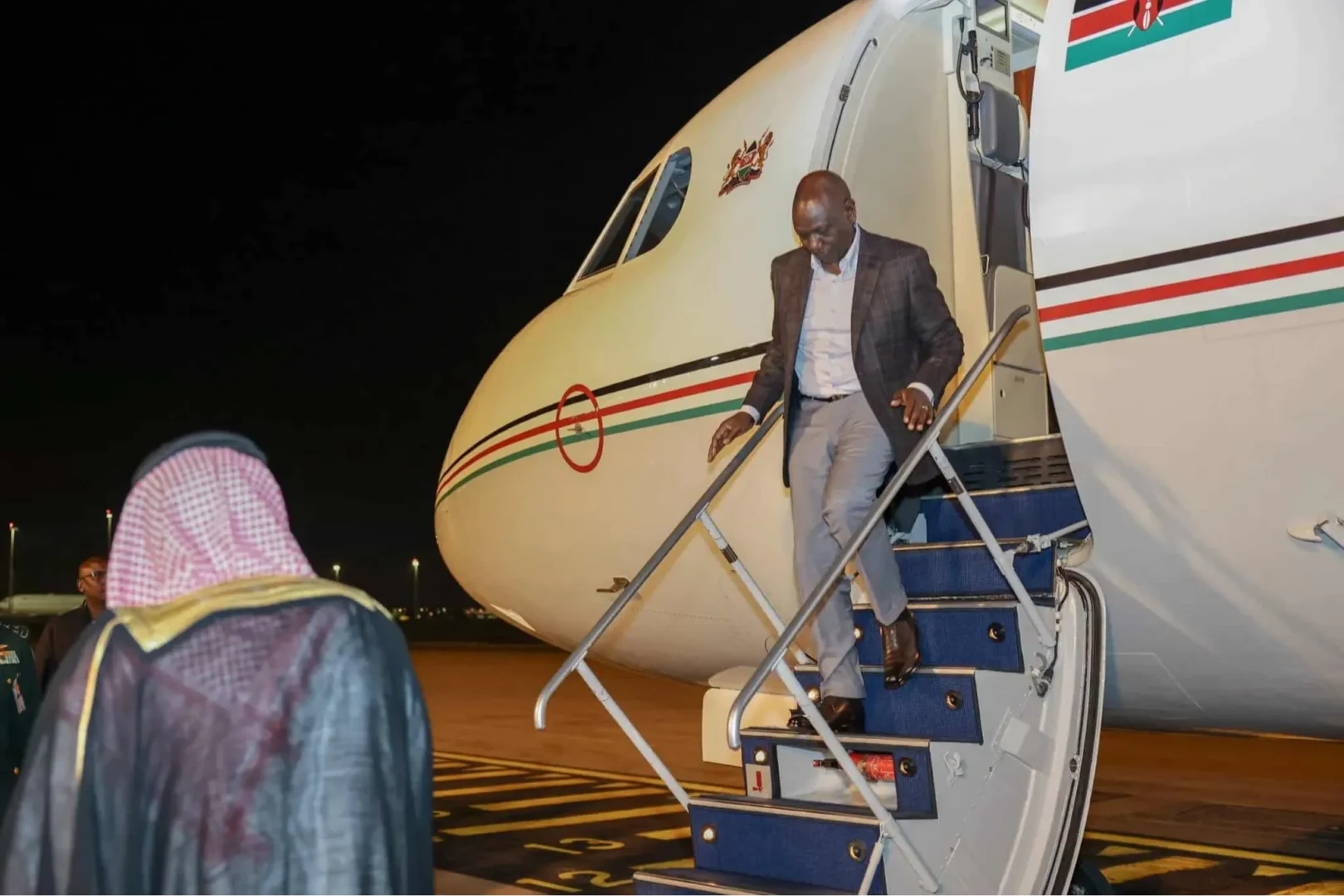
NAIROBI, Kenya — President William Ruto cancelled a planned official visit to Congo-Brazzaville on May 26, 2026, after receiving a Ministry of Health advisory warning of strict quarantine requirements linked to the growing Ebola outbreak in the region, Health Cabinet Secretary Aden Duale has told the High Court.
Duale made the disclosure on Monday while testifying before the Milimani High Court in Nairobi, where he was defending the government’s decision to continue constructing an Ebola quarantine facility at Laikipia Airbase, despite an existing court order halting the project.
According to Duale, the President was advised by health experts, including the Director-General of Health, that proceeding with the trip could have resulted in mandatory isolation upon return due to public health protocols in place at the time.
He said the guidance was issued in line with constitutional provisions and public health regulations, which require strict measures to prevent the spread of infectious diseases.
“He acted on our advice, and the President delivered his speech virtually,” Duale said.
The CS explained that the advisory was based on the risk that any travel to Ebola-affected or high-risk regions could trigger a compulsory 21-day quarantine period for the Head of State upon re-entry into Kenya.
Duale further told the court that instead of travelling, President Ruto opted to participate in the planned engagements virtually from State House, Nairobi.
He also confirmed that members of the President’s advance team, who had already been deployed as part of the delegation, were later subjected to quarantine upon returning to Kenya in accordance with health protocols.
“Those who were his advance team as part of the presidential delegation upon their return were quarantined for a period of 21 days in one of our quarantine stations,” he said.
The testimony came as the government continues to defend its decision to proceed with the construction of an Ebola quarantine facility at Laikipia Airbase, which has faced legal challenge and a court order stopping its development.
Duale argued that the facility is part of broader national preparedness measures aimed at strengthening Kenya’s capacity to respond to potential cross-border health emergencies.
He maintained that public health decisions, especially during outbreak threats, are guided by expert advice and international health regulations.
The disclosure comes amid heightened concern over Ebola risks in the region, particularly in neighbouring countries where outbreaks linked to the Bundibugyo virus strain have been reported in parts of the Democratic Republic of Congo (DRC) and Uganda.
Also Read: Inside public anger over Ruto’s costly chartered foreign trips abroad
While Congo-Brazzaville has not recorded confirmed Ebola cases as of June 23, health authorities continue to monitor the region closely due to cross-border transmission risks.
The case highlights how public health considerations have increasingly influenced high-level diplomatic travel decisions, with government officials indicating that even senior state leaders are subject to quarantine and containment measures when necessary.
The court is expected to continue hearing submissions on the legality of the quarantine facility project in Laikipia as the government defends its broader epidemic preparedness strategy.
