


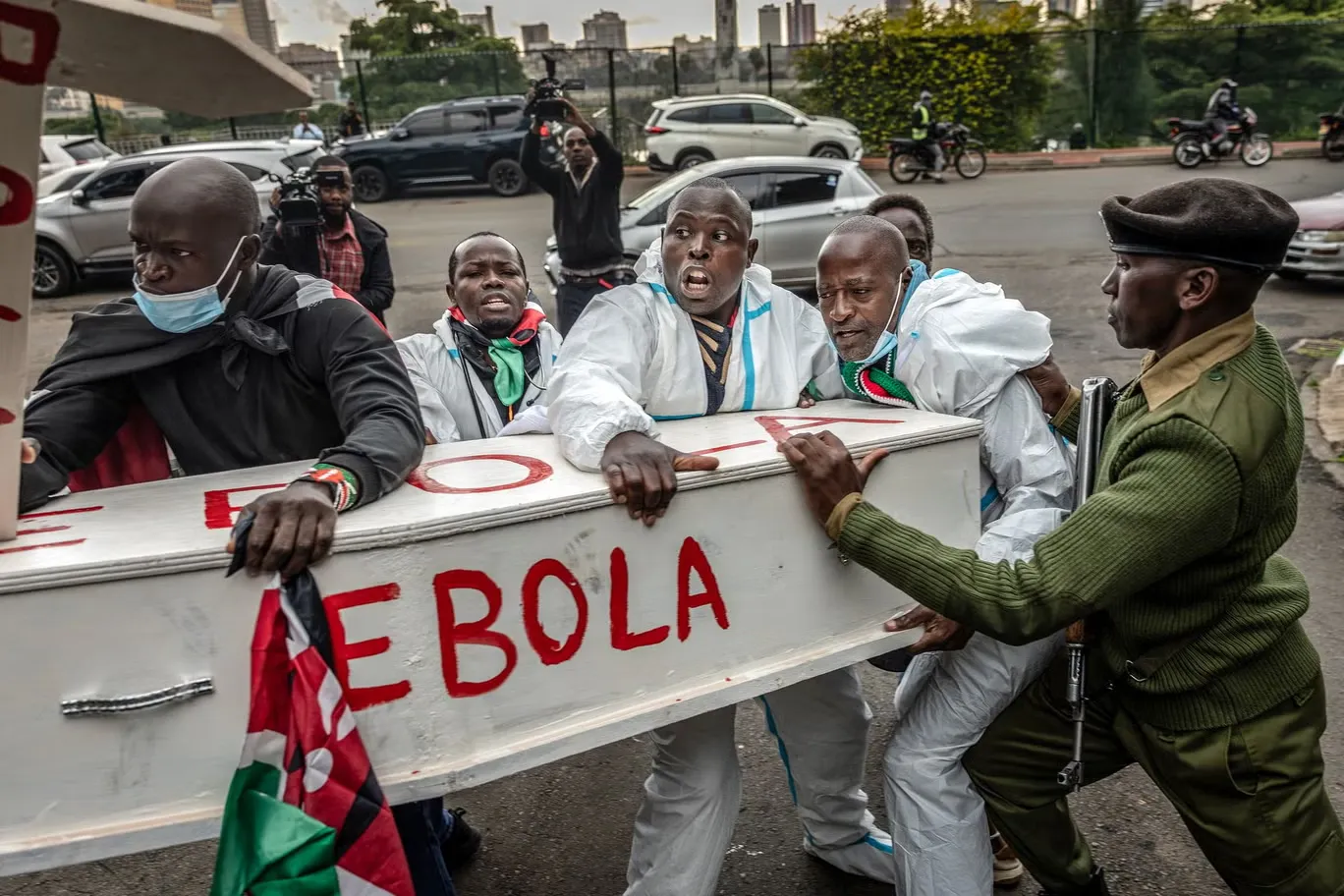
NANYUKI, Kenya — Several protesters were arrested on Tuesday as demonstrations intensified against the construction of a United States-funded Ebola quarantine facility at Laikipia Air Base in Nanyuki, amid growing public concern over Kenya’s role in regional outbreak preparedness efforts.
Police moved in to disperse demonstrators gathered near the military installation, arresting several individuals and firing tear gas as crowds protested plans to host a quarantine centre intended for American citizens arriving from the Democratic Republic of Congo (DRC), which is currently battling a major Ebola outbreak.
The facility, located in the tourism hub of Nanyuki at the foothills of Mount Kenya, is expected to accommodate up to 50 isolation beds and will reportedly be managed by American personnel as part of broader Ebola preparedness arrangements between Kenya and the United States.
Demonstrators carried placards, wore protective gear and staged symbolic displays to express opposition to the project, arguing that Kenya should not accept the risks associated with hosting travellers from Ebola-affected regions.
“We do not have Ebola in Kenya and people are worried about the possibility of importing the disease,” said one protester during the demonstration.
The protests reflect growing unease among sections of the public and local leaders who have questioned both the necessity and safety of establishing the facility despite repeated assurances from health authorities.
The project has already faced legal and political challenges.
A temporary High Court order previously halted construction following petitions filed by opponents of the facility. Local leaders in Laikipia have also voiced concerns over public safety, transparency and consultation surrounding the project.
However, the national government has maintained its support for the initiative, arguing that Kenya’s longstanding partnership with the United States in health and humanitarian programmes justifies continued cooperation.
President William Ruto recently defended the project, describing the United States as one of Kenya’s most important development partners in healthcare.
“The American people and government have been partners with us on matters of health for many years,” Ruto said, adding that the facility is being established at America’s expense and forms part of wider efforts to strengthen regional disease preparedness.
Health officials have also sought to reassure the public that the facility is intended to enhance emergency response capacity and could benefit both Kenyan and foreign nationals if required.
The quarantine centre forms part of a broader Ebola preparedness programme supported by Washington, which has pledged millions of dollars toward strengthening Kenya’s surveillance, response and containment capabilities.
The initiative comes as health authorities across East Africa remain on high alert following the worsening Ebola outbreak in eastern Democratic Republic of Congo (DRC).
According to health officials, the DRC has recorded hundreds of confirmed infections and dozens of deaths since the outbreak began, prompting heightened regional surveillance measures.
Also Read: Gachagua alleges Laikipia Ebola facility is Ruto’s plan to wipe out Mt Kenya community
While fears of cross-border transmission remain high, Uganda is currently the only neighbouring country to have reported confirmed cases linked to the outbreak.
Ugandan authorities say most infections involved travellers arriving from the DRC or individuals who had direct contact with infected persons.
Kenya has not reported any confirmed Ebola cases.
The controversy has exposed the delicate balance governments face between strengthening regional disease preparedness and addressing public fears about infectious diseases.
Public health experts note that quarantine and isolation facilities are internationally recognised tools for preventing disease transmission during outbreaks.
However, they also stress that public confidence and transparent communication remain critical for the success of such programmes.
As construction of the facility continues to generate debate, authorities are expected to face increasing pressure to provide detailed information on operational safeguards, health protocols and the measures being implemented to protect surrounding communities.
The protests mark the latest chapter in a growing national conversation about public health preparedness, international partnerships and the management of emerging infectious disease threats in East Africa.
