


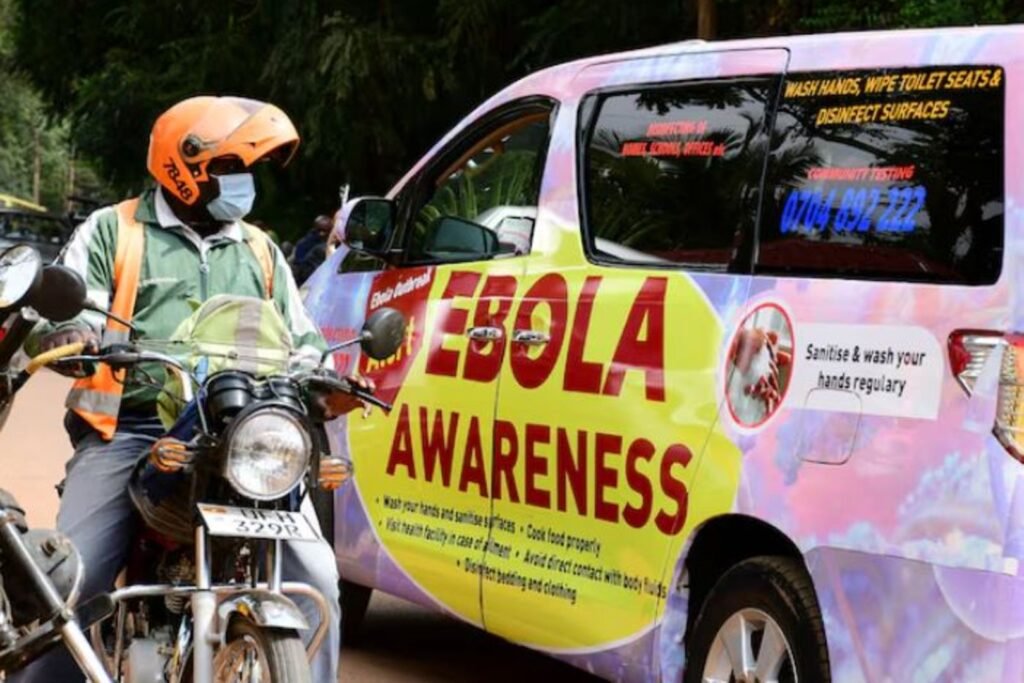
KAMPALA, Uganda — The United States has announced an emergency funding package of $13 million (about Shs 48 billion) to support Uganda and the Democratic Republic of Congo (DRC) as the two countries respond to a renewed Ebola outbreak in the region.
The funding, mobilised within 48 hours of confirmation of new cases, is expected to strengthen surveillance systems, laboratory capacity, public communication and clinical response efforts in affected areas, according to US officials.
The rapid release of funds underscores the urgency surrounding the outbreak and the scale of international concern as health authorities attempt to contain transmission across highly mobile border regions in East and Central Africa.
The assistance is being coordinated through multiple US government agencies, including the United States Department of State, the United States Centers for Disease Control and Prevention and the United States Department of Homeland Security, reflecting the increasingly multi-agency nature of global outbreak response.
Part of the funding is also being channelled through the United Nations Office for the Coordination of Humanitarian Affairs, which supports rapid deployment of emergency resources in crisis-affected regions.
While the announcement signals a fast international response, questions remain over how quickly the resources will translate into operational support at community level—where Ebola outbreaks are typically first detected and where containment measures are most critical.
Ebola outbreaks place immediate strain on local health systems. A single confirmed case can trigger intensive contact tracing, isolation procedures, laboratory testing and movement restrictions, often within hours.
In affected districts, these measures can disrupt schools, markets and transport systems, while significantly increasing pressure on frontline health workers already operating with limited resources.
For communities, technical response terms translate into practical interventions: surveillance involves identifying suspected cases early; laboratory support ensures faster diagnosis; risk communication aims to reduce misinformation and panic; and clinical management focuses on safely treating patients in isolation facilities.
Officials say the speed of the US response reflects a broader shift in global health security, where outbreaks are increasingly treated not only as medical emergencies but also as regional stability threats due to their potential to disrupt trade, mobility and economic activity.
U.S. coordination efforts have also been activated through embassies in Uganda, the DRC, Rwanda and South Sudan to track developments and support real-time information sharing with regional authorities.
The outbreak is particularly challenging in East and Central Africa due to frequent cross-border movement driven by trade, labour migration and family ties. While this mobility supports livelihoods, it also increases the risk of rapid disease transmission in the absence of early detection systems.
Also Read: US to deploy health officers to Kenya over Ebola quarantine plan
Public health experts caution that while emergency financing is critical, outbreak control depends on effective implementation—particularly the speed at which supplies reach health facilities, the capacity of surveillance teams to detect cases early, and the level of public trust in health messaging.
Community trust remains a decisive factor in Ebola response efforts. Where populations understand symptoms and cooperate with tracing teams, containment is significantly more effective. Where fear and misinformation spread, control efforts become more difficult.
The current intervention builds on years of US-supported health programmes in Uganda and the DRC, which have focused on strengthening laboratory systems, training health workers and improving early warning mechanisms for infectious diseases.
