

Close Menu
Vivid Voice NewsVivid Voice News
  • Home
  • News
    • Africa
      • East Africa
      • West Africa
      • Southern Africa
      • North Africa
      • Central Africa
    • Asia
      • China
      • India
    • Australia
    • Europe
    • Middle East
    • US & Canada
    • United Kingdom
  • Politics
  • Business
    • Economy
  • Culture
    • Lifestyle
    • Film & TV
    • Music
    • Art & Design
    • Books
  • Technology
  • Health
    • Fitness
  • Sports
    • Football
    • Athletics
    • Basketball
    • Boxing
    • Cricket
    • Golf
    • Rugby
    • Olympics
    • Motorsport
  • Travel
    • Tourism
    • Adventures
    • Culture & Experiences
    • Destinations

Latest Posts

President Ruto announces 12% wage increase on Labour Day

Atwoli clarifies Ruto’s wage hike: 12% applies to all workers, not just minimum wage earners

India activates cell broadcast emergency alert system in major push for disaster preparedness

India activates cell broadcast emergency alert system in major push for disaster preparedness

Julius Malema

Malema condemns xenophobic attacks in South Africa, rejects blame on migrants

Explore More
  • Home
  • Entertainment
  • Interviews
  • Opinion
    • Columnists
    • Cartoon
  • Supplements
  • Jobs & Tenders
  • Radio Show
    • Podcasts
  • Videos
Facebook X (Twitter) LinkedIn Instagram YouTube
  • Home
  • Entertainment
  • Interviews
  • Opinion
    • Columnists
    • Cartoon
  • Supplements
  • Jobs & Tenders
  • Radio Show
    • Podcasts
  • Videos
Facebook X (Twitter) LinkedIn Instagram YouTube RSS
Vivid Voice NewsVivid Voice News
  • Home
  • News
    • Africa
      • East Africa
      • West Africa
      • Southern Africa
      • North Africa
      • Central Africa
    • Asia
      • China
      • India
    • Australia
    • Europe
    • Middle East
    • US & Canada
    • United Kingdom
  • Politics
  • Business
    • Economy
  • Culture
    • Lifestyle
    • Film & TV
    • Music
    • Art & Design
    • Books
  • Technology
  • Health
    • Fitness
  • Sports
    • Football
    • Athletics
    • Basketball
    • Boxing
    • Cricket
    • Golf
    • Rugby
    • Olympics
    • Motorsport
  • Travel
    • Tourism
    • Adventures
    • Culture & Experiences
    • Destinations
Vivid Voice NewsVivid Voice News
Home » Africa » East Africa » Why Christopher Okello stayed silent before death sentence: Legal strategy or costly misstep?
East Africa

Why Christopher Okello stayed silent before death sentence: Legal strategy or costly misstep?

As Uganda weighs justice and human rights, the convict’s silence leaves courts—and the public—questioning whether it was strategy or a costly mistake.
Michael WandatiBy Michael WandatiMay 2, 20265 Mins ReadNo Comments
Share Facebook Twitter LinkedIn WhatsApp Reddit Telegram Email Copy Link
Follow Us
Google News
Why Christopher Okello stayed silent before death sentence: legal strategy or costly misstep?
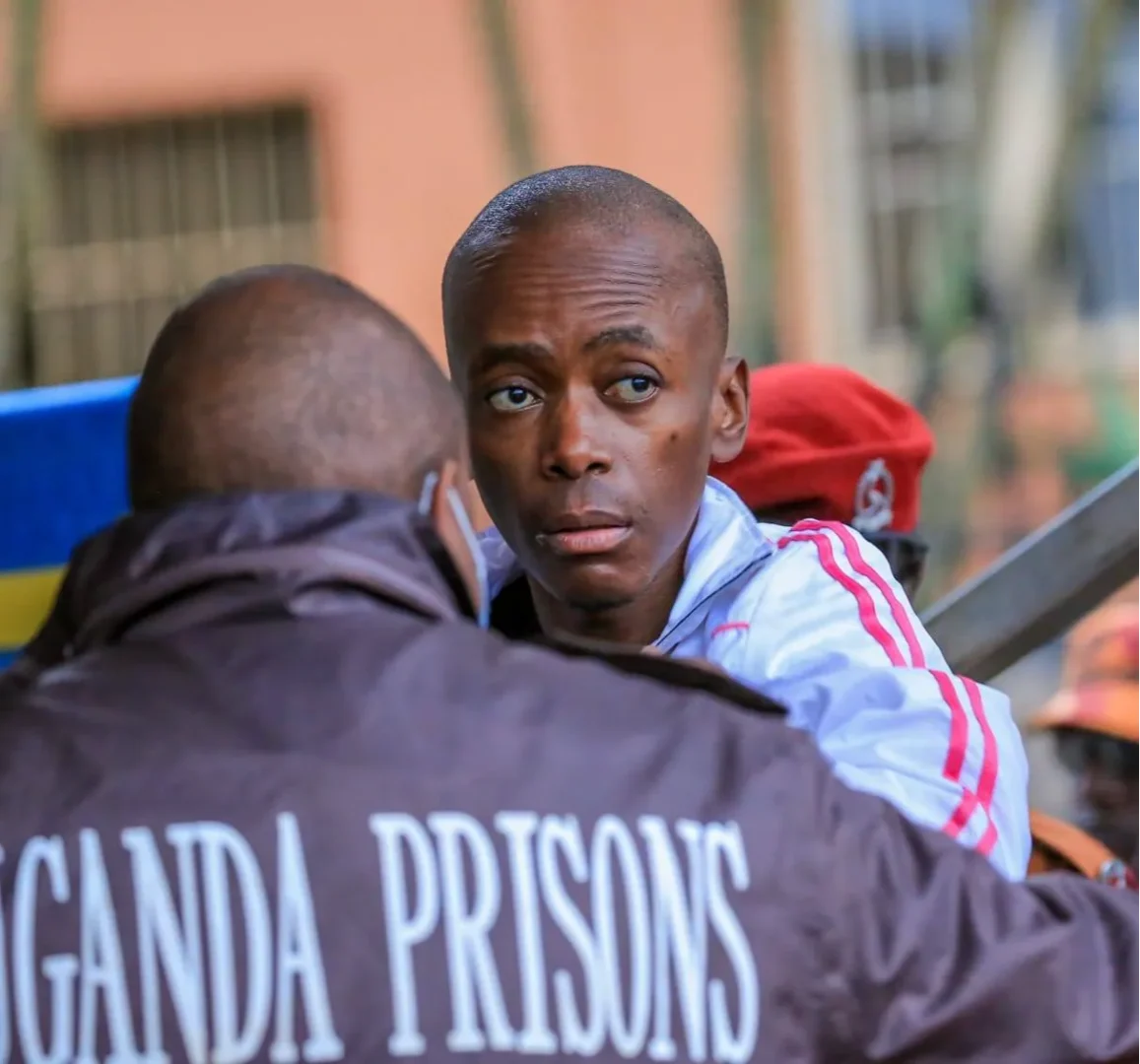
Christopher Okello Onyum, a 39-year-old dual US-Ugandan citizen, accused of killing four toddlers at the Ggaba Early Childhood Development Centre.

KAMPALA, Uganda — The decision by Christopher Okello Onyum—sentenced to death for the murder of four toddlers at a daycare centre in Ggaba—to remain silent at a critical moment in his trial, when the court invited him to mitigate before sentencing, has become one of the most closely examined aspects of a case that has already shocked Uganda.

Presiding over the case, Justice Alice Komuhangi Khaukha underscored the significance of that moment, noting that the accused declined to speak even after repeated prompting.

“The accused person in mitigation. The Court asked him to say something in mitigation, but he chose to keep quiet,” the trial judge observed.

ADVERTISEMENT

In criminal proceedings, mitigation is not a mere procedural formality. It is often the final opportunity for an accused person to influence judicial discretion, particularly in capital cases where the distinction between life imprisonment and a death sentence can hinge on expressions of remorse, personal circumstances, or explanations that humanise the offender.

Okello’s silence has therefore raised a central and enduring question: was it a deliberate legal strategy, or a costly miscalculation?

Under Ugandan law, the role of mitigation has evolved significantly since the landmark Susan Kigula & 416 Others v. Attorney General. That ruling abolished the mandatory death penalty and introduced judicial discretion, requiring courts to weigh aggravating and mitigating factors before determining sentence. In effect, sentencing became a calibrated exercise, with the accused’s own voice often forming a critical part of the balance.

Against that legal backdrop, Okello’s silence effectively left the court with a single, dominant narrative—that of the prosecution. Led by Chief State Attorney Jonathan Muwaganya, the state presented a case grounded in premeditation, digital forensic evidence, financial activity demonstrating cognitive clarity, and the extreme vulnerability of the victims.

Without mitigation, there was little to offset these aggravating factors, reinforcing the court’s conclusion that the case fell within what Justice Komuhangi Khaukha described as the “rarest of the rare.”

On the defence side, counsel—including Sarah Awelo—had attempted to construct a case around mental instability and personal background, pointing to health conditions and a troubled upbringing as factors that could reduce culpability.

Advertisement

However, the court found these arguments unpersuasive, citing the absence of expert psychiatric evidence and the accused’s demonstrated ability to plan, transact financially, and execute actions with precision. In dismissing the insanity defence, the court effectively closed one of the most consequential legal avenues available under Ugandan criminal law.

Legal analysts suggest that Okello’s silence may have been informed by appellate considerations. Statements made during mitigation can later be scrutinised on appeal, and any admissions or inconsistencies could undermine legal arguments—particularly those relating to mental capacity or procedural fairness.

By choosing not to speak, the defence may have sought to preserve a controlled record, free of statements that could complicate future proceedings.

Yet this approach is not without risk. In practice, Ugandan courts often treat remorse as a meaningful mitigating factor, even in cases supported by overwhelming evidence. Silence, particularly in a case involving the killing of young children, may be interpreted not simply as a legal posture but as an absence of contrition—an impression that can weigh heavily in sentencing.

With conviction secured and a death sentence imposed, the case now enters the appellate phase. Christopher Okello Onyum has been granted 14 days to file an appeal, initiating a process that will begin at the Court of Appeal and could ultimately reach the Supreme Court.

The defence is expected to challenge both conviction and sentence, focusing on potential procedural issues, the handling of evidence, and the rejection of the insanity defence.

Advertisement

However, the prospects of overturning the conviction appear limited. The judgment delivered by Justice Komuhangi Khaukha is understood to be detailed and firmly anchored in corroborated forensic and digital evidence.

Appellate courts typically defer to trial courts on factual findings unless a clear legal error is demonstrated. As a result, some legal observers believe that any realistic appellate success may lie in challenging the sentence rather than the conviction—arguing, for instance, that the death penalty was disproportionate or that mitigating factors were insufficiently considered.

Beyond the judiciary, the case also intersects with Uganda’s evolving stance on capital punishment. Although the death penalty remains lawful, its practical application has been significantly constrained.

Uganda has not carried out executions since 1999, creating what is widely regarded as a de facto moratorium. The Kigula decision further introduced safeguards, including the principle that prolonged delays in execution—commonly referred to as the “three-year rule”—can lead to commutation to life imprisonment.

In addition, the final stage of the process lies within the executive domain. The Advisory Committee on the Prerogative of Mercy may review the case and advise the President on whether to grant clemency, reduce the sentence, or allow it to stand.

This layered system has drawn sustained criticism from human rights organisations, including Amnesty International, which argue that maintaining death sentences without carrying out executions raises ethical concerns, particularly regarding prolonged detention under the threat of death and its psychological impact.

Advertisement

Also Read: Christopher Okello Onyum found guilty of murder on all four counts

From a broader human rights perspective, the Okello case encapsulates a tension that continues to define criminal justice systems worldwide: the balance between delivering justice for egregious crimes and upholding evolving standards on the use of irreversible punishment.

For many Ugandans, the brutality of the offence strengthens calls for the harshest sanction available. For others, it underscores the importance of procedural fairness, consistency, and caution in the application of capital punishment.

As the appeal window opens, Okello’s silence remains a defining feature of the case—one that may yet prove consequential.

Whether the silence was a calculated legal decision aimed at preserving appellate options or a missed opportunity to influence judicial discretion, it has added a complex layer to a case that is likely to shape legal precedent and public debate in Uganda for years to come.

Advertisement
Child murder case in Uganda Christopher Okello Onyum Christopher Okello Onyum case analysis Death penalty commuted Death sentence appeal in Uganda Ggaba daycare killings Ggaba Early Childhood Development Program school Ggaba murder suspect Insanity defence in Uganda Kampala daycare Kampala daycare attack Mitigation in criminal law Mobile court in Uganda Murder Police investigate daycare murders Rarest of the rare cases in Uganda Ritual killings in Uganda Toddlers killed in Kampala Uganda death penalty law Uganda nursery stabbing
Michael Wandati
  • Website
  • Facebook
  • X (Twitter)
  • Instagram
  • LinkedIn

Michael Wandati is an accomplished journalist, editor, and media strategist with a keen focus on breaking news, political affairs, and human interest reporting. Michael is dedicated to producing accurate, impactful journalism that informs public debate and reflects the highest standards of editorial integrity.

SPONSORED LINKS

Related Posts

Tanzanian national charged with raping, killing 11-year-old girl in Mombasa

Tanzanian national charged with raping, killing 11-year-old girl in Mombasa

By Imani TendoMay 2, 20262 Mins Read
Uganda death penalty debate rekindled after Christopher Okello Onyum sentencing

Uganda death penalty debate rekindled after Christopher Okello Onyum sentencing

By Michael WandatiMay 1, 20264 Mins Read
Ugandan man sentenced to death over Ggaba daycare toddler murders

Uganda hands death sentence to man who killed four children at nursery school

By Michael WandatiMay 1, 20264 Mins Read
Advertisement
ProGigFinder: Uganda’s digital marketplace connecting jobs and talent across Africa
ADVERTISEMENT

Latest Posts

President Ruto announces 12% wage increase on Labour Day

Atwoli clarifies Ruto’s wage hike: 12% applies to all workers, not just minimum wage earners

Michael WandatiBy Michael WandatiMay 2, 2026
India activates cell broadcast emergency alert system in major push for disaster preparedness

India activates cell broadcast emergency alert system in major push for disaster preparedness

Anish ShekarBy Anish ShekarMay 2, 2026
Julius Malema

Malema condemns xenophobic attacks in South Africa, rejects blame on migrants

Zola TemboBy Zola TemboMay 2, 2026
AI breakthrough from Mayo Clinic could detect pancreatic cancer up to three years early

AI breakthrough from Mayo Clinic could detect pancreatic cancer up to three years early

Anish ShekarBy Anish ShekarMay 2, 2026
Isiolo residents access national IDs as Kenya expands mobile registration drive

Kenya extends national ID replacement fee waiver to October 2026

Michael WandatiBy Michael WandatiMay 2, 2026
ADVERTISEMENT
Trending Now

Breaking News Alerts

Get real-time breaking news alerts and stay up-to-date with the most important headlines from Africa, and around the world.

Vivid Voice News is an independent global news organization dedicated to factual reporting. Your trusted source for breaking news, bold opinions, and insightful stories from Africa and around the world. Stay informed, stay engaged.

We're Social. Connect With Us:

Facebook X (Twitter) Instagram YouTube LinkedIn

Subscribe for Updates

Get real-time breaking news alerts and stay up-to-date with the most important headlines from Africa, and around the world.

Contact Us

Regional Bureaus
🇰🇪 Nairobi, Kenya
📞 +254 714 172 393

🇺🇬 Kampala, Uganda
      Plot 65 Yusuf Lule Road
      P.O. Box 27258
📞 +256 394 516 614

✉️ Email: info@vividvoicenews.com

  • Home
  • About Us
  • Contact Us
  • Advertise With Us
  • Privacy Policy
  • Terms of Use
Copyright © 2026 Vivid Voice News. All Rights Reserved.

Type above and press Enter to search. Press Esc to cancel.