


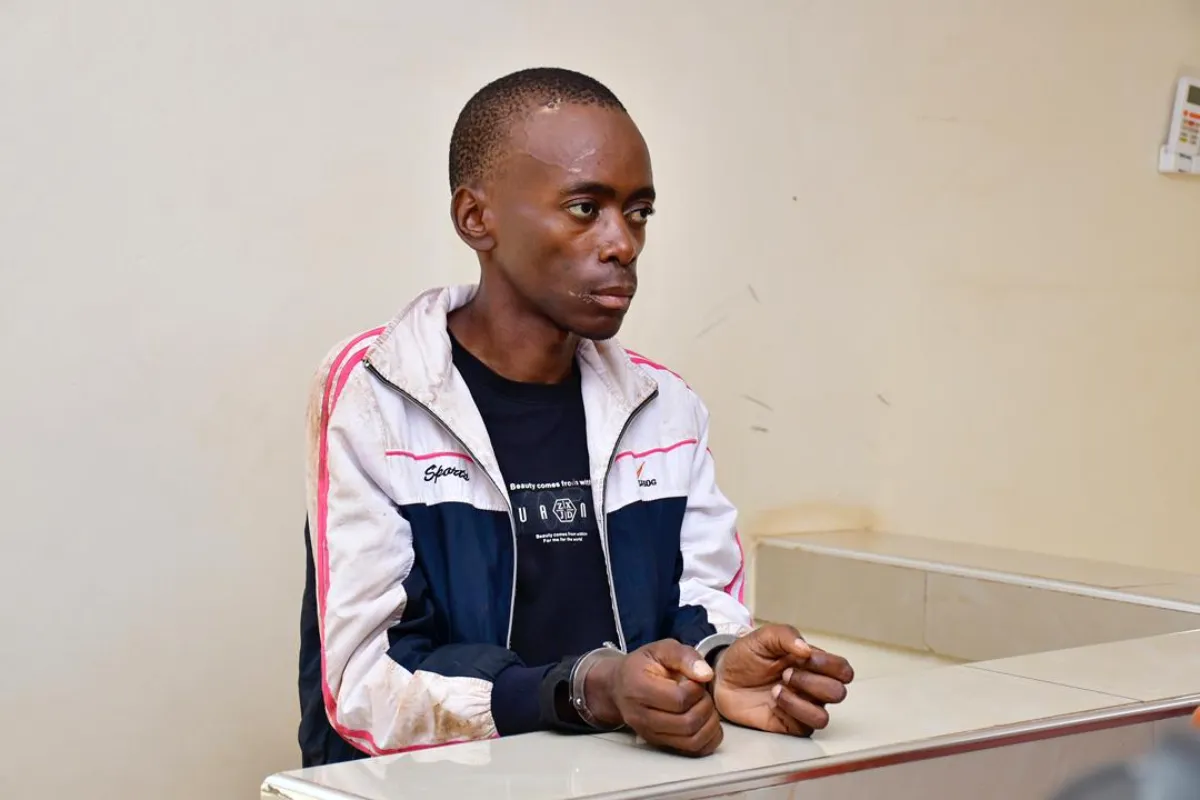
KAMPALA, Uganda — The decision by Alice Komuhangi Khaukha to sentence Christopher Okello Onyum to death has reignited a long-running national debate over the role and reality of capital punishment in Uganda.
At one level, the ruling reflects the most severe sanction available under Ugandan law. The death penalty remains constitutionally grounded and is is provided for under the Penal Code for offences including murder, treason, terrorism resulting in death, aggravated robbery, and aggravated defilement.
Okello’s conviction for the killing of four toddlers places the case within that category. Yet, as legal scholars and rights advocates note, what a death sentence means in Uganda today is far more complex than its wording suggests.
From mandatory punishment to judicial discretion
The modern framework governing capital punishment in Uganda was fundamentally reshaped by the landmark Susan Kigula & 416 Others v. Attorney General.
In that decision, the Supreme Court declared mandatory death sentences unconstitutional, ruling that courts must instead weigh aggravating and mitigating factors before imposing the ultimate penalty.
This shift transformed the death sentence from an automatic consequence of conviction into a discretionary punishment reserved for what courts describe as the “rarest of the rare” cases.
Okello’s sentencing reflects such a determination, with the court concluding that the scale, nature, and premeditation of the crime justified the highest penalty available.
Despite its severity, a death sentence in Uganda does not equate to immediate execution.
Convicts have an automatic right of appeal, progressing from the High Court to the Court of Appeal and ultimately to the Supreme Court. This multi-tiered judicial process can take years, during which the sentence remains in abeyance.
Even after appeals are exhausted, execution is not guaranteed. The Kigula ruling introduced what has come to be known as the “three-year rule,” under which a death sentence must be commuted to life imprisonment if not carried out within three years of the conclusion of the appeals process.
In practice, life imprisonment in Uganda is often interpreted as approximately 20 years, unless a court explicitly orders a natural life sentence.
The executive’s final role
Beyond the judiciary, the fate of death row inmates ultimately intersects with executive authority.
Cases are referred to the Advisory Committee on the Prerogative of Mercy, which advises the President on whether to grant a pardon, commute the sentence, or allow it to stand.
This introduces a political and humanitarian dimension into what is otherwise a legal process, placing the final decision within the executive branch.
A de facto moratorium
While courts continue to issue death sentences, Uganda has not carried out an execution since 1999, when 28 inmates were executed at Luzira Prison.
This has effectively created a de facto moratorium on capital punishment. The state has neither formally abolished the death penalty nor actively implemented it in over two decades.
The result is a dual system: legally, capital punishment remains valid; practically, it is rarely, if ever, enforced.
Renewed debate: justice, deterrence and human rights
Okello’s sentencing has revived broader questions about the purpose and future of the death penalty in Uganda.
Supporters argue that the sentence reflects the gravity of the crime and serves as a deterrent, particularly in cases involving extreme violence and vulnerable victims.
Also Read: Christopher Okello Onyum found guilty of murder on all four counts
Critics, including human rights organisations, counter that the continued existence of capital punishment, despite the absence of executions, creates legal uncertainty and raises ethical concerns about prolonged detention under a sentence unlikely to be carried out.
The debate also intersects with global trends. Many African countries have moved toward abolishing or suspending the death penalty, while others retain it but rarely enforce it.
What Okello’s sentence ultimately means
In practical terms, Christopher Okello’s death sentence signals the judiciary’s strongest condemnation of his actions and its rejection of mitigating arguments presented during trial.
However, the final outcome will depend on the appeals process, the passage of time, and potential executive intervention.
In Uganda’s current legal reality, a death sentence is both definitive and uncertain: it represents the highest possible punishment under the law, yet one that, in most cases, evolves into long-term imprisonment rather than execution.
As the country continues to grapple with questions of justice, deterrence and human rights, Okello’s case stands as a focal point in an unresolved national conversation about the place of capital punishment in a modern legal system.
