


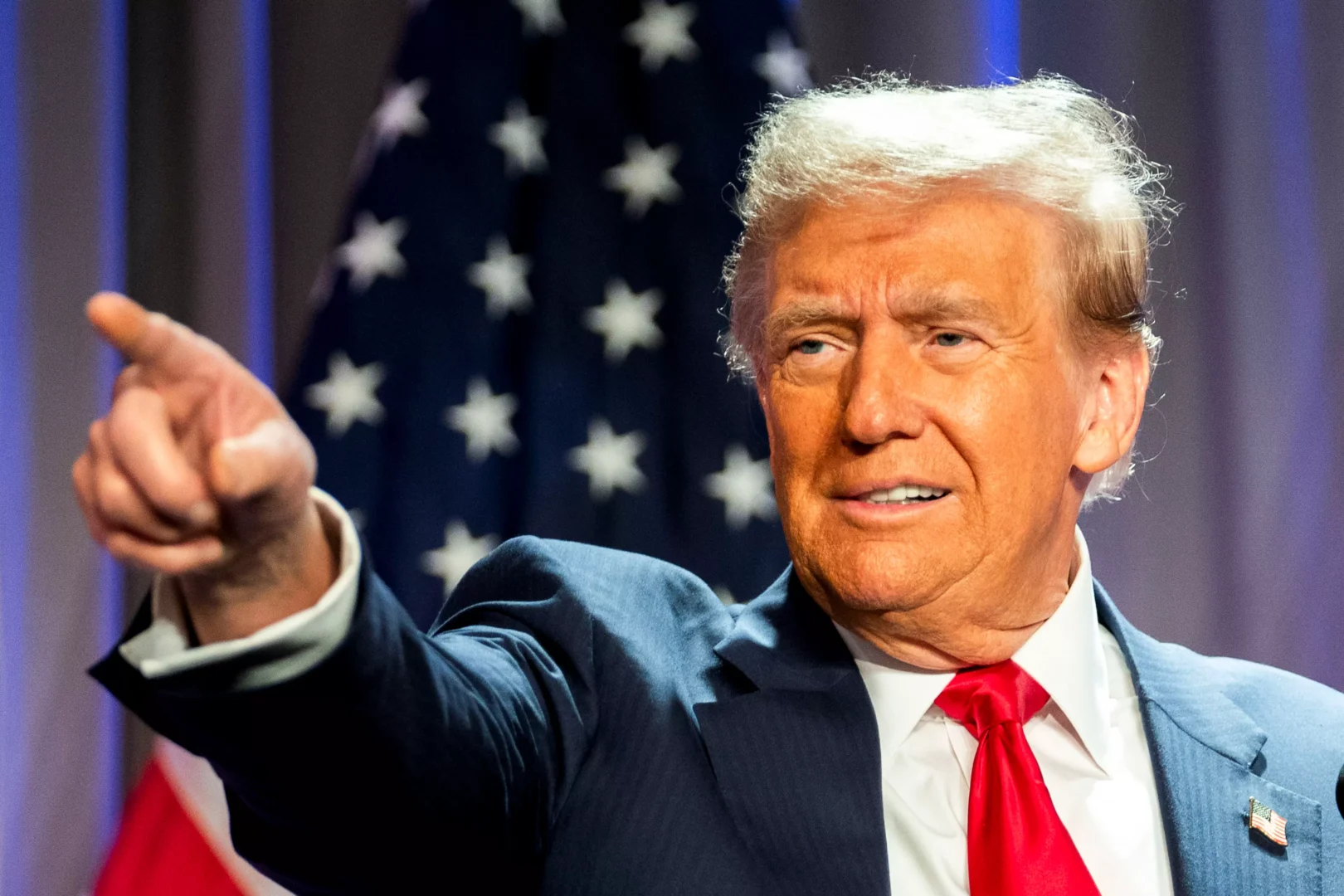
WASHINGTON, D.C., United States — US President Donald Trump has indicated that American military operations against Iran could extend beyond initial projections, as Tehran intensified retaliatory strikes across the Gulf and drones struck the US embassy in Saudi Arabia.
The escalation follows Washington’s call for American citizens to leave Middle Eastern countries stretching from Egypt eastwards, amid mounting fears of a wider regional conflict.
Two drones struck the US embassy compound in Riyadh on Tuesday, causing what officials described as limited structural damage and a small fire. In response, Trump vowed to retaliate “soon”, though he did not outline specific measures.
Overnight, powerful explosions were reported in Tehran as fighter jets flew over the Iranian capital. The Pentagon said US forces had established air superiority over Iran, which has been governed by Islamic clerics since the 1979 revolution.
Strait of Hormuz threat
Iran expanded its response beyond missile and drone launches, threatening to disrupt global energy flows through the Strait of Hormuz, a critical maritime corridor through which roughly one-fifth of the world’s seaborne oil supply transits.
“We will burn any ship that tries to pass through the Strait of Hormuz,” Revolutionary Guards General Sardar Jabbari said.
Such a move would have profound implications for global oil markets, particularly for energy-importing regions in Africa and Asia that rely heavily on Gulf exports.
War timeline and objectives
Trump stated at the White House that the military campaign was progressing “substantially” ahead of schedule, but stressed that the United States was prepared for a longer engagement.
“From the beginning we projected four to five weeks, but we have capability to go far longer than that,” Trump said.
He outlined the mission’s objectives for the first time: dismantling Iran’s missile systems, naval capacity and nuclear programme, and curbing its support for regional armed groups. Notably, he did not include regime change among the stated goals, despite previously encouraging Iranians to rise against their leadership.
Speaking separately, Israel’s Prime Minister Benjamin Netanyahu said joint operations would continue but would not become “an endless war”.
“It may take some time, but it’s not going to take years,” he told Fox News.
Regional fallout
Saudi Arabia reported intercepting additional drones over multiple cities, including Riyadh, after confirming the embassy strike. The US mission in the kingdom urged Americans in Riyadh, Jeddah and Dhahran to shelter in place.
Meanwhile, Qatar said it shot down two Iranian bombers, marking the first reported instance of a Gulf Arab state directly engaging Iranian aircraft in the current conflict.
The Israeli military also confirmed further strikes in Lebanon, targeting positions linked to Hezbollah after the group launched rockets and drones toward Israel.
Lebanon’s government reported at least 52 deaths following Israeli strikes in Beirut’s southern suburbs and southern Lebanon. Prime Minister Nawaf Salam ordered an “immediate prohibition” of Hezbollah’s military activities and called on the group to surrender its weapons, a rare and politically sensitive move.
US justification and political debate
US Secretary of State Marco Rubio said Washington intervened after intelligence suggested Israel was preparing to strike Iran, and that Tehran would likely target US forces in retaliation.
“The imminent threat was that we knew that if Iran was attacked — and we believed they would be attacked — that they would immediately come after us,” Rubio said.
Iran’s Foreign Minister Seyed Abbas Araghchi dismissed that account.
“There was never any so-called Iranian ‘threat’.”
“Mr. Rubio admitted what we all knew: U.S. has entered a war of choice on behalf of Israel’,” he wrote on X.
Democratic lawmakers in Washington questioned the legal and strategic basis for the intervention, warning that the United States risked being drawn into a prolonged regional war.
Rising casualties
According to US Central Command, six American military personnel have been killed since hostilities began. Iranian media have reported hundreds of casualties, though independent verification remains limited.
The US-based Human Rights Activists News Agency (HRANA) said 101 people had been killed in Iran by the third day of fighting, including 85 civilians.
Also Read: US and Israel launch major strikes on Iran, Tehran hits back
Inside Tehran, residents have been seen preparing to leave the city. One 45-year-old lawyer described the emotional toll of the bombardment.
“Every time we hear the noises, we get scared for just a second,” he said in a voice message to Europe, “but we experience some joy and excitement every time we hear a hit.”
Strategic implications
The widening conflict risks severe disruption to global energy markets, maritime trade and diplomatic stability across the Middle East.
For African economies already facing inflationary pressures, prolonged instability in Gulf energy corridors could translate into higher fuel prices and shipping costs.
International actors, including European and Asian powers, have renewed calls for restraint amid fears that miscalculation could escalate the confrontation into a broader regional war.
