



NAIROBI, Kenya — Marion Naipei has emerged as a focal point of national debate in Kenya following the circulation of intimate videos linked to her past involvement with adult content platforms.
While the footage has sparked intense online discussion, Naipei has acknowledged the existence of the videos, insisting they belong to a chapter of her life she says she has since left behind.
Speaking candidly during a TikTok Live session, Naipei told her followers that the material currently circulating on platforms such as Telegram and Streamchat was recorded several years ago, prior to what she describes as a personal and spiritual transformation.
“Those videos were recorded 3 years ago. It’s my past and I am now born again,” Marion stated firmly.
“Kama kuna limit ya kuokoka mniambie” — loosely translated as “If there’s a limit to being saved, please tell me.”
How the controversy began
Marion Naipei began trending after a video involving a man identified online as James Opande went viral.
The footage showed the man stripping her and exposing explicit content, an incident Naipei later said occurred without her consent.
The video reignited scrutiny into her private life and triggered wider sharing of additional explicit clips.
Subsequently, several other videos linked to her former identity as an adult content creator, previously known online as “Jelly Kunt” — were leaked and widely circulated across private messaging groups and adult streaming platforms.

Naipei has described these videos as part of her past and says their resurfacing has caused her significant emotional distress.
The controversy intensified amid reports that one of the incidents followed a traumatic encounter with a Tinder date, raising renewed concerns around consent, exploitation and digital privacy.
A public declaration of faith
As scrutiny mounted, Naipei publicly declared that she had undergone a spiritual transformation.
In January 2026, she announced that she had accepted salvation, framing the moment as a decisive break from her former life.
“I was not previously born again, but I have now accepted Christ,” she said.
She was publicly welcomed into the Salvation and Healing Ministry on Sunday, January 25, 2026 where Prophet Victor Kanyari introduced her to the congregation and confirmed that he would serve as her spiritual mentor.
Kanyari later defended Naipei against what he termed online “stone-throwers” and said he had offered her KSh 50,000 to help her restart her life.
Prophet Kanyari’s role — and the backlash
Prophet Kanyari has played a prominent and controversial role in Naipei’s transition.
During a church service, he referred to her as the “new sweetheart in town” and “his girl,” describing both of them as “celebrities of tomorrow.”
Kanyari revealed plans to ordain Naipei as a pastor in his ministry, claiming she would soon be preaching as part of his pastoral team.
Also Read: Exposed without consent: The Marion Naipei scandal and Kenya’s crisis of digital morality
In early February 2026, Kanyari introduced Naipei to his children, Sky and Danny, and has since referred to her with terms of endearment like “sweetheart,” leading to public speculation about a potential romantic relationship.
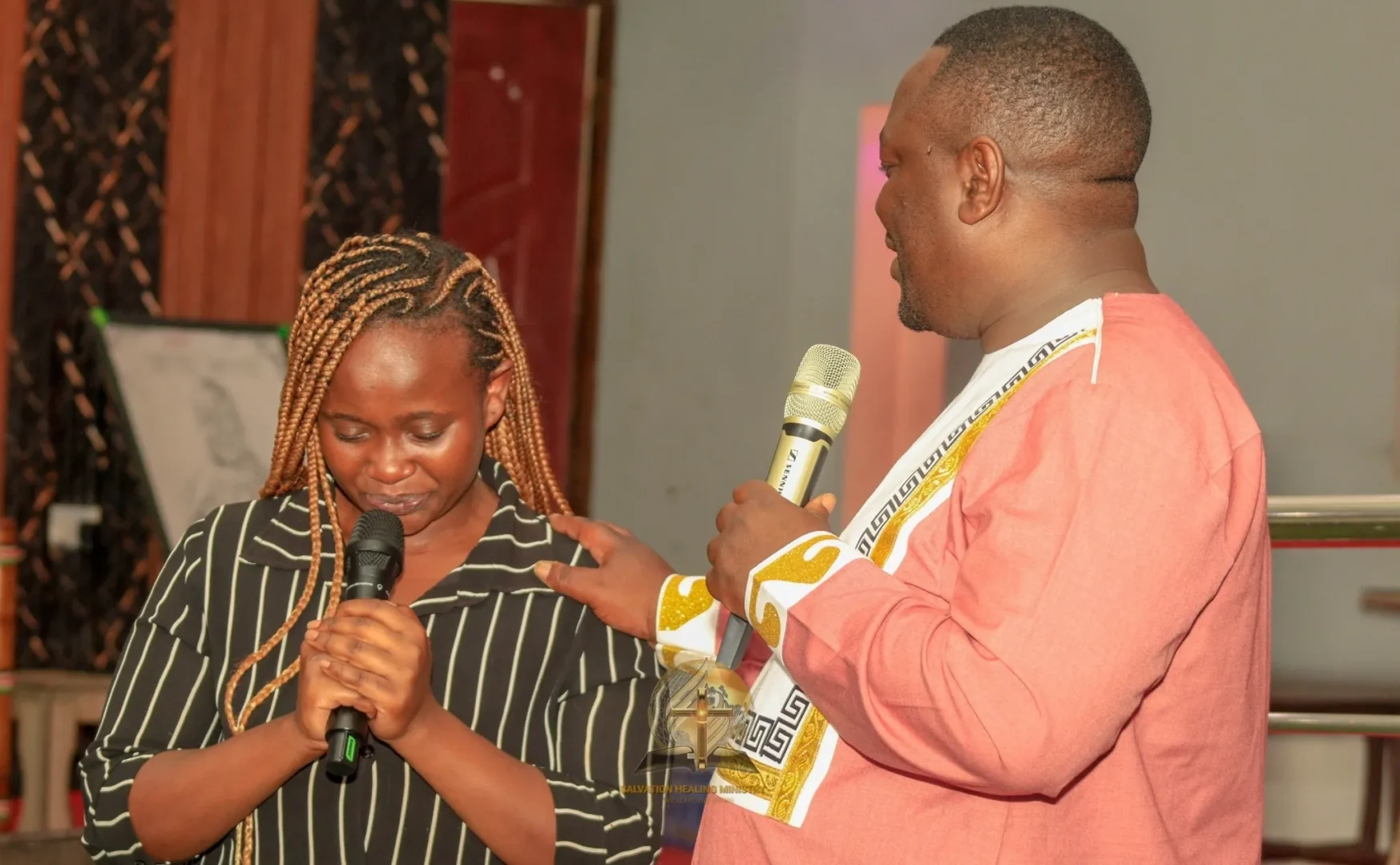
His remarks, and his visible association with Naipei, have fueled further debate across Kenyan social media.
The association has sparked significant debate, with Kanyari admitting he watched her viral videos and choosing to support her despite the “scandalous” nature of her past content.
Critics have questioned the authenticity of what they describe as “celebrity salvation,” while supporters argue that Naipei deserves the opportunity to rebuild her life without public condemnation.
A nation divided
At the centre of the debate is a broader question: how Kenyan society treats individuals whose private pasts resurface in the digital age.
While Naipei continues to emphasise that the videos being shared are three years old and predate her spiritual conversion, public opinion remains sharply split.
For some, her story is one of accountability, repentance and renewal. For others, it raises unresolved concerns about online morality, exploitation, and the responsibilities of public figures, religious or otherwise, in moments of scandal.
What is clear is that Marion Naipei’s case has become more than a personal controversy. It has evolved into a wider national conversation about consent, digital permanence, public judgement and the possibility — or limits — of redemption in Kenya’s unforgiving online space.
