


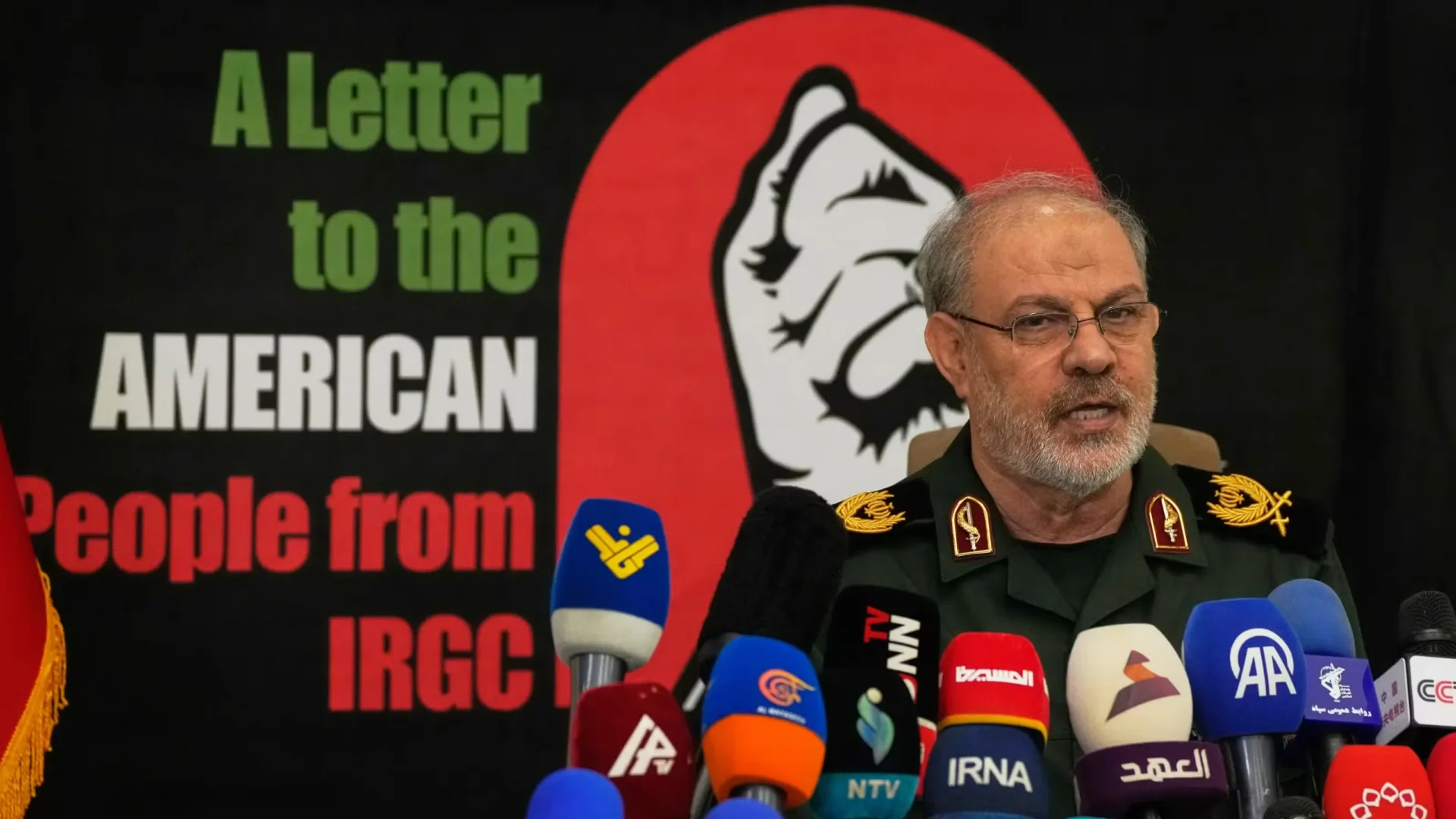
NAIROBI, Kenya — Kenya has been drawn into the escalating military confrontation between the United States and Iran after Tehran’s Islamic Revolutionary Guard Corps (IRGC) claimed Washington is establishing military bases in the country to protect its forces from Iranian missile attacks.
The allegation, made on Sunday, November 29, by IRGC spokesperson Brigadier General Hossein Mohebbi, raises fresh questions about Kenya’s growing strategic importance to American military operations in East Africa and the wider Indian Ocean region.
Speaking about the vulnerability of US military installations in the Middle East, Mohebbi argued that Washington was seeking alternative locations farther from Iran’s missile capabilities after some of its existing facilities were allegedly destroyed or rendered inoperable.
According to Iran’s state-run Islamic Republic News Agency (IRNA), the military spokesman specifically mentioned Kenya and other parts of the Horn of Africa as locations where the United States was establishing new military facilities.
“The United States is setting up military bases in the Horn of Africa and Kenya because it knows its existing bases in the region are within Iran’s reach,” Mohebbi said.
He suggested that Washington was attempting to relocate or expand its military infrastructure beyond the range of Iranian weapons as the confrontation between the two countries intensified.
However, Tehran has not provided evidence identifying the alleged construction sites in Kenya, the number of facilities involved or the nature of the purported military projects.
Neither the Kenyan government nor the United States has publicly confirmed the specific allegation that Washington is establishing a new military base in the country.
What is the US military doing at Manda Bay?
Iran’s allegations come against the backdrop of an established defence partnership between Kenya and the United States, with Manda Bay in Lamu County serving as an important centre for joint military operations.
The facility, which includes Kenya Navy Base Manda and the US military’s Camp Simba presence, supports cooperation between the Kenya Defence Forces (KDF) and American forces, particularly in counterterrorism and regional security operations.
In January 2026, Kenya and the United States officially broke ground on a major runway expansion project at Manda Bay.
The project involves extending the runway to 10,000 feet, with financing provided by Washington.
Kenya’s Ministry of Defence described the investment as a strategic development intended to strengthen the operational capabilities of the Kenya Defence Forces and improve security cooperation between the two countries.
The United States subsequently provided further details during a September 7 visit to the facility by Assistant Secretary of State Frank Garcia and US Embassy Chargé d’Affaires Susan Burns.
According to the US military, the runway expansion is intended to improve the ability of American and Kenyan forces to conduct military and counterterrorism operations while strengthening regional security.
The development demonstrates that the American military presence in Kenya is not new. However, the documented runway project is part of an existing bilateral defence arrangement and does not independently establish that a separate new US base is being constructed to evade Iranian missile threats.
Why American warships are repeatedly visiting Mombasa
The IRGC’s allegations have also drawn attention to the increasing visibility of American naval vessels at the Port of Mombasa.
On September 5, 2026, the USS Ross (DDG 71), an Arleigh Burke-class guided-missile destroyer, arrived in Kenya for a scheduled port visit.
The vessel had been deployed in the US Fifth Fleet’s area of operations and had supported American military activities linked to Operation Epic Fury and the blockade against Iran, according to reports on its deployment.
The US Sixth Fleet described the Mombasa visit as part of the longstanding security partnership between Washington and Nairobi, highlighting the importance of regional ports in maintaining naval readiness, logistics and resupply operations.
Another American destroyer, the USS Delbert D. Black (DDG 119), arrived in Mombasa on November 17.
US Navy records identified the vessel’s visit as part of a scheduled deployment in the Sixth Fleet’s area of operations, supporting the readiness and operational effectiveness of American naval forces in Europe and Africa.
Both vessels belong to the US Navy’s Arleigh Burke-class fleet, which is equipped with the Aegis combat system and capabilities for air defence, anti-submarine warfare and land-attack missions.
Their visits demonstrate the strategic value Washington places on access to Kenya’s coastline and Indian Ocean facilities.
However, scheduled port calls and logistical arrangements should not be interpreted as evidence that Kenya is being converted into a new military base for operations against Iran.
Why Kenya matters to American military strategy
Kenya occupies an important geographical position along the western Indian Ocean, close to major international shipping routes and the security challenges affecting Somalia and the wider Horn of Africa.
Its location gives American forces access to an important maritime corridor connecting the Middle East, East Africa and the Indian Ocean.
The US military has maintained a significant counterterrorism interest in the region, particularly in operations targeting al-Shabaab and other extremist organisations operating in Somalia.
Manda Bay is strategically important because it provides a platform for cooperation with Kenyan forces and supports regional military operations.
The runway expansion could improve the facility’s capacity to accommodate military aircraft and sustain operations over longer distances.
For Washington, such infrastructure offers logistical flexibility in a region where maritime security, counterterrorism and protection of international shipping routes remain important priorities.
For Kenya, the partnership provides access to military training, equipment, intelligence cooperation and operational support.
However, deeper military cooperation also places greater importance on transparency over defence agreements, the use of military facilities and the extent of foreign military activities conducted on Kenyan territory.
Could Iran’s allegations put Kenya in a difficult diplomatic position?
The latest statements from Tehran introduce a sensitive diplomatic dimension to Kenya’s defence relationship with Washington.
Kenya maintains security and diplomatic relationships with several international partners and has traditionally sought to position itself as a regional diplomatic and economic hub.
Being publicly identified by Iran as a potential location for American military expansion could attract additional attention to Kenya’s strategic relationship with the United States.
It also raises questions about whether military facilities and logistical arrangements in the country could become subjects of international political or security pressure if the confrontation between Washington and Tehran continues.
Also Read: US launches heavy strikes on Iran after missile attack on American troops
Nevertheless, there is an important difference between hosting an established defence partnership and being directly involved in military operations against another country.
The publicly documented cooperation between Kenya and the United States has focused on counterterrorism, maritime security and regional stability.
There is no independently verified evidence in the reports reviewed that Kenya has agreed to host a new American military installation specifically intended to support operations against Iran.
What Nairobi needs to clarify
Mohebbi’s allegations place renewed attention on the need for clear communication from Kenya’s defence and foreign affairs authorities.
The government may need to clarify whether the ongoing Manda Bay infrastructure programme represents the full extent of the current American military development activities in Kenya or whether additional facilities are being considered.
Questions surrounding the nature of the bilateral defence arrangements, the operational mandate of foreign forces and the purpose of military infrastructure investments are likely to attract greater public interest as tensions in the Middle East continue.
For now, the established facts are that Kenya and the United States are expanding military cooperation at Manda Bay, American warships have made scheduled visits to Mombasa, and Iran’s military has publicly alleged that Washington is building bases in Kenya.
What remains unverified is Tehran’s central claim that the United States is establishing new military bases in Kenya specifically to move its forces beyond the reach of Iranian missiles.
As the Washington-Tehran confrontation continues, Kenya’s strategic position along the Indian Ocean could become increasingly significant, placing the country’s defence partnerships and diplomatic neutrality under closer international scrutiny.
