


KAMPALA, Uganda — Uganda’s decision to crack down on unlicensed public Wi-Fi operators has exposed a difficult policy dilemma: how to enforce telecommunications laws, protect consumers and recover lost tax revenue without making internet access even more expensive for millions of citizens.
The Uganda Communications Commission (UCC) has given approximately 4,000 unauthorised Wi-Fi hotspot operators seven days to stop trading and remove illegal installations before a nationwide enforcement campaign begins. The regulator says the businesses are reselling commercial and residential internet subscriptions without the required licences, costing the government an estimated UGX 148 billion in annual tax revenue.
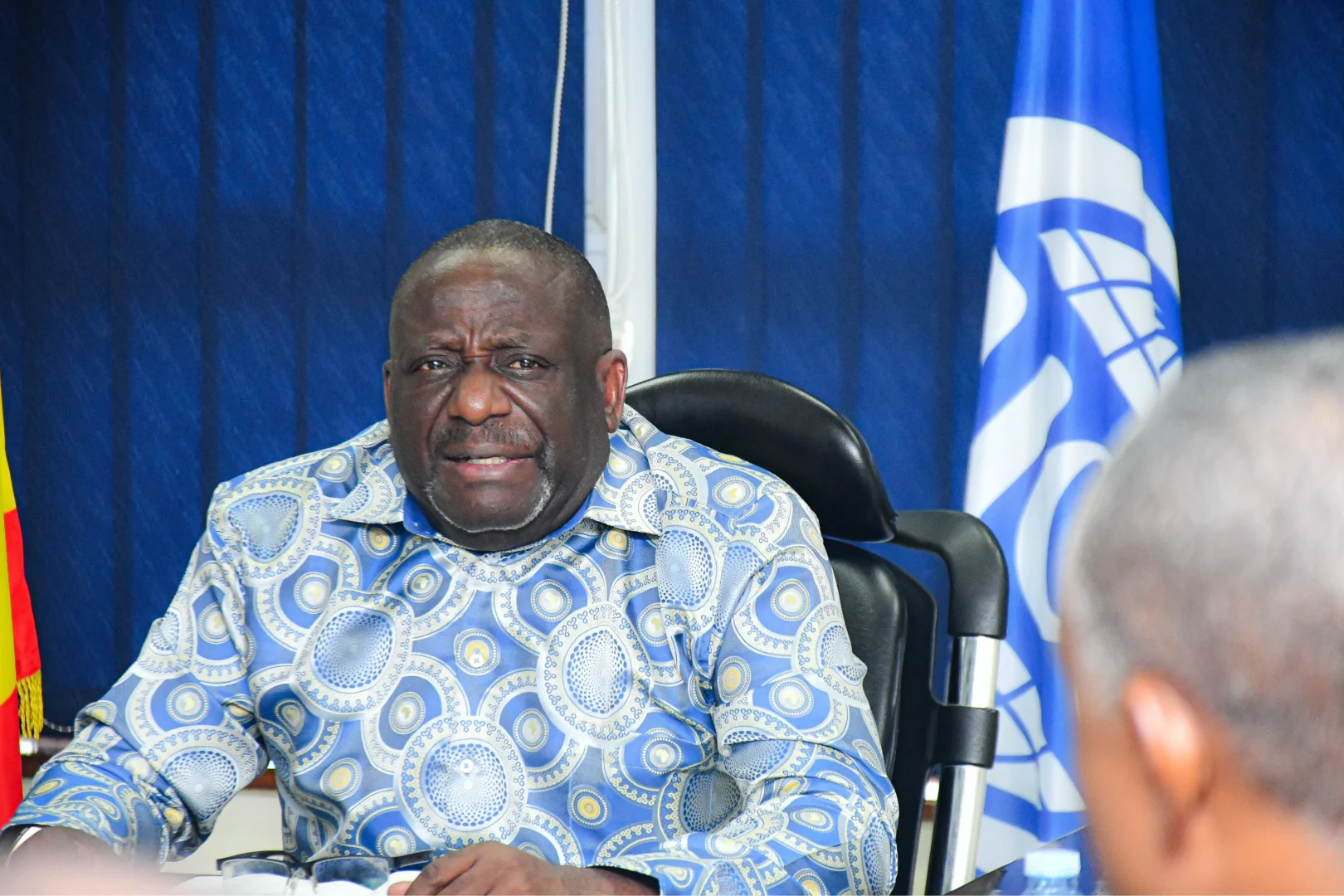
Announcing the enforcement drive on Tuesday, October 13, UCC Executive Director George William Nyombi Thembo said the commission had completed its assessment of the operators and was moving towards enforcement. The exercise is expected to involve identifying illegal installations, dismantling unauthorised equipment and seizing routers used to provide the services.
The crackdown follows consultations involving UCC, telecommunications companies MTN Uganda and Airtel Uganda, the Uganda Revenue Authority (URA) and representatives of the Wi-Fi hotspot industry.
The regulator’s concerns are not without merit. Public internet services cannot be allowed to operate indefinitely outside a framework designed to protect consumers, safeguard infrastructure, enforce technical standards and ensure that businesses meet their tax obligations.
Yet the government’s intervention raises a more fundamental question: if thousands of entrepreneurs have found a market for reselling internet access, is the problem simply illegal business activity, or does it also reflect a failure to make affordable connectivity widely available?
Uganda must address both challenges if its digital economy is to grow without excluding the people who need internet access most.
Why UCC is right to demand regulation
Under Section 22 of the Uganda Communications Act, 2013, telecommunications services and apparatus generally require a licence from the commission, subject to applicable exemptions. The law provides a basis for regulating businesses that provide internet connectivity to the public.
Unlicensed operators who buy residential or commercial broadband subscriptions and resell the connection to multiple customers may be operating outside the conditions under which those packages were purchased. Where authorisation is required, regulators have a legitimate responsibility to ensure compliance.
The issue extends beyond licensing.
An improperly configured hotspot can expose customers to risks involving insecure connections, unauthorised access to personal information and inadequate complaint-handling procedures.
Poorly installed equipment on utility poles can also create safety hazards, interfere with maintenance and complicate the management of shared infrastructure.
However, these risks must be assessed against the actual practices of individual operators. Unlicensed status alone does not establish that every hotspot is unsafe, just as a licence does not automatically guarantee excellent service or complete data security.
The appropriate response is therefore a regulatory system that establishes clear technical and consumer-protection standards, monitors compliance and imposes proportionate penalties where operators break the rules.
The government also has a legitimate interest in collecting taxes lawfully due from commercial activities. If the estimated UGX 148 billion in annual revenue losses is supported by a transparent assessment, the scale of the reported shortfall deserves serious attention.
UCC and URA should nevertheless explain how that figure was calculated, distinguishing between estimated taxable activity, taxes legally payable and revenue that can demonstrably be recovered. A large headline figure should not substitute for transparent evidence.
The affordability question Uganda cannot ignore
The most consequential aspect of the crackdown may not be the equipment seized or the number of operators removed from the market. It may be what happens to the customers who depend on their services.
In many communities, small Wi-Fi businesses have created a practical way to purchase internet access in limited quantities rather than commit to a more expensive subscription or repeatedly buy mobile data bundles.
A customer who cannot afford a substantial data package may be able to pay a small amount for a period of access at a neighbourhood hotspot.
Students can use such connections for research, jobseekers can submit applications, traders can communicate with customers and young people can develop digital skills without bearing the full cost of a dedicated connection.
The appeal is straightforward: customers pay for what they can afford, when they need it.
That model does not necessarily mean the internet is cheap in absolute terms. Nor does every hotspot offer good value. But it can lower the immediate financial barrier to getting online, particularly for people whose incomes are irregular.
Removing these operators without providing affordable alternatives could leave some customers with two choices: purchase more expensive data directly from a telecommunications company or reduce their internet use.
That would be a troubling outcome for a country seeking to expand digital inclusion.
A 2025 GSMA report on Uganda’s digital transformation identified high smartphone costs, sector-specific taxes, unreliable electricity and limited digital skills among the barriers to mobile internet adoption. The report estimated that three in four Ugandans living within mobile broadband coverage were not using mobile internet.
The distinction is important. Network coverage does not automatically translate into meaningful access. A signal can reach a village, trading centre or informal settlement while residents remain unable to afford the data needed to use it.
The International Telecommunication Union (ITU), in its assessment of Uganda’s National Broadband Policy, has similarly identified internet pricing and usage patterns as important parts of the country’s connectivity challenge.
This means the government cannot measure the success of its digital policy solely by the number of towers installed, licences issued or illegal routers removed. It must also consider whether ordinary citizens can afford to use the infrastructure.
MTN and Airtel must be part of the affordability solution
MTN Uganda and Airtel Uganda are central to this debate because they supply much of the connectivity on which the hotspot market depends.
Telecommunications operators invest in network infrastructure, spectrum, equipment, maintenance, customer support and security. They must be able to recover legitimate costs and earn returns on investments that expand coverage and improve service quality.
Allowing businesses to resell subscriptions in violation of contractual conditions or licensing requirements could undermine those investments, distort competition and weaken incentives to develop products specifically designed for public Wi-Fi.
Licensed operators also have a reasonable interest in ensuring that customers receive reliable services and that their networks are not exposed to poorly managed installations.
But the existence of an unauthorised resale market should also prompt the companies to examine why it has grown so widely.
If customers are willing to pay neighbourhood operators for small amounts of connectivity, that demand presents a commercial opportunity. Telecoms companies could develop authorised wholesale products, community Wi-Fi subscriptions, affordable daily passes and pay-as-you-go packages that allow approved small businesses to resell access legally.
Such products would enable operators to reach customers who may not be profitable under conventional home broadband subscriptions or larger mobile data bundles.
The objective should not be to force every customer into an existing product category. It should be to expand the range of lawful, affordable ways people can connect.
Telecommunications companies should therefore be judged not only by their network investments and tax contributions but also by how effectively their pricing and distribution models serve lower-income customers.
The government must balance revenue with digital inclusion
The Uganda Revenue Authority has an important role in determining the tax implications of the hotspot industry. Commercial activity should be subject to clear, consistent tax rules, and businesses that earn taxable income should not gain an unfair advantage by evading obligations imposed on compliant competitors.
However, the government must distinguish between preventing tax evasion and imposing a regulatory burden so heavy that small businesses cannot formalise.
A licensing framework designed primarily around large telecommunications operators may not be practical for an entrepreneur operating a handful of routers in a neighbourhood.
If compliance requires substantial upfront fees, complex technical documentation, expensive equipment or lengthy approval procedures, some operators may be unable to transition into the formal economy even if they are willing to do so.
The result could be an enforcement cycle in which businesses are closed, new operators emerge to meet the same demand, and authorities repeatedly pursue them without resolving the underlying problem.
UCC should therefore work with URA and the Ministry of ICT and National Guidance to establish a proportionate framework for small-scale public internet providers.
That could include a simplified authorisation category, transparent and affordable fees, standard equipment requirements, clear tax guidance and accessible procedures for registering a hotspot business.
The framework should also define responsibilities for data protection, customer complaints, service quality and network security.
Where possible, compliance costs should reflect the size and risk of the operation rather than treating a neighbourhood entrepreneur as though they were building a national telecommunications network.
The aim should be to bring viable businesses into the formal economy, improve consumer safeguards and widen the tax base without unnecessarily destroying small enterprises.
A seven-day ultimatum may be too short for meaningful transition
UCC’s seven-day deadline signals that the regulator is serious about enforcement. It also raises questions about procedural fairness and practical implementation.
Some operators may have deliberately ignored licensing requirements. Others may have entered the business without understanding the applicable rules or may have attempted to comply but encountered unclear procedures.
These circumstances should not excuse unlawful activity, but they matter when determining how enforcement should proceed.
The commission has indicated that it will organise guidance sessions beginning Friday, October 16, to help willing operators transition to legal operations. That is a constructive step, particularly because UCC has acknowledged receiving complaints and requests for further regulatory review from hotspot operators.
The next step should be to publish clear eligibility criteria, licensing requirements, fees, application timelines and the conditions under which existing equipment may remain in use.
Operators who present immediate safety or serious security risks may require urgent intervention. For others, a transparent transition process could allow them to regularise their businesses without unnecessary disruption to customers.
The seven-day ultimatum should not become a substitute for clear administrative procedures, nor should engagement become an excuse for indefinite non-compliance.
UCC must demonstrate that the rules are predictable, consistently applied and open to review where legitimate concerns arise.
Consumer protection must go beyond warning people about illegal Wi-Fi
UCC has advised consumers to rely on licensed internet service providers to protect their data and maintain uninterrupted connectivity.
That advice is understandable, but it is not sufficient on its own.
Consumers need accessible information about which providers are authorised, what protections apply to their personal data, how to report unsafe connections and where to seek redress when services fail.
The commission should publish an easily searchable register of licensed public internet providers and approved hotspot operators. It should also make the licensing process transparent enough for customers to distinguish legitimate businesses from those operating outside the law.
At the same time, licensed providers must be held to meaningful service and consumer-protection standards. Customers should not be expected to accept high prices, misleading advertising, poor service or inadequate complaint handling simply because a provider is licensed.
The Personal Data Protection Office also has a role in ensuring that businesses handling customers’ personal information comply with Uganda’s data protection framework.
Public Wi-Fi security is not merely a question of whether an operator holds a licence. It also depends on network configuration, encryption, access controls, data-handling practices and the ability to respond to security incidents.
The policy response must therefore protect consumers against identifiable risks rather than assume that formal licensing alone resolves every problem.
Parliament and regulators must confront the cost of access
Uganda’s digital policy ambitions will remain difficult to achieve if connectivity is treated primarily as a commercial service while affordability is addressed only after enforcement decisions have been made.
Parliament has a role in scrutinising the effectiveness of the legal framework, the proportionality of licensing requirements and the impact of telecommunications taxes on consumers.
UCC must regulate the industry fairly, publish evidence supporting its enforcement decisions and monitor whether the crackdown affects prices, access and competition.
The Ministry of ICT and National Guidance should ensure that the national broadband strategy addresses the gap between network availability and actual use. The ITU’s 2024 review of Uganda’s National Broadband Policy provides a basis for assessing progress and identifying where implementation needs to improve.
Local governments can also help identify underserved communities, facilitate safe infrastructure deployment and support community connectivity initiatives.
Development partners and universal-access programmes should consider whether targeted support can help extend affordable broadband to rural areas and low-income communities that commercial operators struggle to serve profitably.
The government should also assess how taxes and other charges affect the final price paid by consumers. Any reform should be evidence-based and consider its effect on public revenue, investment and affordability rather than assume that one intervention can achieve all three objectives.
A better model: Regulate the business, not the demand for affordable internet
Uganda does not have to choose between enforcing the law and preserving affordable access. It can pursue both objectives if the regulatory response is designed around the needs of the entire digital ecosystem.
First, UCC should establish a realistic pathway for small hotspot operators to obtain authorisation, including a simplified category for businesses that meet defined technical, security and consumer-protection requirements.
Second, MTN Uganda and Airtel Uganda should be encouraged to introduce wholesale connectivity products and affordable public Wi-Fi packages that authorised resellers can purchase under clear commercial terms.
Also Read: Can Uganda’s small Wi-Fi hotspot providers afford UCC’s licence fees?
Third, URA should provide straightforward guidance on the tax obligations of small internet businesses and work with UCC to ensure that the compliance framework is consistent and proportionate.
Fourth, the government should publish regular information on internet affordability, service quality, coverage and actual usage. Enforcement outcomes should be assessed alongside their effects on consumers, particularly low-income households and students.
Finally, UCC should monitor the market after the crackdown. If neighbourhood connectivity becomes more expensive or access falls sharply in underserved areas, the regulator should investigate the causes and work with providers to address them.
These measures would help protect legitimate businesses and public revenue while preserving the economic benefits of small-scale connectivity.
The real test is whether Ugandans remain connected
The growth of unauthorised Wi-Fi hotspots presents a genuine regulatory challenge. Unchecked resale can undermine licensing requirements, weaken consumer safeguards and create risks for telecommunications infrastructure.
But the existence of thousands of operators also signals that there is demand for forms of internet access that customers consider affordable and convenient.
That demand will not disappear simply because routers are seized or businesses are closed. Unless licensed providers offer viable alternatives, the market may shrink temporarily while the underlying affordability problem remains.
UCC’s enforcement campaign should therefore be judged by more than the number of illegal installations dismantled or the amount of tax revenue authorities expect to recover.
Its success should also be measured by whether consumers retain access to affordable connectivity, whether small businesses can formalise their operations, whether security improves and whether competition produces better services.
Uganda has an opportunity to use the crackdown as a turning point in telecommunications policy: from a narrow focus on unauthorised operators towards a broader strategy that combines lawful competition, consumer protection, investment and universal access.
The ultimate objective should be a market in which internet businesses operate legally, telecommunications companies compete on quality and price, government revenue is protected and ordinary Ugandans can afford to participate in the digital economy.
Regulation is necessary. But if enforcing the rules makes the internet less accessible to the people who need it most, the policy will have solved one problem while deepening another.
