


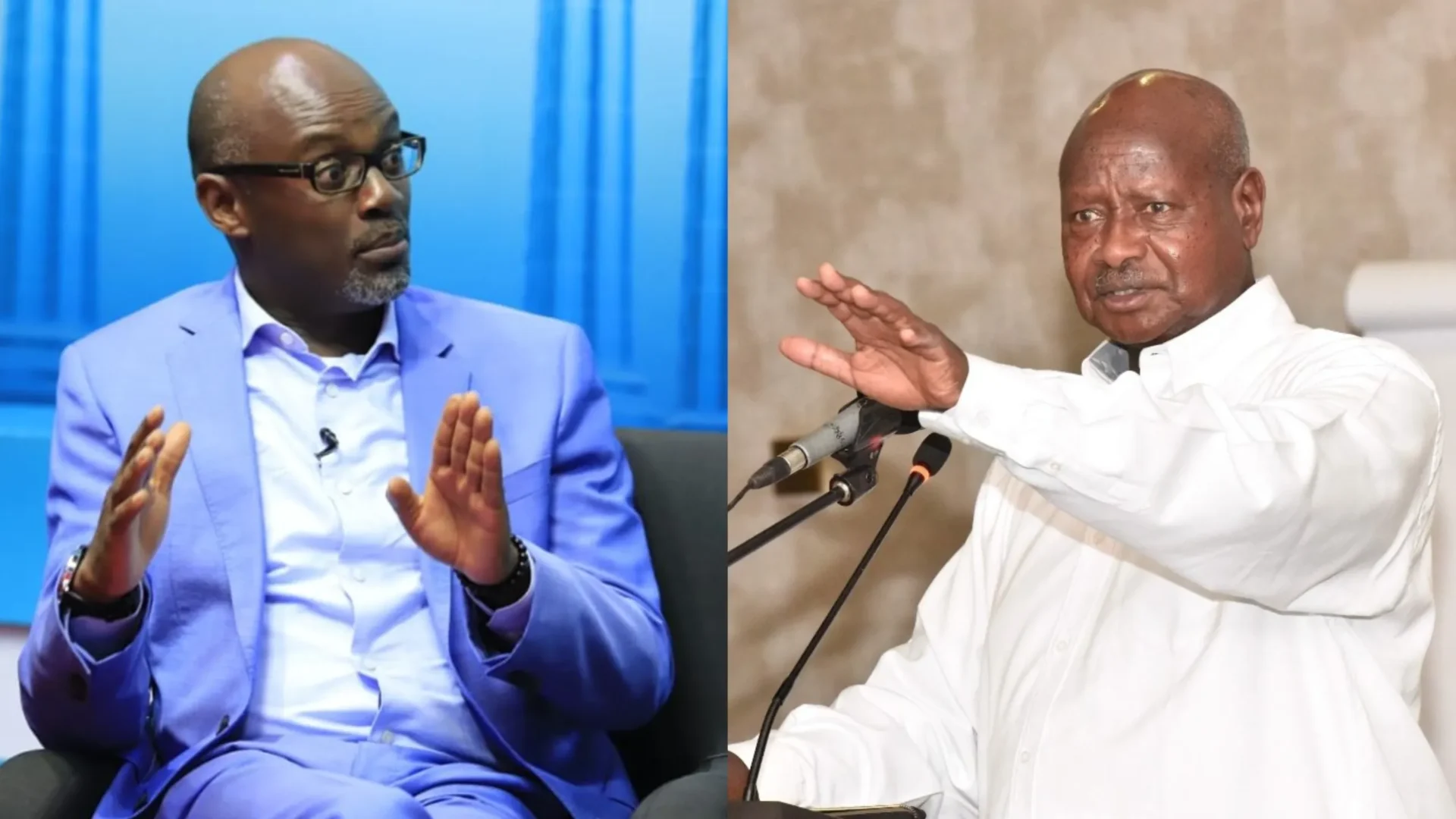
KAMPALA, Uganda — President Yoweri Museveni has defended his decision to personally intervene in the case of Stephen Nuwagaba, describing the young man as a victim of torture and abuse by elements within Uganda’s security services while launching a scathing attack on veteran journalist Andrew Mwenda over his commentary on the matter.
In a lengthy statement released on Monday 3, August 2026, Museveni said Nuwagaba came to him “as a fugitive, a victim of torture and maiming,” insisting that his intervention was motivated by humanitarian concerns rather than politics.
The President disclosed that Nuwagaba had spent months under his care and had undergone specialised treatment both in Uganda and abroad after allegedly suffering severe physical injuries.
“Nuwagaba is a young man in his mid-twenties who came to me as a fugitive, a victim of torture and maiming, whom some elements in the Security Services were trying to silence, including threatening with death,” Museveni said.
“I had to send him to the hospitals in Uganda and abroad to save his life. He seems to have improved, but some of the maiming is still there.”
Museveni added that investigations had already been launched into allegations that members of the security services were responsible for the alleged torture and said some suspects were already facing court proceedings, although he did not identify them.
Museveni warns security agencies
The President used the statement to issue one of his strongest public warnings in recent years against torture, extrajudicial actions and abuse of power by security agencies.
He said such conduct betrayed the ideals for which the National Resistance Movement (NRM) fought during Uganda’s liberation struggle.
“The torture and the maiming are allegedly by elements in the Security Forces. Is this what we and the People of Uganda fought for?” he asked.
Museveni recounted killings carried out under former President Idi Amin and atrocities committed during the 1981–1986 guerrilla war, arguing that Uganda’s liberation was intended to end arbitrary arrests, torture and dictatorship.
“All these people did not suffer so that Ugandans are tortured, maimed or traumatized again.”
While defending the ongoing anti-corruption operations within the security sector, Museveni cautioned that efforts to combat crime must not themselves violate the law.
“The UPDF and the other security forces, in fighting impunity, they should not commit their own crimes, such as torture, extra-judicial killings, etc.”
He argued that torture was morally wrong, strategically ineffective and inconsistent with revolutionary principles.
Criticism of Andrew Mwenda
A significant portion of Museveni’s statement was devoted to criticising journalist Andrew Mwenda, whom he accused of deliberately diverting public attention from what he described as Uganda’s more pressing national challenges.
The President said Mwenda had previously criticised Uganda’s pharmaceutical innovators and now sought to turn Nuwagaba into what he sarcastically described as “a national emergency.”
“The great journalist Andrew Mwenda is back with his schemes,” Museveni wrote.
Museveni accused Mwenda of ignoring systemic corruption in favour of what he described as sensational narratives.
“Why doesn’t the investigative team of Mr. Mwenda pick up the corruption in PDM, in the roads, etc., etc.?”
He argued that the country’s greatest threat was not Nuwagaba but corruption and criminal conduct within state institutions.
“The main problem of Uganda is not Nuwagaba seizing State House and the Security Forces, but the criminals, including some in the Security Forces and other organs.”
Defence of intelligence structures
Museveni also rejected suggestions that informal intelligence networks have replaced Uganda’s formal security structures.
Drawing extensively from his experiences during the bush war, he said both formal and informal intelligence systems have always operated side by side.
He recounted several military operations conducted by the National Resistance Army (NRA), arguing that human intelligence and signals intelligence had always complemented each other in protecting national security.
According to the President, informal sources continue to play an important role whenever formal structures fail to detect corruption or emerging threats.
He cited several recent cases—including anti-corruption investigations and the arrest of opposition figure Dr. Kizza Besigye—as examples where informal intelligence had proved valuable.
Allegations against security personnel
Museveni alleged that some security personnel had become compromised by corruption or infiltration.
He suggested that these elements had attempted to suppress information about wrongdoing and prevent sensitive intelligence from reaching the Presidency.
He also claimed that Nuwagaba’s mother had allegedly been assaulted and that his father had received threats after the young man came under presidential protection.
The President said those allegations form part of investigations he ordered months ago.
Nuwagaba’s own conduct
While defending his decision to protect Nuwagaba, Museveni acknowledged that the young man may himself have committed wrongdoing.
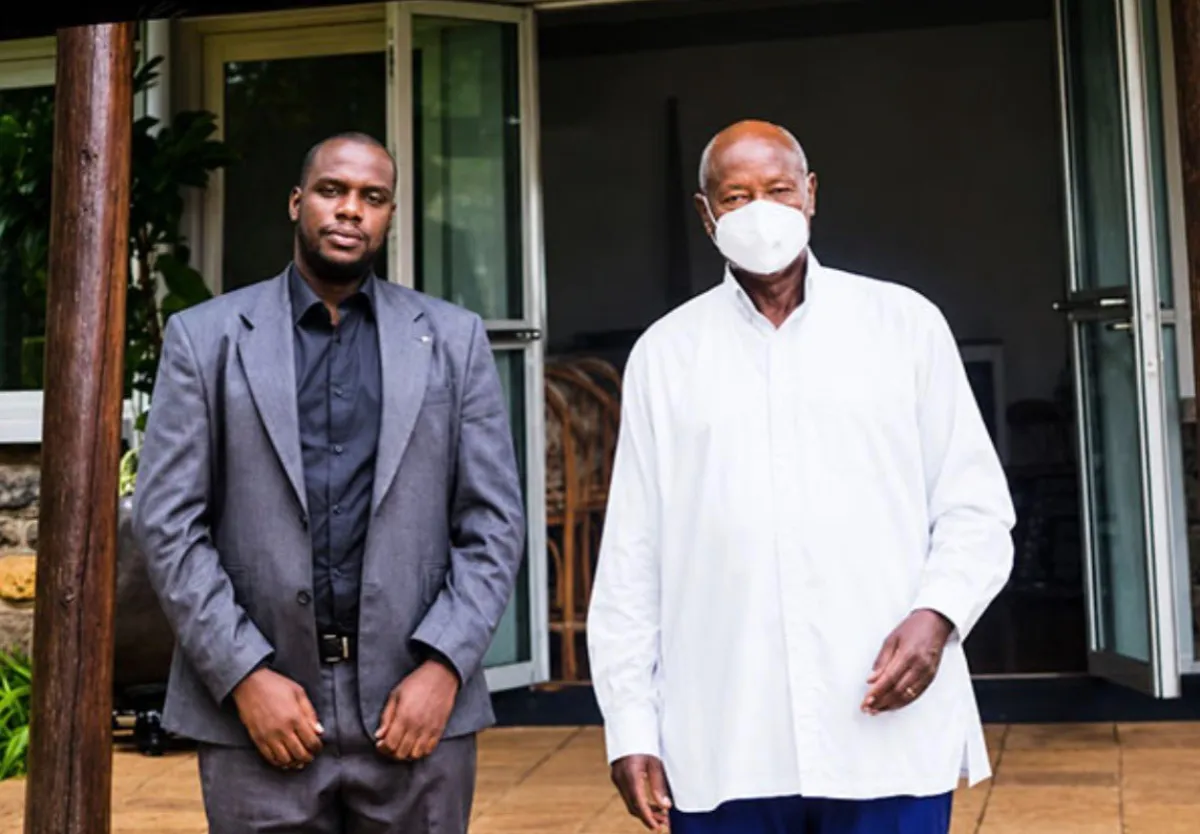
He referred to allegations that Nuwagaba may have solicited money, impersonated influential figures or misrepresented himself.
Also Read: Stephen Nuwagaba: From state protection to military arrest
However, Museveni maintained that such allegations did not justify torture.
“If he has got problems like lying, he will account for those.”
He argued that regardless of any offences Nuwagaba may have committed, security agencies must operate within the law.
Broader debate
Museveni’s intervention comes amid continuing public debate over allegations of torture, accountability within Uganda’s security services and the relationship between the Presidency and the country’s intelligence agencies.
It also follows renewed scrutiny of the Stephen Nuwagaba case after his recent arrest by security operatives, an incident that has raised further questions about the circumstances surrounding his relationship with senior state officials.
While the President’s statement offers the most detailed public account yet of why he became involved in Nuwagaba’s case, it is also likely to intensify debate over the conduct of security agencies and the mechanisms available to investigate allegations of abuse within Uganda’s law enforcement system.
The Presidency has not indicated whether the investigations Museveni referenced have been concluded or when their findings will be made public.
