


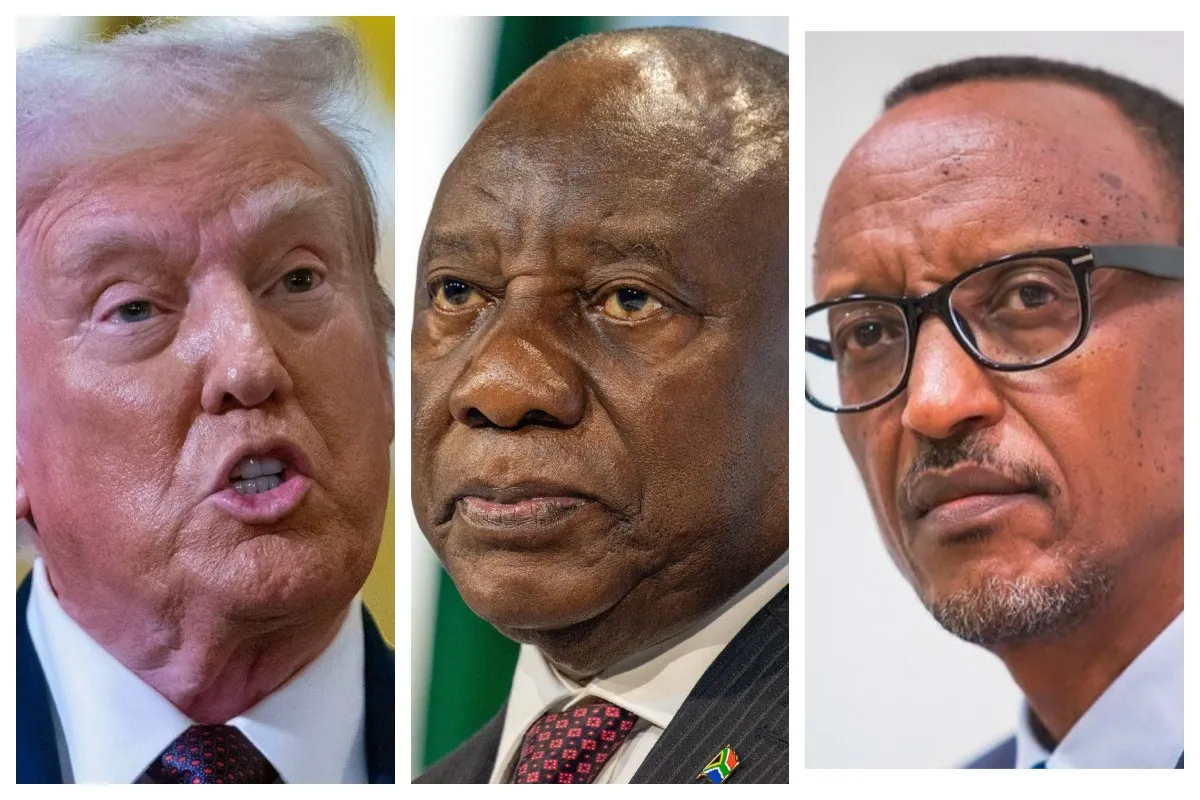
JOHANNESBURG, South Africa — US President Donald Trump has notified Congress of his intention to remove South Africa and Rwanda from a preferential trade programme that gives eligible African countries duty-free access to the American market, in a move that could affect billions of dollars in exports and deepen diplomatic tensions between Washington and the two nations.
The proposed termination of their eligibility under the African Growth and Opportunity Act (AGOA) is scheduled to take effect on January 1, 2027, following an annual review by the Trump administration.
US Trade Representative Jamieson Greer announced the decision on Monday, November 2, saying the two governments had engaged in practices that were inconsistent with the programme’s eligibility requirements.
The administration cited barriers to American trade and investment, alongside concerns about US national security and foreign policy interests in the region.
Washington also raised specific concerns about Rwanda’s human rights record, political pluralism, the rule of law and internationally recognised workers’ rights. In South Africa’s case, the administration additionally cited corruption.
“The Trump administration is working to ensure our African partners take the necessary steps to meet the eligibility criteria,” Greer said in a statement.
The proposed removal comes amid deteriorating relations between the Trump administration and both countries, with Washington increasingly linking trade policy to broader diplomatic, political and security concerns.
Why Trump is targeting South Africa and Rwanda
The US decision follows an annual interagency review of sub-Saharan African countries participating in AGOA, which allows eligible economies to export thousands of products to the American market without paying specified import duties.
According to the Office of the US Trade Representative, Rwanda faces concerns involving trade and investment barriers, the rule of law, political pluralism, workers’ rights, human rights and threats to American national security and foreign policy interests.
For South Africa, Washington identified barriers to US trade and investment, corruption and concerns involving its national security and foreign policy interests.
However, the announcement did not provide detailed examples of all the practices cited in the eligibility review.
The decision also comes against the background of longstanding disagreements between Washington and Pretoria over South Africa’s domestic policies and international diplomatic positions.
Trump has previously criticised South Africa’s land and affirmative-action policies, while his administration has also raised objections to Pretoria’s diplomatic relations and positions on international conflicts.
In May 2025, Trump confronted South African President Cyril Ramaphosa during a White House meeting, repeating allegations of persecution and a so-called white genocide against white South Africans. Pretoria has rejected the allegations.
The administration also established a refugee pathway for Afrikaners, a move that further strained relations between the two governments.
Rwanda’s removal follows US sanctions over M23 conflict
Rwanda’s proposed removal from AGOA comes less than a week after Washington imposed sanctions on the country’s Ministry of Defence and Zigama Credit and Savings Society over alleged support for the M23 rebel movement in eastern Democratic Republic of Congo (DRC).
On October 28, the US Treasury Department announced sanctions against the two institutions, accusing Rwanda’s security apparatus of supporting M23 through the deployment of thousands of troops, weapons, military equipment, logistics and training.
The Treasury also accused Zigama of facilitating financial transactions linked to the armed group and helping move gold originating from areas under M23 control.
According to Washington, the alleged military support has contributed to M23’s territorial advances in North and South Kivu provinces, worsening insecurity and displacement in eastern DRC.
The sanctions were presented as part of efforts to hold Rwanda accountable for commitments made under the Washington Accords for Peace and Prosperity, signed by Rwanda and the DRC in December 2025.
Kigali has rejected accusations of supporting armed groups in eastern Congo and has maintained that its security concerns, particularly the threat posed by the Democratic Forces for the Liberation of Rwanda (FDLR), must also be addressed.
The latest AGOA decision therefore adds a trade dimension to the growing dispute between Washington and Kigali, potentially affecting Rwandan exports beyond the sectors already subject to restrictions.
Rwanda had previously lost AGOA benefits for its apparel exports in 2018 following a dispute over restrictions on imported second-hand clothing, while other qualifying exports retained preferential access.
South Africa protests decision, says Washington raised new issues
South Africa’s government has criticised the proposed termination, arguing that Washington introduced additional concerns despite negotiations between the two countries that began in 2025.
Trade, Industry and Competition Minister Parks Tau described the decision as “unfortunate”, saying Pretoria had made efforts to address American concerns and had offered additional concessions during the negotiations.
“It is however unfortunate that the US is now raising new issues that have not been the basis for discussions as part of the negotiations process that commenced in 2025,” Tau said.
He said South Africa would continue working to protect businesses and employment while expanding its access to alternative export markets.
“We will continue to accelerate the diversification of South Africa’s export markets to protect jobs,” Tau said.
US Ambassador to South Africa Leo Brent Bozell III defended Washington’s decision, arguing that Pretoria had failed to address concerns raised by the American government.
“It is regrettable that South African policies led to its termination from Agoa. This was a predictable and preventable outcome resulting from the rejection by South Africa’s government of real concerns raised by the US,” Bozell wrote on X.
The contrasting positions highlight the disagreement between the two governments over the reasons for the proposed removal, with Pretoria maintaining that it had engaged constructively in negotiations while Washington insists that South Africa’s policies failed to meet the programme’s eligibility requirements.
What the decision means for South Africa’s exports and jobs
South Africa is the largest beneficiary of AGOA, making its proposed removal particularly significant for exporters that depend on preferential access to the American market.
According to figures released by South Africa’s trade ministry, the country exported approximately US$1.7 billion worth of goods to the United States under AGOA in 2025, compared with about US$4 billion in 2024.
AGOA-related exports accounted for approximately 10 per cent of South Africa’s exports to the US in 2025, down from 28 per cent the previous year, and around 1 per cent of its total global exports.
Key export sectors benefiting from the programme include the automotive industry, agriculture, citrus, wine and manufactured products.
The automotive sector is particularly exposed because preferential access has helped South African manufacturers and suppliers export vehicles and components to the American market.
The agricultural sector could also face additional pressure, particularly producers of citrus and other products that compete in international markets.
However, losing AGOA eligibility would not automatically end all South African exports to the United States. Products could continue entering the American market under ordinary World Trade Organization tariff arrangements or other applicable trade provisions, although some would face higher import duties.
South Africa’s government has said it will assess the effects on affected industries and support businesses while pursuing alternative markets in Africa, Europe, Asia and Latin America.
The US remains an important trading and investment partner for Pretoria, with bilateral trade reaching approximately US$28.8 billion in 2025, according to figures cited by South African officials.
What AGOA is and why it matters to African countries
The African Growth and Opportunity Act was enacted by the US Congress in 2000 under President Bill Clinton to strengthen economic and commercial relations between the United States and sub-Saharan Africa.
The programme allows eligible African countries to export qualifying goods to the American market duty-free, giving them preferential treatment compared with countries that do not enjoy the same arrangements.
According to the Office of the US Trade Representative, AGOA covers more than 1,800 products, in addition to thousands of products covered under the Generalised System of Preferences framework.
The programme’s eligible product categories include agricultural goods, textiles, clothing, footwear, manufactured products and other exports that meet the applicable rules of origin.
Countries seeking to benefit must meet conditions relating to market-based economic policies, the rule of law, political pluralism, workers’ rights, human rights, corruption and the removal of barriers to American trade and investment.
Eligibility is reviewed annually, allowing the US president to determine whether participating countries continue to meet the programme’s requirements.
AGOA was reauthorised by Congress in February 2026 through December 2026, following its previous expiry in September 2025.
What happens next?
The proposed removal of South Africa and Rwanda from AGOA is scheduled to take effect on January 1, 2027.
Until then, the development leaves room for further diplomatic engagement and discussions over the concerns raised by Washington.
Also Read: AGOA trade deal expiry puts thousands of African jobs at risk
Both countries could seek to address the issues identified by the US administration, although the announcement has not set out a detailed public roadmap for reversing the decision.
For South Africa, the immediate priority will be protecting export-dependent industries and maintaining access to the American market through alternative trade arrangements.
For Rwanda, the trade decision adds pressure at a time when its relations with Washington are already strained by the conflict in eastern DRC and allegations of military support for M23.
The development also raises wider questions about the future of US-Africa trade relations and the conditions African governments must satisfy to retain preferential access to the American market.
As the January 2027 deadline approaches, the outcome of any further negotiations could determine whether the two countries lose their AGOA benefits or find a diplomatic path towards retaining preferential access.
