


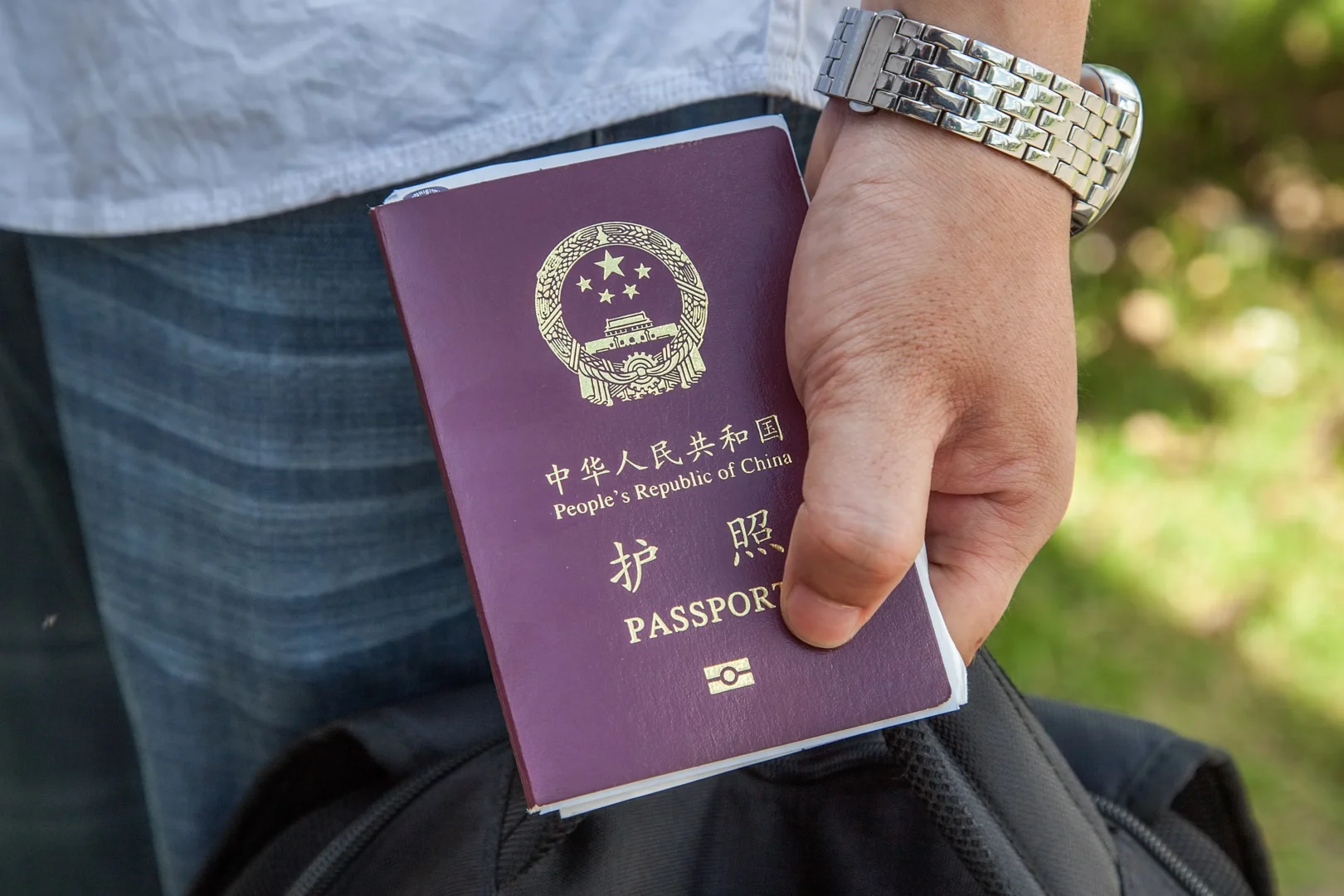
BEIJING, China — A sweeping new set of Chinese regulations governing who can leave the country took effect on Tuesday, giving authorities significantly broader powers to restrict citizens’ overseas travel in the name of national security, industrial policy and technological competitiveness.
The State Council’s Regulation on Exit and Entry Administration, promulgated by Premier Li Qiang on 31 July and comprising 19 articles, represents one of the most significant overhauls of China’s border-control framework since the country’s original exit-entry law came into force in 2013.
Under the new framework, citizens found to have “harmed” China’s national security or interests while overseas can be barred from re-entering the country’s travel system, with the potential to be barred from leaving China again for between six months and three years.
In cases judged to endanger national security through violations of export controls or technology-transfer rules, authorities can impose bans with no fixed maximum duration.
The rules explicitly extend to anyone deemed a threat to China’s industrial or technological security, reflecting Beijing’s heightened sensitivity around sectors such as semiconductors and artificial intelligence amid its escalating technology rivalry with Washington.
Restrictions of this kind are not entirely new in practice: reports indicate some executives in these industries had already faced exit bans before the rules were formalised, including the co-founders of Manus, an AI company acquired by Meta, who were reportedly barred from leaving China in March.
Border officials are now also required to warn Chinese nationals against travelling to countries or regions the government considers “high-risk.” Separately, foreign nationals can face entry bans of one to five years for providing false information on visa applications, prior border violations, or inclusion on government sanctions lists.
Restrictions on foreign travel have applied informally to certain groups for years, well before Tuesday’s rules were formalised. Civil servants were among the earliest to face such controls, with the practice later extending to state-owned enterprise employees and, increasingly, ordinary citizens.
Speaking to BBC Chinese, a retired grassroots civil servant from Anhui said his workplace had required staff to surrender their passports as far back as 2018 — a passport that, in his case, remains with his former employer even after his retirement last year.
He said colleagues had to formally apply and justify any request for overseas travel, with trips to visit relatives more likely to be approved than tourism. He linked the practice mainly to preventing corrupt officials from fleeing abroad or moving assets overseas, and, for more senior officials, to preventing state secrets from being disclosed.
A Beijing-based employee at a state financial institution, who spoke to BBC Chinese under the pseudonym Xiao Wang, said staff at his workplace have long had to surrender passports and seek approval before travelling abroad, with managers making clear that countries such as Japan are considered off-limits.
Tom Kellogg, Executive Director of the Center for Asian Law at Georgetown University, described the expanding restrictions as deeply concerning, characterising them as part of a pattern of growing ideological control under Chinese leader Xi Jinping that recalls the isolation of the Mao Zedong era, when China was largely cut off from the world and international travel only became a normal part of life following the reforms of the 1990s.
Kellogg also said the rules could be used to police what Chinese citizens say and do while abroad, noting that state security authorities sometimes withhold passports outright to prevent government criticism or punish rights advocacy, rather than waiting to impose exit bans after the fact.
Piyao, a Chinese government platform dedicated to countering what it calls rumours, said in a statement last week that the new rules do not restrict ordinary citizens’ travel, describing them instead as a preventative measure targeting high-risk destinations and individuals with unusual travel patterns.
The statement said the regulations were designed to address problems including people being deceived into leaving the country, and involvement in illegal gambling or scam operations abroad.
China’s Ministry of Foreign Affairs and immigration authorities did not respond to enquiries from BBC Chinese on the matter.
Under the current system, Chinese citizens have no independent means of checking whether they are subject to an exit ban. Unless they receive formal written or verbal notice, most only discover a restriction when applying for travel documents or attempting to leave the country.
The new regulation does introduce notification procedures for exit bans, though authorities retain the ability to withhold notice where a case involves national security or an active criminal investigation.
Data provided to the BBC by the rights group Safeguard Defenders shows a dramatic escalation in the use of exit bans in China’s court system in recent years.
Also Read: China grants visa-free access to UK and Canadian citizens
China’s supreme court database recorded just 89 cases referencing exit bans in 2016, a figure that had climbed to 188,760 by last year. The share of civil court verdicts touching on exit bans rose more than thirtyfold between 2019 and 2025, from around 0.23 percent to 7.3 percent — with the true number of cases believed to be even higher, given a rising trend of withheld judgments.
Analysts say the expanded rules could particularly affect people involved in human rights work. Kellogg said state security authorities sometimes refuse to issue passports outright specifically to prevent individuals from criticising the government abroad or to punish their advocacy.
One case illustrating this dynamic involves a 26-year-old Chinese citizen who spoke to BBC Chinese under the pseudonym Pipi. He said his 2023 passport application was rejected, which he believes was linked to his participation in Hong Kong’s 2019 pro-democracy protests, during which he was interviewed by Hong Kong media.
On returning to mainland China, he was questioned by state security police, and he said an immigration official later told him verbally — though never in writing — that his passport had been refused “because of the Hong Kong issue.” He said he does not know if he will ever be able to leave China.
