


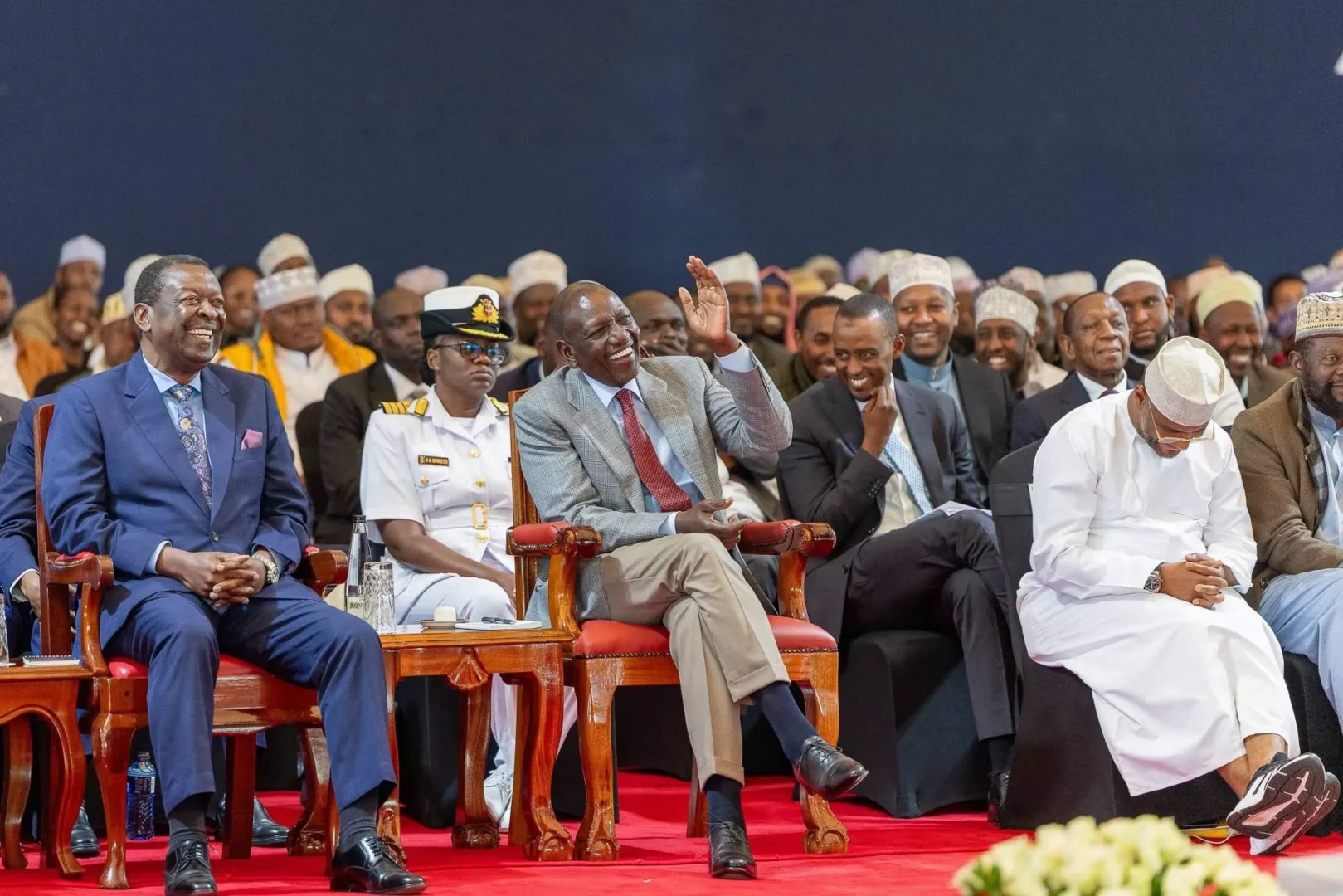
NAIROBI, Kenya — President William Ruto shared a light-hearted moment with Muslim leaders at State House, Nairobi, on Tuesday 4, August 2026, joking about reports that some people wanted to convert him from Christianity to Islam before delivering a message on religious unity and national cohesion.
Addressing a gathering of Muslim clerics and community leaders, the President laughed off suggestions that there were efforts to persuade him to embrace Islam.
“And you know, do not try. Mimi ni mhubiri sugu sana. Msipochunga, mimi nitawahuburia nikimalizana na kazi ya Urahis na pengine wengine wenu nitawapinduliwa wakuwe wa Christo,” Ruto said, prompting laughter from those in attendance.
The Swahili remarks loosely translate to: “Don’t try. I am a very stubborn preacher. If you’re not careful, once I finish serving as President, I might start preaching to you, and some of you may end up becoming Christians.”
The President quickly shifted from humour to a broader appeal for religious harmony, saying Kenya’s diversity should be a source of unity rather than division.
“Niunganishe Wakenya wote, tuweke usawa. Niko tayari mnifanyie mtihani mwaka ujao,” he said.
He urged Kenyans of different faiths to coexist peacefully, emphasising that both Christians and Muslims worship the same God.
“Nyinyi ni ndugu zetu… uzuri, mimi natambua dini ya kiislamu ni kwamba mnaamini Mungu,” Ruto said.
Also Read: Rwanda’s Paul Kagame defends regulation of religious institutions
The President added that no individual is perfect and stressed that faith in God remains a common foundation across religions.
“Binadamu hawezi kua mkamilifu. Bila ya kuamini Mungu, and that is where we are all of us, and we are equal,” he said.
Ruto has frequently used interfaith engagements to promote religious tolerance, often describing Kenya’s religious diversity as one of the country’s greatest strengths. His administration has repeatedly called for cooperation between faith communities in advancing peace, national unity and development.
The meeting at State House formed part of the President’s continued consultations with religious leaders from different denominations and faiths as his administration seeks broader engagement with community leaders across the country.
