


KAMPALA, Uganda — When thousands of Ugandans picked up brooms, shovels and wheelbarrows for the country’s first National Cleaning Day, the government hoped to demonstrate a new era of civic responsibility.
By Sunday 26, July 2026 morning, however, another picture had emerged.
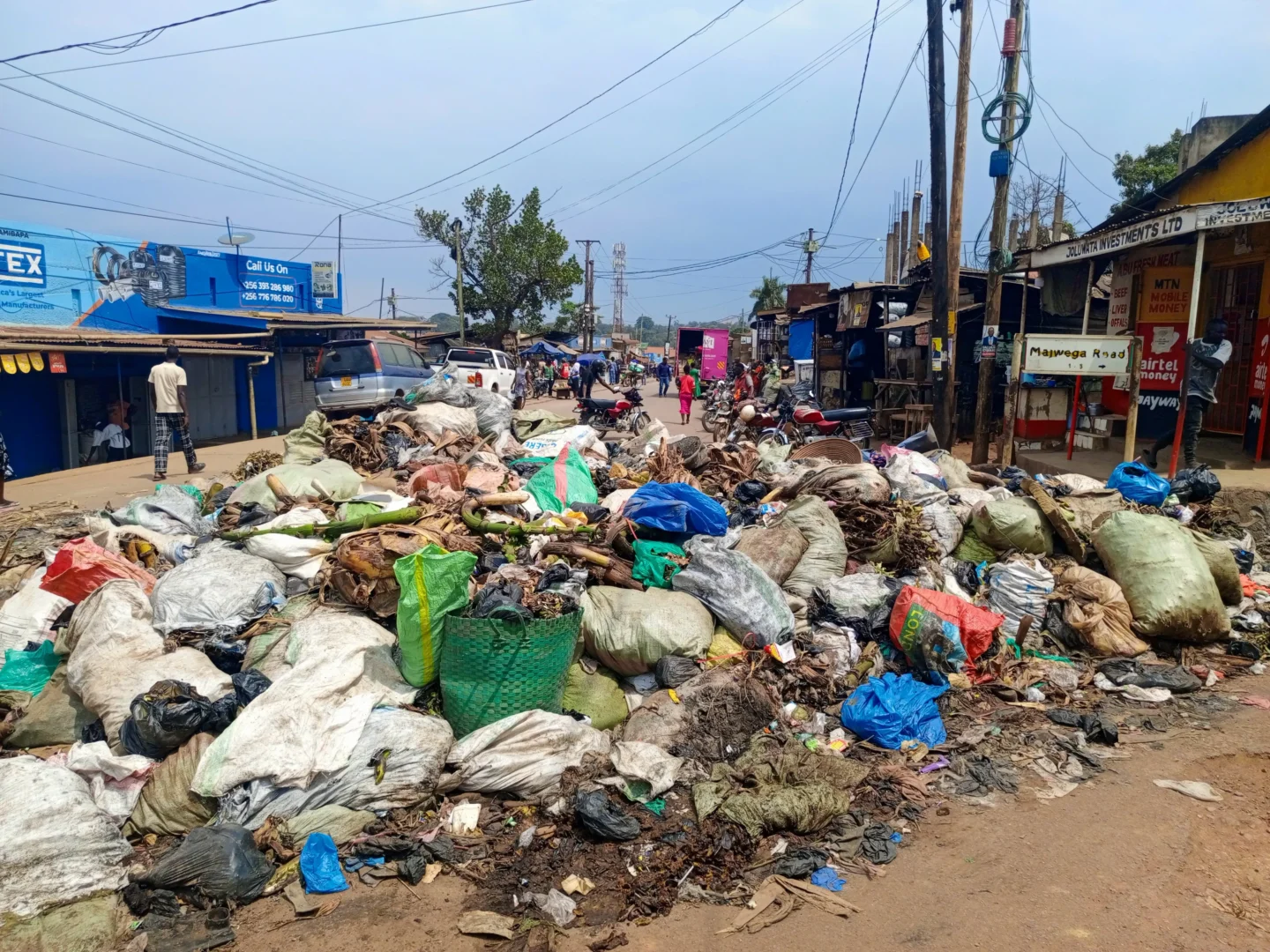
Across Kampala, the cleaned-up rubbish remained exactly where residents had left it.
Along Namungona–Kasubi Road, Hoima Road, Nankulabye, Makerere Kikoni, Kamwokya, Kyebando, Kagugube and Kawala, heaps of mixed waste lined roadsides, market entrances and residential streets, replacing one public health concern with another.
The irony was difficult to ignore.
Citizens had responded to the government’s call.
The garbage had not.
The aftermath of Uganda’s first nationwide cleanup has shifted public debate from whether people were willing to participate to whether the country’s waste management systems were prepared for the volume of waste generated by one of the largest coordinated sanitation exercises in recent years.
It has also exposed a broader governance question.
Can governments successfully mobilise citizens to clean their communities if public institutions lack the capacity to remove the waste afterwards?
When civic action meets logistical reality
The National Cleaning Day campaign, introduced through Cabinet Circular No. 1 of 2026, sought to improve sanitation by requiring communities across Uganda to participate in organised monthly clean-up exercises.
Across Kampala, many residents embraced the initiative.
Markets, roadsides, drainage channels and public spaces were cleared of litter accumulated over weeks and months.
But concentrating waste into collection points created an unexpected challenge.
Removing it.
By Sunday, complaints flooded social media as residents shared photographs of overflowing garbage piles that had become larger than before the exercise began.
At Kasubi Market alone, several large heaps remained beside vendors trading along the roadside.
The online frustration eventually drew a response from Kampala Capital City Authority (KCCA) Executive Director Sharifah Buzeki, who appealed for patience as collection teams continued working.
“Thank you all for the feedback on the places that have not yet been cleared. We are still in the field evacuating waste until the last pack of garbage reaches Buyala Waste Management Site,” Buzeki posted on X.
She later urged residents to provide precise locations where waste remained uncleared.
“Most areas were cleared throughout the night. If your area has not yet been cleared, please share the exact location so our trucks can be dispatched.”
The exchange effectively transformed social media into a real-time reporting platform for urban waste collection.
A smell stronger than before
For many communities, the delayed collection created an immediate problem.
The rubbish had been moved.
It had not disappeared.
On Hajji Ssebuliba Road in Makerere Kikoni, boda boda riders who had enthusiastically joined Saturday’s cleanup returned to find the garbage still lying beside their stage.
Ronald Byamukama said riders had expected KCCA trucks to collect the waste before the end of the day.
Instead, the decomposing rubbish forced them to temporarily abandon their operating area.
The smell, he said, had become unbearable.
What had begun as an exercise to improve sanitation was now affecting livelihoods.
A similar picture emerged in Kamwokya.
Quinto Okethwengu, chairperson of the Alur Community in Kamwokya, said the cleanup had unintentionally intensified unpleasant odours because scattered rubbish had been consolidated into larger piles.
He argued that regular deployment of garbage trucks—not occasional campaigns—would allow residents to maintain cleaner neighbourhoods throughout the year.
The infrastructure question
The delayed collections have renewed attention on a long-standing challenge facing Kampala.
Waste collection has struggled to keep pace with one of Africa’s fastest-growing urban populations.
While community participation can remove litter from streets and drainage channels, transporting thousands of tonnes of waste requires trucks, disposal sites, fuel, personnel and efficient logistics.
KCCA acknowledged that the unusually large volume of waste had stretched existing systems.
According to the Authority, congestion at Buyala Waste Management Facility significantly slowed operations.
“Due to the large volumes of waste and heavy traffic from Kampala and its metropolitan area at the Buyala Waste Management Facility, offloading times are longer, which stretches the turnaround time,” the Authority said.
The explanation highlights a logistical bottleneck often overlooked in public discussions about sanitation.
Collecting waste is only one part of the chain.
Transporting, processing and disposing of it present equally significant challenges.
New trucks, old challenges
As criticism mounted, KCCA announced measures intended to strengthen waste collection capacity.
The Authority revealed it had received nine new 40-tonne Sino trucks through partner support.
Lubaga, Makindye and Kawempe divisions each received two trucks, while Nakawa received three.
In addition, Nabugabo Updeal Venture deployed 15 extra trucks to support garbage collection in Kampala Central Division.
While the additional fleet may improve capacity, questions remain about whether it is sufficient for a rapidly expanding city generating thousands of tonnes of waste every day.
Urban planners have long argued that successful sanitation depends less on periodic cleanup campaigns than on predictable, routine collection supported by adequate infrastructure.
Without consistent collection schedules, residents often have little choice but to dump waste in open spaces or drainage channels.
Citizens fulfilled their part
Nakawa Division Mayor Nubian Li believes residents demonstrated their willingness to participate.
The remaining responsibility, he argues, rests with government.
“Citizens did their part for the national cleanup, but piles of trash are still sitting uncollected in our streets. This is a massive public health hazard waiting to happen,” he said.
Also Read: Can Uganda National Cleaning Days coexist with constitutional rights?
“The government needs to invest more in garbage trucks and waste infrastructure.”
His comments reflect growing public sentiment that National Cleaning Day should complement—not substitute—institutional investment in urban sanitation.
A lesson beyond one weekend
During Saturday’s launch, Vice President Jessica Alupo acknowledged the challenges facing local governments.
She said government was mobilising resources to procure more garbage collection equipment, including trucks, to strengthen future cleanup exercises.
That commitment may prove critical.
Public participation campaigns succeed when citizens see visible results.
If residents repeatedly spend hours cleaning only to watch waste remain beside their homes for days, enthusiasm may gradually diminish.
The first National Cleaning Day demonstrated something important.
Ugandans are willing to contribute their time and effort toward cleaner communities.
What remains uncertain is whether public institutions can match that commitment with the infrastructure necessary to sustain it.
Because ultimately, the success of a national cleanup is measured not by how much garbage is collected into piles.
It is measured by how much of it disappears.
