


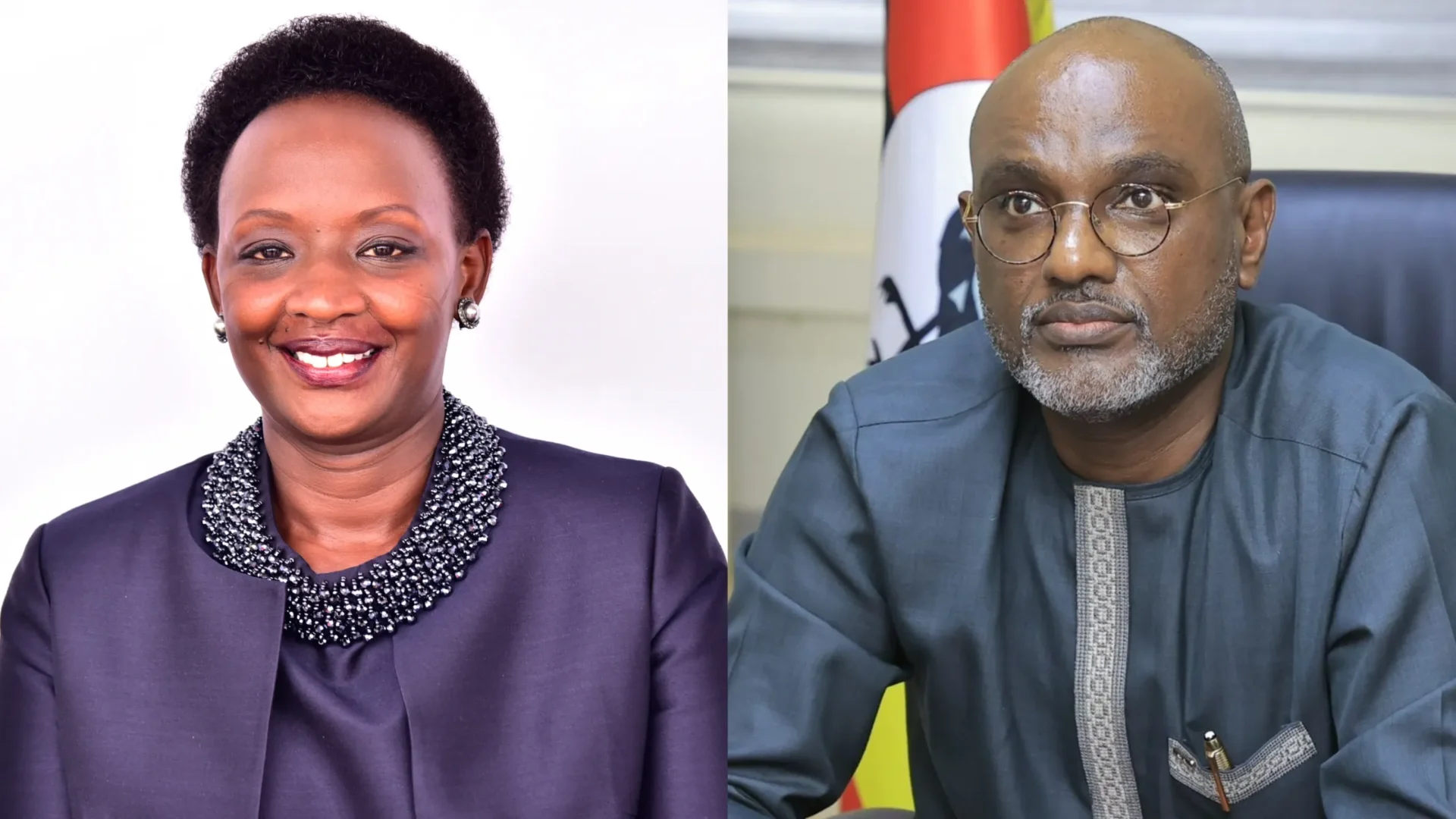
KAMPALA, Uganda — Cabinet reshuffles are usually remembered for the political calculations they reveal—who rises, who falls and what the appointments signal about a government’s priorities.
Uganda’s latest reshuffle, however, has been defined by something far less visible but equally significant: citizenship.
For weeks, two of President Yoweri Museveni’s ministerial nominees remained in political limbo despite receiving parliamentary approval. Their appointments were not stalled by political opposition or questions over competence, but by a constitutional requirement that ministers must not owe allegiance to another state while serving in Uganda’s Cabinet.
That legal hurdle now appears to have been cleared.
President Museveni has directed Head of Public Service and Secretary to Cabinet Lucy Nakyobe Mbonye to schedule the swearing-in of Ambassador Adonia Ayebare as Minister of Foreign Affairs and Shartsi Kutesa Musherure as Minister of State for Microfinance after the two completed the formal renunciation of their United States citizenship, according to multiple government sources familiar with the matter.
The President is understood to have instructed Nakyobe to identify a suitable date when he will be in Kampala to preside over the ceremony, bringing to a close one of the most closely watched constitutional questions arising from his latest Cabinet appointments.
The development is more than an administrative update.
It reflects how constitutional requirements governing citizenship are increasingly shaping Uganda’s highest public offices at a time when many senior officials have built careers, families and professional lives across multiple jurisdictions before returning to government service.
When constitutional law interrupted political appointments
The delay traces back to Parliament’s vetting process following Museveni’s Cabinet reshuffle.
After completing hearings, Parliament’s Appointments Committee cleared the nominations of Ambassador Ayebare, Musherure and Calvin Echodu, who was nominated Minister of State for Foreign Affairs (International Affairs).
However, the committee advised that the three should first complete the formal renunciation of their foreign citizenship before assuming ministerial office.
That recommendation placed the President in an unusual constitutional position.
According to government sources, Museveni subsequently received legal advice warning that administering the oath before completion of the renunciation process could expose the appointments to legal challenge.
Rather than risk future litigation over the validity of ministerial appointments, the President postponed the inauguration.
As a result, Ayebare, Musherure, Echodu and Dr Lawrence Muganga, who had been nominated Minister of State for Internal Affairs, were absent when the remainder of the Cabinet took the oath of office at State House Entebbe.
Their empty places quickly became one of the defining images of the reshuffle.
The constitutional question
Uganda’s Constitution imposes strict eligibility requirements for certain public offices, reflecting the principle that holders of senior executive responsibilities should owe undivided allegiance to Uganda.
While dual citizenship is recognised under Ugandan law in specific circumstances, eligibility for constitutional offices—including Cabinet positions—requires compliance with additional legal requirements concerning foreign citizenship.
The latest appointments therefore became an important test of how those constitutional provisions would be interpreted and enforced in practice.
Rather than treating the issue as a procedural technicality, both Parliament and the Executive appear to have insisted upon documentary compliance before ministerial powers could formally be assumed.
That approach signals a growing emphasis on constitutional procedure in appointments to senior government office.
Why Ayebare and Musherure proceeded
Government sources now say both Ambassador Ayebare and Musherure have successfully completed the renunciation process relating to their American citizenship.
Their compliance has cleared the way for the President to complete their appointments through the formal swearing-in ceremony.
Officials indicated that an inauguration had initially been planned for Thursday but was postponed because of the President’s official schedule.
“A new date will be fixed once the President’s programme allows,” a government source said.
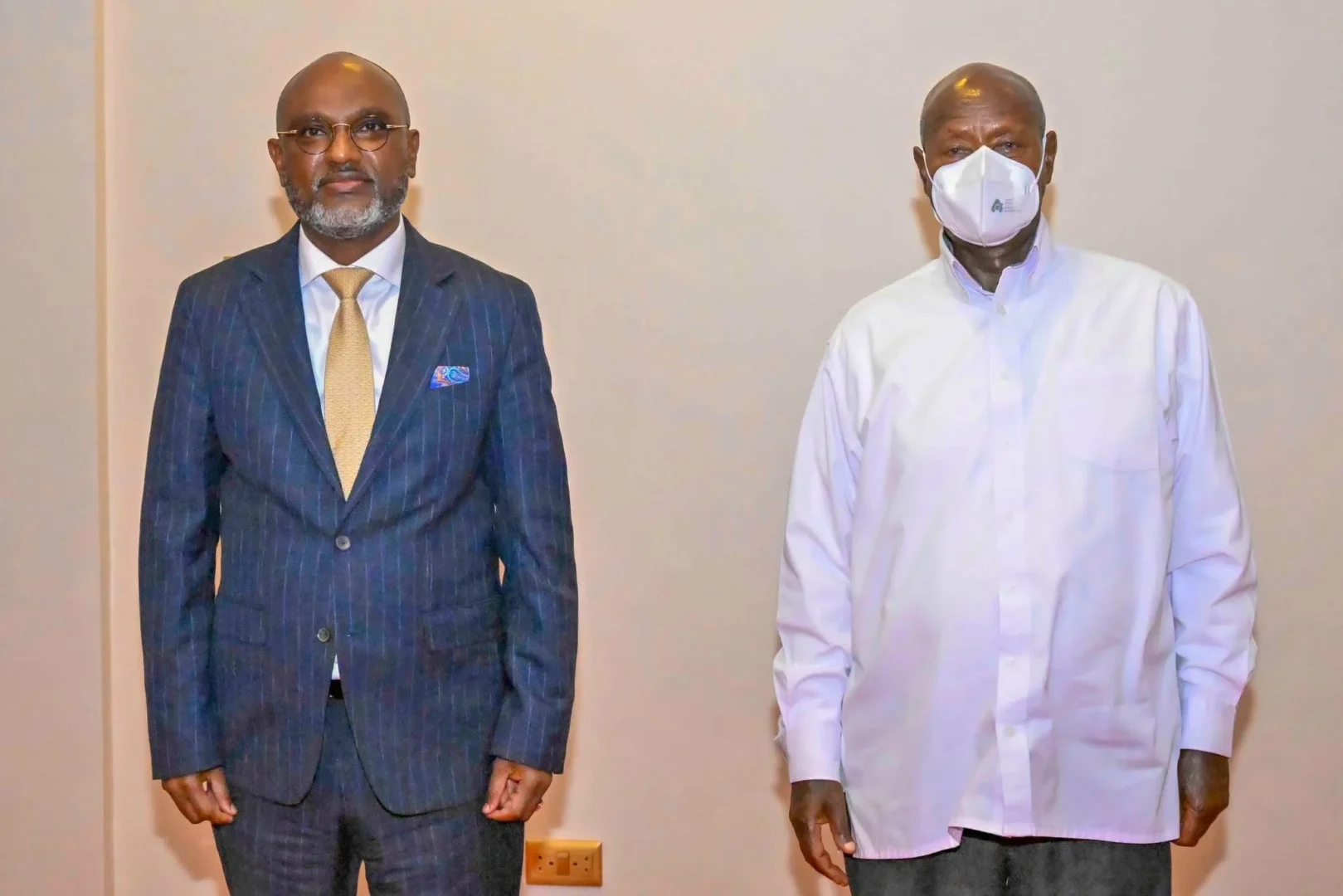
Although the delay appears temporary, it illustrates how even routine ceremonial events can become dependent upon strict constitutional compliance.
Once sworn in, Ayebare will assume responsibility for Uganda’s foreign affairs at a time when Kampala continues expanding its diplomatic engagement across Africa and beyond.
Musherure will take office in the Microfinance docket, a portfolio increasingly linked to government programmes aimed at expanding financial inclusion and supporting household enterprise.
The remaining unresolved files
While Ayebare and Musherure now appear set for inauguration, other nominations remain unresolved.
Officials said Echodu’s citizenship file is still under review, although they indicated that processing continues.
The position of Dr Muganga is considerably more complicated.
Unlike Ayebare, Musherure and Echodu, whose files reportedly contained documentary evidence demonstrating that they had initiated formal renunciation procedures, Parliament’s Appointments Committee rejected Muganga’s nomination.
According to parliamentary officials, Muganga failed to provide documentary proof during vetting that he had begun the formal renunciation process relating to his multiple foreign citizenships.
His nomination was subsequently referred back to President Museveni as the appointing authority.
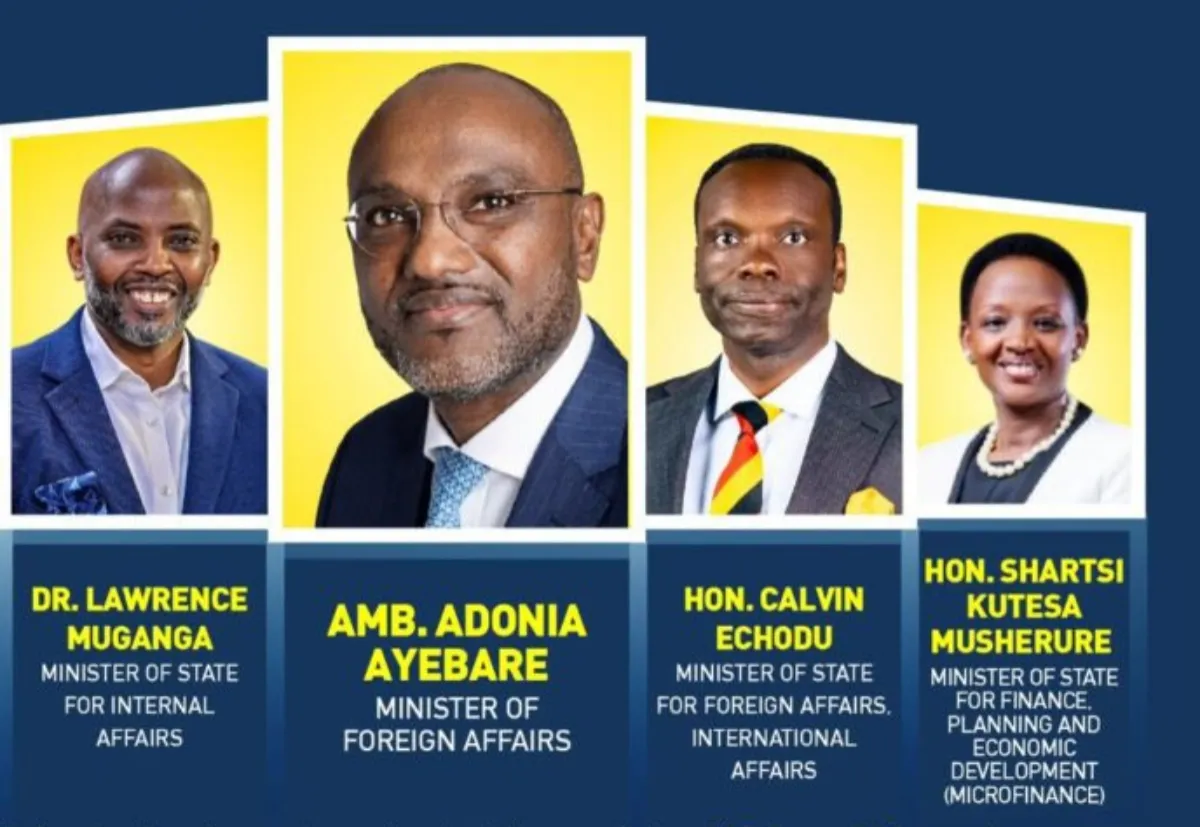
Muganga has consistently rejected the committee’s conclusions.
He maintains that he became the target of a political witch-hunt by certain legislators rather than an objective constitutional review.
Parliamentary officials, however, have defended their decision, insisting it rested entirely upon documentary evidence presented—or not presented—during the vetting process.
Behind the scenes at State House
The citizenship dispute prompted additional consultations at the highest levels of government.
Museveni directed Head of Public Service Lucy Nakyobe Mbonye, State House legal officer Florence Kiconco and Solicitor General Pius Perry Biribonwoha to engage the affected nominees before advising him on the appropriate constitutional path forward.
Those consultations effectively became a legal review of the appointments before the President made his final decision.
During the Cabinet swearing-in ceremony, Nakyobe publicly confirmed that the consultations had been completed and that a report had already been submitted to the President.
That process now appears to have produced its first concrete outcome through the impending inauguration of Ayebare and Musherure.
A changing profile of public leadership
The episode also reflects broader changes in Uganda’s political class.
Increasingly, senior public officials have accumulated international education, diplomatic careers, business interests and professional experience outside Uganda before entering government.
Also Read: Citizenship concerns cloud Uganda cabinet swearing-in of four nominees
Such global careers inevitably raise more frequent questions about citizenship status, legal eligibility and constitutional compliance.
The issue is therefore unlikely to disappear.
Instead, constitutional scrutiny surrounding citizenship may become a routine feature of future appointments as Parliament continues exercising increasingly detailed oversight over executive nominations.
More than delayed oaths
For most governments, ministerial swearing-in ceremonies are largely symbolic.
The Ugandan experience demonstrates they can also become constitutional milestones.
What delayed Ayebare and Musherure was not political disagreement but legal procedure.
Their expected inauguration suggests government now considers the constitutional questions surrounding their appointments to have been satisfactorily resolved following completion of the renunciation of their United States citizenship.
Yet the broader story extends beyond two ministers finally taking office.
It highlights how constitutional safeguards—often overlooked during Cabinet reshuffles—can quietly determine who ultimately qualifies to govern.
In Uganda’s latest reshuffle, citizenship proved just as consequential as politics.
